
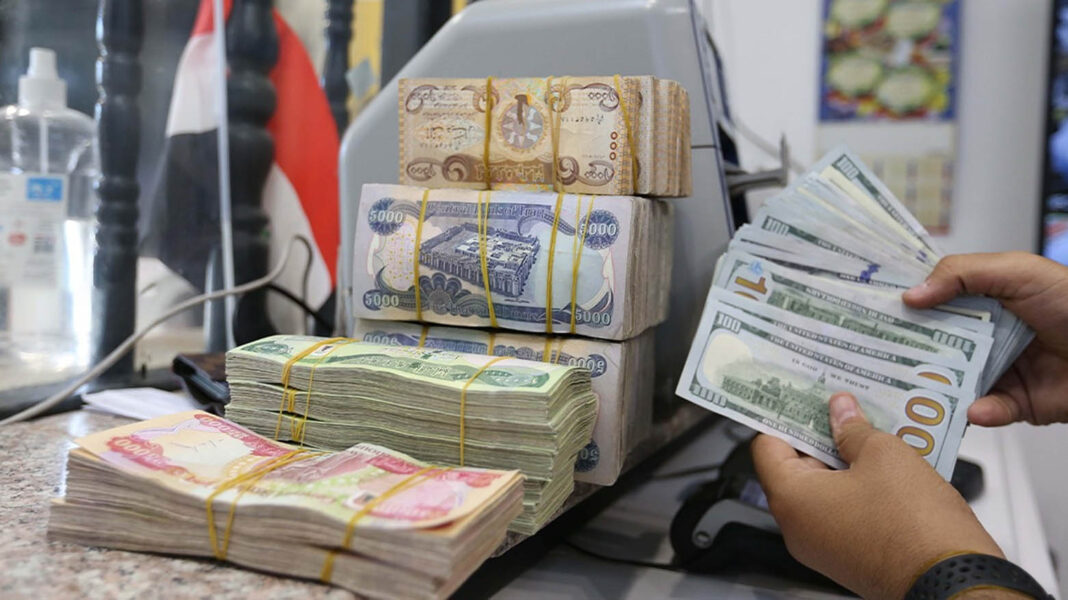
The US dollar opened lower across Iraq, with Baghdad and Erbil markets trading near 151,000 dinars per $100. Currency dealers reported declines across major exchange centers. Consequently, the Iraqi dinar gained ground against the American currency. However, retail rates differed between the two cities.
Currency dealers at Baghdad’s Al-Kifah and Al-Harithiya exchanges quoted 150,800 dinars for every $100. The previous session recorded 152,600 dinars for the same amount. Therefore, the benchmark declined by 1,800 dinars. That movement represents a drop of roughly 1.2%.
The Iraq Dollar Dip also affected prices at exchange shops across Baghdad. Retail dealers sold $100 for 151,250 dinars. Meanwhile, those dealers offered 150,250 dinars when purchasing $100 from customers. The difference between the two rates reached 1,000 dinars.
Exchange shops usually maintain a gap between buying and selling prices. This difference allows dealers to cover costs and manage currency risks. Moreover, individual shops may adjust rates according to local supply and customer demand. Therefore, prices can vary across neighborhoods.
Erbil’s currency market showed slightly higher retail rates. Dealers sold $100 for 151,550 dinars. Additionally, they purchased the same amount for 151,300 dinars. The difference between the two prices reached only 250 dinars.
Erbil’s selling rate exceeded Baghdad’s selling price by 300 dinars. Meanwhile, Erbil’s buying price exceeded Baghdad’s rate by 1,050 dinars. These differences show how local conditions can shape currency pricing. Cash availability and customer demand may influence each market differently.
However, the market data did not identify a specific reason for the dollar’s decline. Currency movements can reflect changing demand among businesses, travelers, and importers. Additionally, cash supplies can affect daily prices. Traders may also react quickly to broader economic expectations.
A lower dollar rate means customers need fewer dinars to purchase American currency. Consequently, the movement strengthens the dinar’s market value. Importers may welcome that change because they often pay foreign suppliers in dollars. However, short-term movements may not immediately change retail prices.
Iraqi businesses closely monitor the dollar because imports support many local markets. Traders use foreign currency to purchase food, electronics, clothing, and industrial materials. Therefore, exchange-rate changes can affect operating costs. Larger movements can also influence consumer prices.
Meanwhile, families may watch the market for different reasons. Some households save money in dollars to protect their purchasing power. Others need dollars for travel, education, healthcare, or overseas payments. Consequently, even small changes can influence personal financial decisions.
The decline may also encourage some dollar holders to delay sales. They could wait for a stronger rate before exchanging their savings. Conversely, customers who need dollars may see the lower price as a buying opportunity. These decisions can quickly change daily market demand.
Baghdad remains Iraq’s largest currency trading center. Therefore, rates from Al-Kifah and Al-Harithiya often guide dealers across other provinces. However, local shops add their own margins. Transportation costs and available cash can also create regional differences.
Erbil operates another important foreign-exchange market. Businesses, travelers, and investors create regular demand for American currency there. Furthermore, the Kurdistan Region relies heavily on imported goods. This activity keeps dollar movements important for local merchants and consumers.
Nevertheless, one trading session cannot establish a lasting market direction. The dollar could continue falling, stabilize, or recover during later trading. Dealers will therefore monitor supply and demand closely. Wider economic developments could also influence future movements.
Consumers should compare several exchange shops before completing large transactions. Different dealers may offer better buying or selling prices. Additionally, customers should confirm the final rate before exchanging money. Small price differences can become significant during larger transactions.
Businesses may also review their purchasing plans when currency prices change. A stronger dinar can reduce the local cost of dollar-based imports. However, companies often need stable rates for reliable budgeting. Frequent changes can make pricing and inventory decisions more difficult.
The market figures show a clear decline from the previous level. Baghdad’s central exchange rate moved from 152,600 to 150,800 dinars per $100. Meanwhile, retail prices remained slightly above that benchmark. Erbil dealers also kept their rates near 151,000 dinars.
Ultimately, the Iraq Dollar Dip gave the dinar a stronger position in Baghdad and Erbil. However, traders have not confirmed a lasting downward trend. Market participants will continue watching demand, cash supplies, and regional price differences. Further trading will reveal whether the decline continues.