Strait of Hormuz reopening emerged as a key priority for Iraq on Monday as Baghdad welcomed a new understanding between Iran and the United States. Iraqi officials said the agreement could ease tensions and support stability across the region.
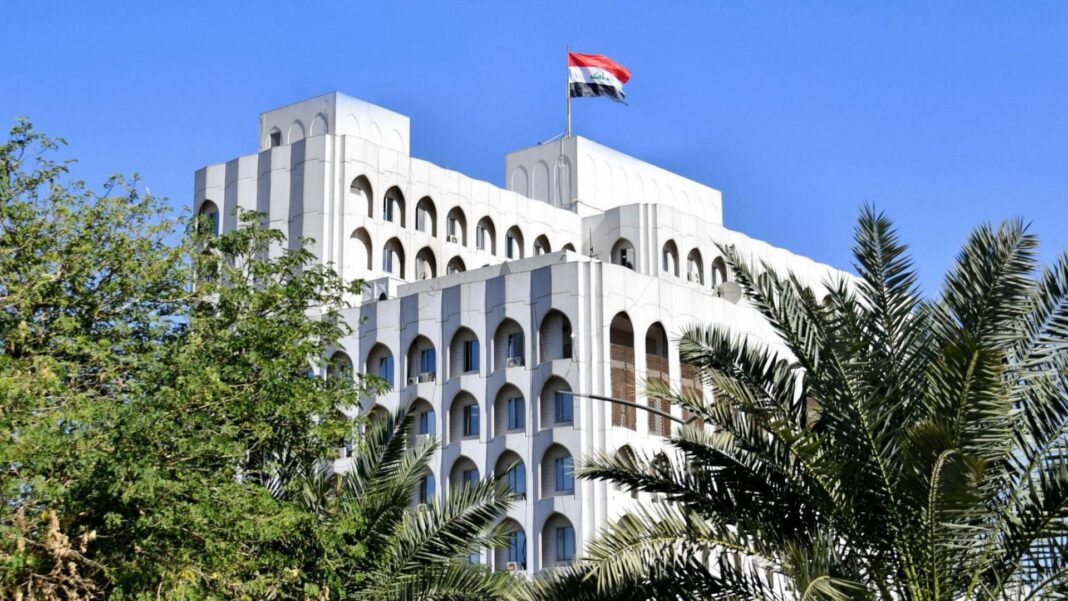
The Iraqi Foreign Ministry expressed support for the memorandum of understanding reached between Tehran and Washington. Furthermore, the ministry praised efforts that prioritize dialogue and diplomatic solutions.
According to the statement, peaceful engagement can strengthen regional security and reduce the risk of future confrontations. Therefore, Baghdad reiterated its commitment to resolving disputes through diplomacy.
In addition, Iraqi officials welcomed the expected return of normal maritime traffic through the Strait of Hormuz. They described the waterway as essential for the flow of oil and gas to international markets.
The ministry stressed that the passage plays a major role in maintaining global energy stability. Consequently, Iraq views the restoration of shipping activities as an urgent matter.
Earlier on Monday, U.S. President Donald Trump announced that Washington and Tehran had finalized an agreement. He also stated that the United States would immediately end its naval blockade on Iranian ports.
Moreover, Trump said vessels had already started moving through the strategic waterway. According to his remarks, many ships were carrying oil cargoes.
The agreement follows months of tensions and military escalation. Fighting erupted in late February and continued for several weeks. Later, a ceasefire mediated by Pakistan temporarily halted hostilities.
However, both sides still need to address unresolved issues. In particular, negotiations over Iran’s nuclear program remain ongoing. Officials expect a formal signing ceremony in Switzerland on Friday.
For Iraq, the conflict created severe economic challenges. The closure of the Strait of Hormuz disrupted oil exports and damaged state revenues.
Before the crisis, Iraq produced roughly 4.14 million barrels of crude oil daily. However, output later dropped to about 1.49 million barrels per day.
Financial adviser Mazhar Mohammed Salih previously warned about heavy losses. He estimated that export disruptions cost Iraq between $200 million and $255 million each day.
Furthermore, he said higher oil prices could not fully offset the losses. Monthly revenues, he warned, could decline significantly despite rising prices.
Meanwhile, Iraq also faced growing security pressures during the conflict. The war expanded beyond Iran and involved multiple regional actors.
The United States and Israel launched extensive air operations against Iran in late February. In response, Iran carried out drone and missile attacks across the Middle East.
In addition, armed factions aligned with Tehran launched attacks against alleged American targets. Some Iraqi groups also claimed responsibility for operations in the region.
Consequently, Iraq found itself under increasing pressure from neighboring countries. In mid-April, the United Arab Emirates delivered a strong protest to Iraqi diplomats.
Abu Dhabi criticized attacks allegedly launched from Iraqi territory. Moreover, Emirati officials warned that continued incidents could strain relations with Baghdad.
Despite these developments, Iraq maintained its call for peaceful solutions. Officials emphasized their rejection of war and their support for dialogue.
Furthermore, the Foreign Ministry urged regional and international actors to prevent further escalation. Leaders also warned against the danger of new confrontations.
According to the ministry, Iraq will continue promoting understanding among regional countries. Officials believe balanced diplomacy can help bridge differences and preserve stability.
As a result, Strait of Hormuz reopening remains vital for Iraq’s economy and regional interests. At the same time, Strait of Hormuz reopening could help restore confidence in international energy markets and reduce tensions across the Middle East.