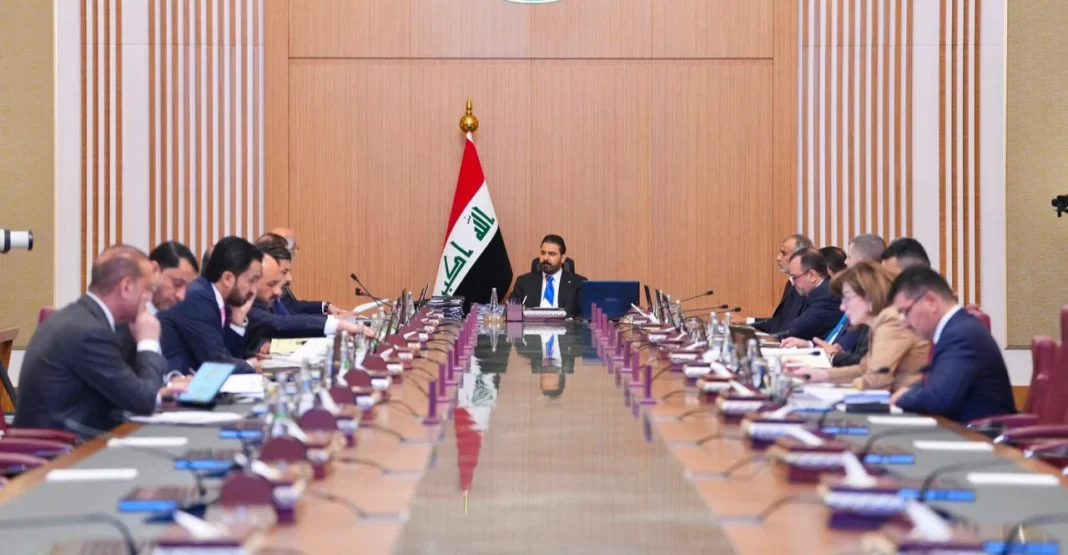
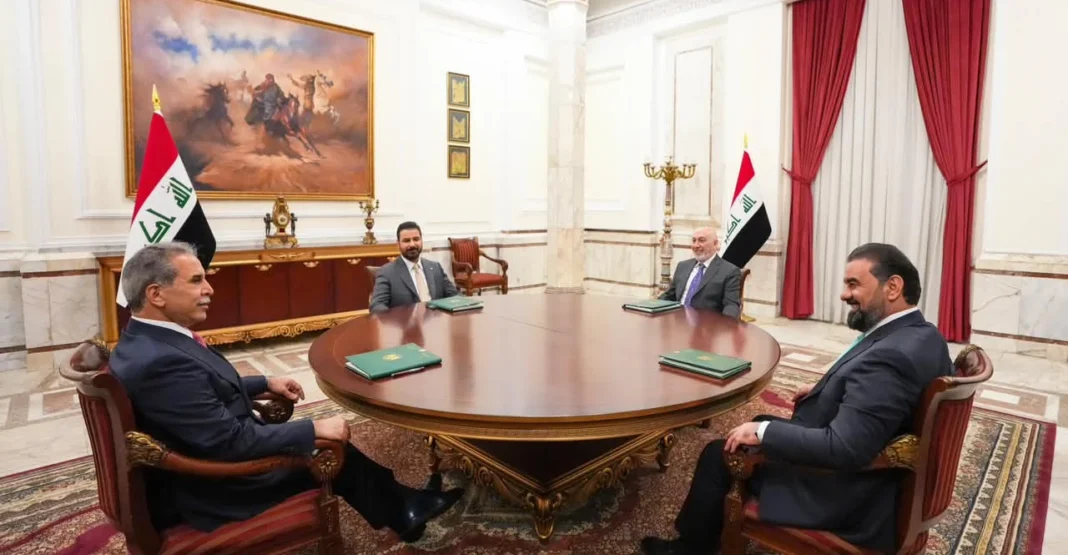
The future of Iraq state authority dominated talks in Baghdad on Wednesday. Iraq’s four highest constitutional leaders met to review political, economic, and security developments. They also stressed the need to strengthen institutions and accelerate reforms.
President Nizar Amidi joined Prime Minister Ali al-Zaidi, Parliament Speaker Haibat al-Halbousi, and Supreme Judicial Council President Faiq Zaidan during the meeting.
According to a statement from the Iraqi Presidency, the leaders examined recent developments inside Iraq and across the region. They also reaffirmed support for government efforts to tackle economic and security challenges.
Moreover, the participants highlighted the importance of completing the federal cabinet. They urged officials to fill the remaining ministerial positions without delay.
Additionally, the leaders backed measures that seek to strengthen state institutions. They said stronger institutions can improve governance and deliver better services.
Furthermore, the meeting focused on legislative reforms. The participants called for the approval of several important laws. They also supported amendments to investment legislation.
Officials believe these legal changes can attract investors. They also expect reforms to boost economic growth and improve the business climate.
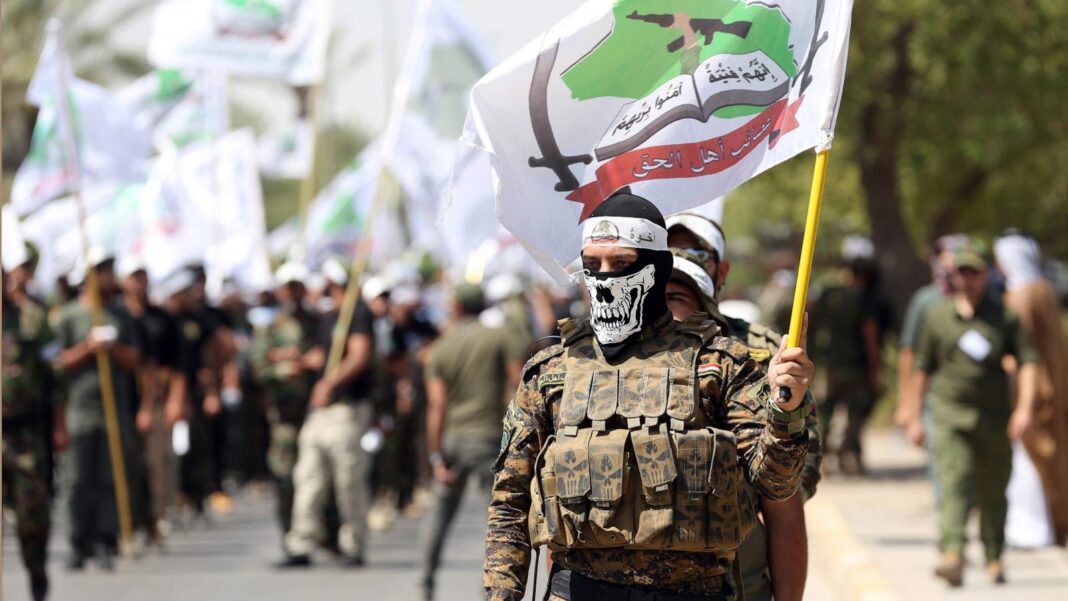
Meanwhile, security issues received significant attention. The four leaders reiterated that only the state should possess weapons. They described this principle as essential for the rule of law.
They also argued that stronger control over arms can support national stability. Consequently, they emphasized the importance of reinforcing Iraq state authority throughout the country.
The issue remains sensitive in Iraq. Previous governments also pledged to expand state control over armed groups. However, leaders continue to face political and security complexities.
At the same time, Iraq faces regional tensions and domestic challenges. Therefore, officials continue efforts to strengthen economic reforms and improve public services.
The meeting also highlighted the need for greater cooperation among state institutions. Leaders stressed the importance of coordination between the executive, legislative, and judicial branches.
Moreover, they said closer cooperation can help address national challenges more effectively. They also noted that unity among institutions remains necessary for maintaining stability.
Economic development formed another key topic during the discussions. Leaders believe reforms can create a stronger environment for investment and business activity.
Additionally, they emphasized the need to continue supporting policies that encourage growth. They argued that these measures can create opportunities and strengthen confidence.
As Iraq navigates regional uncertainty, officials continue to stress institutional cooperation. They also seek policies that can reinforce security and economic progress.
Ultimately, the leaders presented a unified message. They emphasized that Iraq state authority remains central to stability, governance, and long-term development.