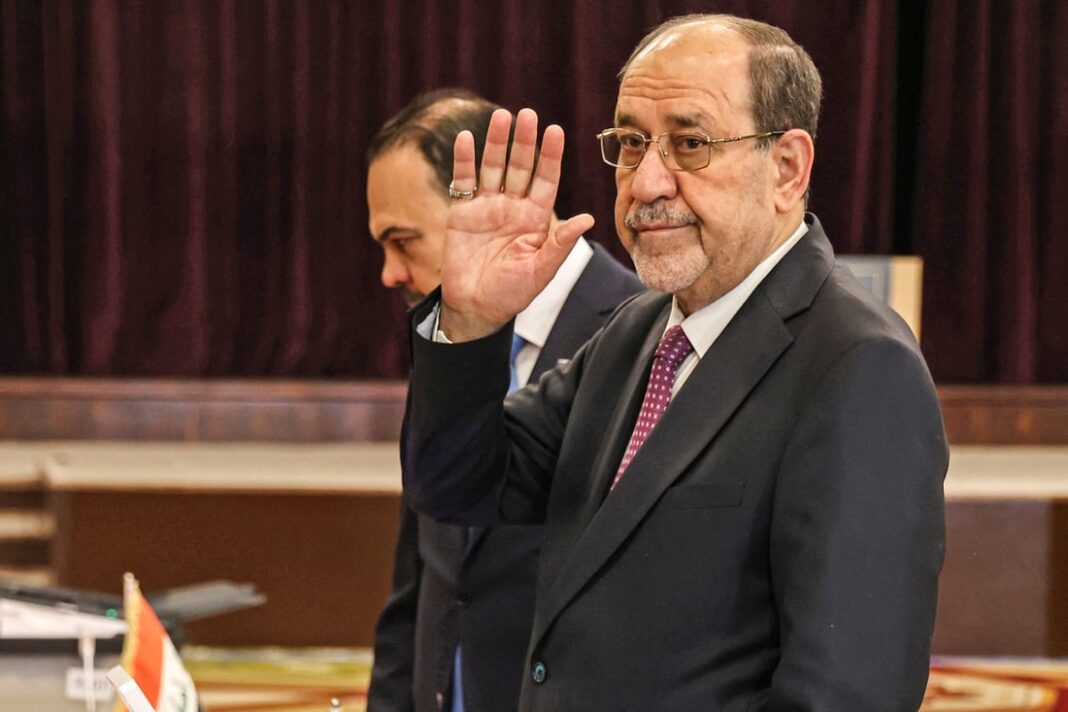
Senior leaders within the Coordination Framework agreed to withdraw the candidacy of Nouri al-Maliki for prime minister. A senior source familiar with the meeting confirmed the decision. The source said coalition figures reached a consensus after intense internal debate. An official statement is expected within hours.
This move marks a decisive turn in a stalled political process. Lawmakers struggled for weeks to bridge deep divisions. Disagreements centered on Maliki’s possible return to office. However, mounting pressure pushed leaders to reconsider their strategy. As a result, they opted for a compromise.
The source said leaders will begin urgent consultations within two days. They aim to select a new nominee who can secure broader political support, as well as a candidate acceptable to Shiite factions. They also need backing from the Sunni and Kurdish blocs. Therefore, negotiations will focus on consensus rather than confrontation.
Several prominent figures did not attend the meeting. Maliki missed the session along with Hammam Hamoudi and Abu Alaa al-Walaei. Their absence fueled speculation about internal rifts. Nevertheless, coalition members pressed ahead with discussions. They concluded that unity requires flexibility.
Prime minister nomination shift reflects wider political realities. Iraqi leaders recognize the risks of prolonged deadlock. Political paralysis could weaken state institutions. It could also strain security coordination and economic planning. Consequently, Framework leaders chose to act before divisions deepened.
External pressure also influenced the debate. United States officials reportedly voiced concern over Maliki’s potential return. They warned about political and security implications. Although Iraqi leaders did not publicly confirm those warnings, sources say the concerns shaped private discussions. Still, Framework members insist they made the final decision independently.
Prime minister nomination shift signals a broader recalibration inside the alliance. Leaders now seek a figure who can reduce tensions. They want someone who can reassure regional and international partners. At the same time, they aim to protect the alliance’s political weight.
In addition, Sunni and Kurdish parties closely monitor these talks. Their support remains essential for forming a stable government. Therefore, Framework negotiators will likely engage in parallel outreach. They understand that inclusive dialogue can speed up the formation process.
Prime minister nomination shift may accelerate compromise. It may also open space for fresh alliances. However, much depends on the next nominee. Political blocs will test whether the new candidate can unite competing interests.
For now, coalition leaders emphasize unity and continuity. They promise to avoid further delays. Prime minister nomination shift represents a turning point in Iraq’s leadership contest. The coming days will reveal whether this shift delivers a breakthrough.