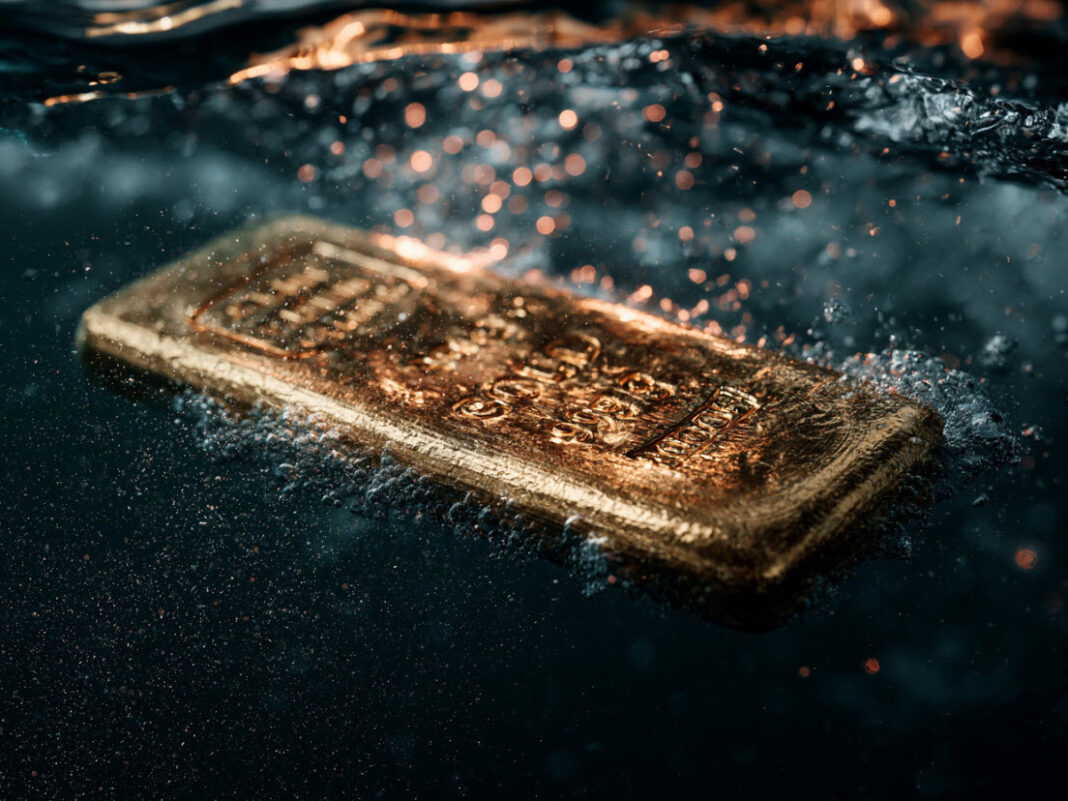
U.S. gold prices fell sharply as rising oil costs increased fears about stronger inflation. Spot gold declined 1.5% to $4,060.36 per ounce. Meanwhile, U.S. gold futures dropped 1.1% to $4,068.30. The decline followed renewed military escalation across the Middle East.
Iranian and U.S. forces exchanged heavy missile and drone attacks across the region. Tehran also targeted American facilities in several Gulf countries. Moreover, Iran announced another closure of the Strait of Hormuz. The waterway carries a major share of global oil supplies.
Consequently, oil prices jumped about 4% as traders feared serious supply disruptions. The surge pushed the U.S. dollar and Treasury yields higher. At the same time, Asian stock markets moved lower. These movements placed additional pressure on precious metals.
Gold normally attracts investors during military conflicts and economic uncertainty. However, rising oil prices can create stronger inflation and higher interest rates. Higher rates increase the cost of holding gold because it produces no regular income. Therefore, many traders moved money toward assets offering higher yields.
Nicholas Frappell, an institutional markets executive, explained the unusual market reaction. He said Gulf violence often creates immediate pressure on gold. However, he also highlighted possible support for the metal over a longer period. A prolonged Strait closure could eventually weaken global demand and economic activity.
Higher energy prices could force companies and households to reduce spending. Consequently, economic growth could slow across several major markets. That slowdown could later reduce inflation and encourage easier monetary policy. Under those conditions, investors could return to gold as a defensive asset.
Still, U.S. gold prices currently face pressure from stronger expectations for another interest rate increase. Traders now estimate a 72% chance of a Federal Reserve rate increase. That figure previously stood near 63%. Therefore, investors expect policymakers to maintain a tougher approach toward inflation.
Markets will closely follow Federal Reserve Chair Kevin Warsh’s upcoming testimony before Congress. Investors want clearer information about inflation, economic growth, and future interest rates. In addition, several important U.S. economic reports could influence market expectations. These reports cover consumer prices, producer prices, and retail sales.
Furthermore, comments from Federal Reserve officials could guide financial markets. Vice Chair Michelle Bowman and Governor Christopher Waller may discuss energy-driven inflation risks. Their remarks could reveal whether officials support additional interest rate increases. As a result, gold traders will monitor every policy signal closely.
Speculative activity also shows weaker confidence among large gold traders. COMEX speculators reduced their net long holdings by 1,964 contracts. Their total position fell to 114,854 contracts after three consecutive increases. This reduction suggests that some investors expect further pressure on gold.
Other precious metals also suffered significant declines during the wider market selloff. Spot silver dropped 2.6% to $58.29 per ounce. Meanwhile, platinum lost 1.6% and reached $1,601.92 per ounce. Palladium also declined 2% to $1,251.42 per ounce.
The dollar’s strength added further pressure across the metals market. A stronger dollar makes precious metals more expensive for buyers using other currencies. Consequently, international demand can weaken when the dollar rises quickly. Higher Treasury yields also encourage investors to choose interest-paying government debt.
Nevertheless, the Strait of Hormuz remains the market’s main concern. A lengthy disruption could drive oil prices even higher and damage global trade. It could also increase transportation, electricity, and manufacturing costs worldwide. Therefore, investors face competing risks from inflation, conflict, and slower economic growth.
U.S. gold prices may remain volatile while traders assess these conflicting forces. Continued violence could support safe-haven demand, but higher rates could limit gains. Meanwhile, falling economic activity could eventually change the Federal Reserve’s position. For now, surging oil prices and rising yields continue to dominate market direction