Iraq’s political landscape has been shaped by the rise of Shiite factions since the fall of Saddam Hussein in 2003. While these factions initially came to power after enduring years of persecution under the Ba’athist regime, the political dominance of Shiite parties has been marked by deep divisions, intense rivalries, and heavy external influences from Iran and the United States.
Seeds of Shiite Discord
The fragmentation within Iraq’s Shiite political community began after Saddam Hussein’s regime collapsed. Previously marginalized Shiite groups, such as the al-Dawa Party and the Supreme Council for Islamic Revolution in Iraq (SCIRI), which had been exiled in Iran, emerged as key political players. These groups, along with others aligned with Iran, became dominant forces in the new political order. However, deep ideological differences and internal power struggles soon led to fragmentation.
One of the most notable figures in this context is Muqtada al-Sadr, whose populist Shiite movement has pushed for greater independence from Iran’s influence. While factions like the Coordination Framework, backed by Iran, hold significant sway in Iraq, they remain divided, complicating governance and policymaking.
The 2021 Elections and Al-Sadr’s Rise
The 2021 parliamentary elections further deepened these divisions. Muqtada al-Sadr’s movement emerged as the biggest winner, securing 73 seats in Iraq’s 329-seat Parliament. This victory significantly shifted the power dynamics, with al-Sadr positioning himself as the most influential political force in Iraq, surpassing other Shiite powerhouses like Nouri al-Maliki’s State of Law Coalition.
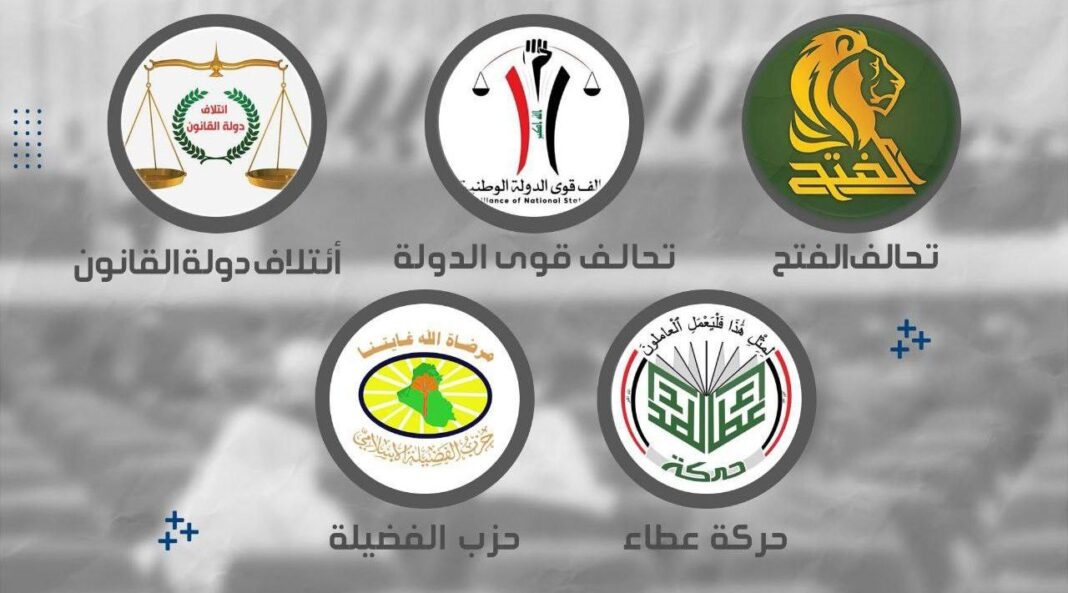
Al-Sadr’s success resonated particularly with Iraq’s youth, who were disillusioned with the political establishment. His anti-corruption message further fueled his popularity, while the State of Law Coalition and Iran-aligned factions like the Fatah Alliance faced setbacks, with their representation in Parliament sharply declining.
Al-Sadr’s Withdrawal and Political Fragmentation
In 2022, in the wake of political gridlock, al-Sadr ordered his 73 MPs to resign from the Parliament, citing his desire to distance himself from Iraq’s corrupt political system. This move left a vacuum that allowed the Coordination Framework to consolidate power and enabled Prime Minister Mohammed Shia al-Sudani to gain further influence.
The Power Struggle and Shifting Alliances
As political fragmentation deepens, new alliances have formed. For instance, figures like Alia Nassif, a former ally of al-Maliki, joined Prime Minister al-Sudani’s bloc, highlighting the shifting dynamics. The Coordination Framework, now focusing on presenting a unified front under al-Sudani and Ammar al-Hakim of the al-Hikma Movement, continues to struggle with internal divisions.
Meanwhile, Iran-aligned factions like the Badr Organization are also facing pressure to reconsider their alliances, with some members suggesting a potential alignment with al-Sadr’s movement to ensure political survival.
Al-Sudani: A New Kingmaker?
Prime Minister Mohammed Shia al-Sudani has risen as a pragmatic force in Iraq’s political scene, with a focus on governance and reforms. His emphasis on public services and economic reforms has made him popular among both Shiite and Sunni voters. As al-Sudani consolidates power, some see him as a potential rival to traditional Shiite leaders like Nouri al-Maliki, whose influence has waned.
Al-Sudani’s approach to both the US and Iran further highlights his pragmatism, positioning him as a leader who aims to break away from the sectarian-driven politics of the past.
2025 Elections: The Realm of Possibilities
As Iraq heads toward its 2025 parliamentary elections, the political landscape remains fluid. The future of Shiite factions, particularly al-Sadr’s movement, remains a key factor. Should al-Sadr re-enter the political arena after Ramadan, he would present a formidable challenge to the Coordination Framework and Prime Minister al-Sudani’s government.
Another possibility is the Coordination Framework’s efforts to consolidate power and overcome its internal divisions. Should it succeed, it could form a dominant coalition to secure the next government. However, internal rivalries and the fragmentation of the Shiite political bloc remain significant obstacles.
The Future of Iraq’s Politics
Iraq’s political future is uncertain, driven by fragmentation within Shiite factions, external influences, and shifting alliances. With elections just around the corner, the nation stands at a pivotal moment, with potential shifts in leadership and governance on the horizon. Whether Iraq can overcome its divisions and find common ground will determine its path forward.