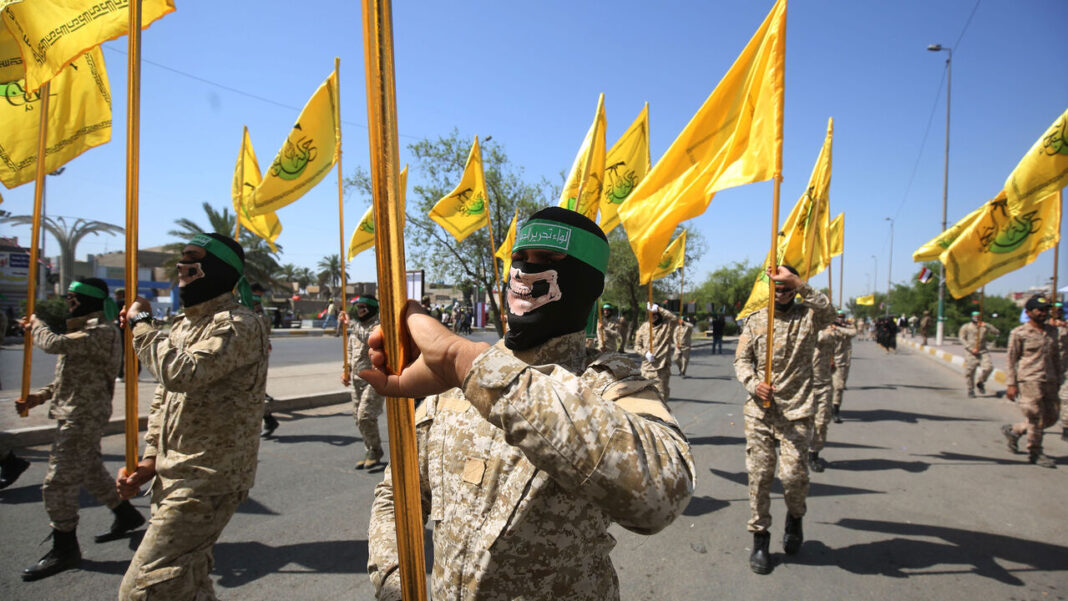
Iraq’s resistance response intensified on Monday as armed factions vowed immediate action if Iran comes under attack. Firas Al‑Yasser, a member of Harakat al‑Nujaba, said fighters will not wait for hostilities to reach Iraqi territory. He warned that any strike against Iran could drag the entire region into a larger confrontation.
Al‑Yasser predicted that a future attack would surpass the intensity of the 12‑day war in June 2025. He stressed that Iran’s retaliation could target unconventional locations or military bases. Meanwhile, he emphasized that Iraq’s resistance response would play a central role in defending regional security and stability.
He also suggested that religious authorities in Najaf might issue rulings supporting Iran if Tehran faces a large-scale assault. Al‑Yasser said fighters, or “Mujahidin,” are preparing not only in Iraq but across neighboring countries. He added that developments in Syria could allow extremist groups to expand toward Iraq in the next phase.
Other Iran-aligned factions in Iraq voiced similar positions. The Badr Organization confirmed its readiness to support Iran, framing the situation as a decisive battle for the region. Kataib Hezbollah urged fighters to prepare for a “comprehensive war” in defense of Tehran. They accused Israel of attempting to weaken or destroy Iran, increasing regional tension.
The United States has also taken action. President Donald Trump announced the deployment of a “massive fleet” toward the Middle East, warning of Iran’s potential response to nationwide protests. The USS Abraham Lincoln Carrier Strike Group is moving to the region, with the goal of promoting regional security. Iran has responded by promising a full counterstrike. Islamic Revolutionary Guard Corps commander Mohammad Pakpour said Tehran keeps its “finger on the trigger,” signaling readiness for any escalation.
Analysts note that Iraq’s resistance response reflects more than military readiness; it signals how regional alliances are reshaping Middle Eastern security. Observers warn that the growing involvement of Iraqi factions could escalate conflicts beyond Iran’s borders.
As tensions rise, Iraq faces a delicate balancing act. Internal stability, regional pressures, and international military deployments all converge. The upcoming days will test the readiness and coordination of Iraqi armed factions. Clearly, Iraq’s resistance response has become a defining factor in the unfolding regional crisis.