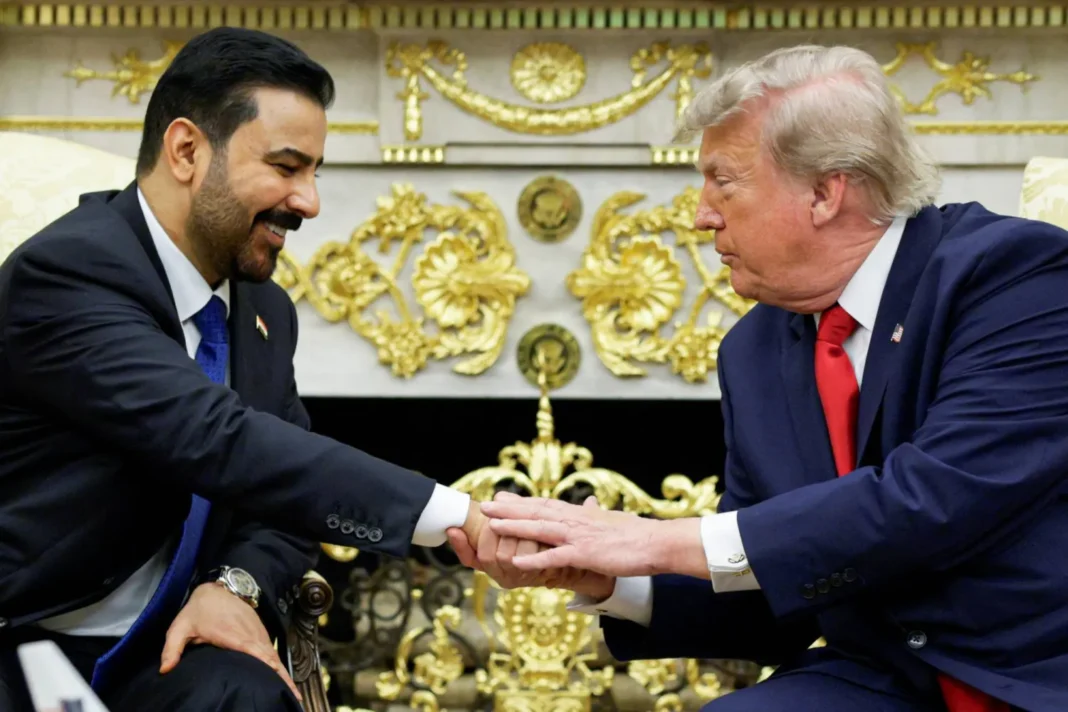
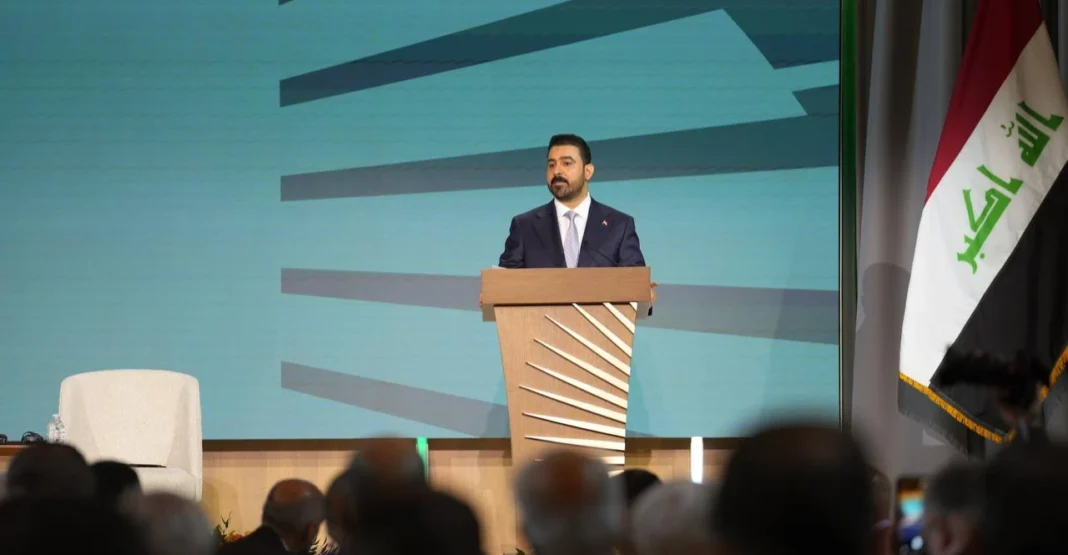
Iraq and the United States launched a major package of commercial and economic partnerships. Prime Minister Ali Falih al-Zaidi oversaw the signing of 48 separate agreements. The package includes contracts, memorandums, and cooperation frameworks across several vital industries. Together, the Iraq-U.S. economic pacts signal a new phase in bilateral relations.
The agreements cover energy, infrastructure, communications, agriculture, healthcare, and education. Iraqi ministries joined public companies and private businesses during the signing process. Meanwhile, leading American corporations are committed to several major development projects. The broader plan aims to attract capital and diversify Iraq’s economy.
Iraq’s Oil and Electricity ministries formed partnerships with several international energy companies. ExxonMobil, KBR, GE Vernova, Shell, and Halliburton joined the new cooperation frameworks. These partnerships target energy production, electricity development, and modern infrastructure. Furthermore, the companies could introduce advanced technology and management experience.
Several agreements focus on crude oil pipelines connecting Iraq with Baniyas. The planned corridor would give Iraqi oil direct access to the Mediterranean Sea. Project planners set an initial capacity of two million barrels per day. Chevron, TI, and Qatar’s UCC will participate in the proposed pipeline consortium.
Iraqi leaders view the corridor as an alternative route for national oil exports. This route could reduce Iraq’s reliance on shipments through the Strait of Hormuz. Additionally, Mediterranean access could connect Iraq with more international energy markets. However, the project will require strong coordination, financing, and regional cooperation.
The communications package also includes a major agreement involving Starlink. Iraq’s Communications and Media Commission reached an understanding with the satellite internet provider. Starlink plans to introduce high-speed satellite internet services across the country. Consequently, the service could improve connectivity in remote and underserved communities.
Meanwhile, Keysight Technologies established cooperation frameworks with Iraqi private-sector companies. These frameworks aim to support advanced communications technology and digital development. Better internet services could also help businesses reach international markets. Moreover, stronger connectivity could support education, healthcare, and government services.
The package also includes several industrial and commercial partnerships. PepsiCo joined agreements covering production, supply chains, and business expansion. UOP, Polaris, and the Association of Energy Engineers also entered cooperation frameworks. In addition, PPTA joined projects involving electronic networks and related technologies.
Frito-Lay completed two agreements covering agricultural development and food production. One agreement targets improvements across Iraq’s domestic agricultural infrastructure. The second agreement supports stronger supply chains and modern farming methods. Therefore, farmers could gain better access to technology, markets, and industrial buyers.
Other agreements address Iraq’s healthcare and pharmaceutical sectors. Iraqi institutions and American partners plan to develop local medicine production. They also aim to improve pharmaceutical supply systems across the country. Furthermore, new joint ventures could reduce Iraq’s reliance on imported medical products.
Education also forms an important part of the wider economic package. Iraqi and American institutions plan to expand academic exchanges and professional cooperation. Such partnerships could improve technical training across several important industries. Additionally, stronger education links could prepare Iraqi workers for new employment opportunities.
The agreements highlight a changing relationship between Baghdad and Washington. Security cooperation previously dominated many discussions between both countries. Now, officials want commerce, investment and technology to play larger roles. Therefore, the new framework places private-sector growth at the center of bilateral ties.
The Iraqi government views the agreements as support for its financial reforms. Officials have promoted changes across banking, customs and public administration. Clearer regulations could encourage more international companies to enter Iraq. At the same time, stronger oversight could protect investors and domestic businesses.
Successful implementation could create jobs across technology, energy and manufacturing. Infrastructure projects could also increase demand for engineers, technicians and construction workers. Meanwhile, agricultural investment could support farmers and local food producers. Healthcare partnerships could create new opportunities for laboratories and pharmaceutical companies.
Overall, Iraq-U.S. economic pacts create an ambitious roadmap for long-term commercial cooperation. They connect major global companies with Iraq’s infrastructure and development needs. Moreover, they could help the country build revenue sources beyond traditional oil exports. The government hopes these partnerships will strengthen growth and attract further foreign investment.