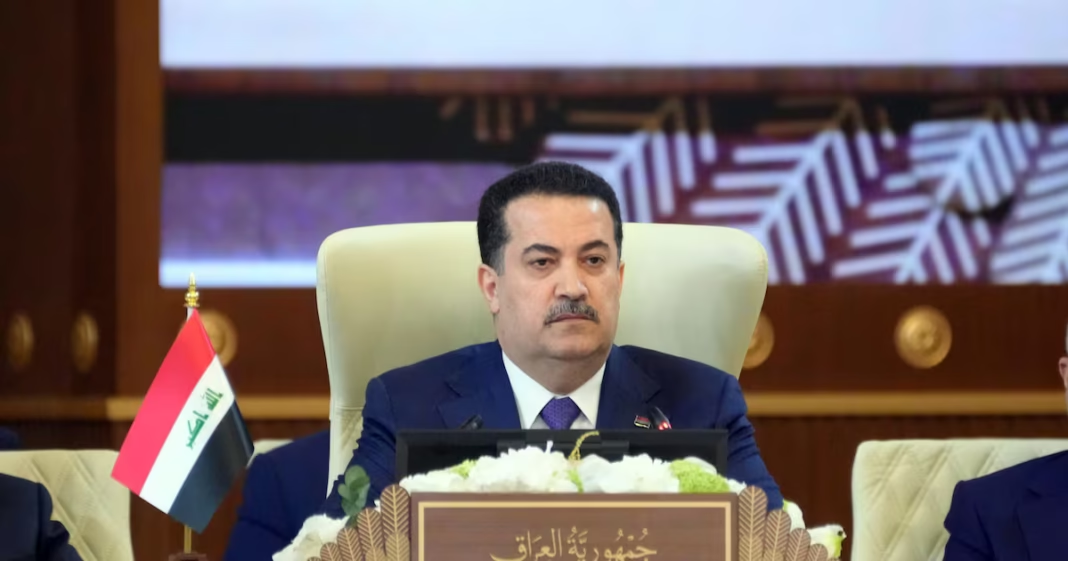
Election misconduct in Iraq has emerged as a major controversy just weeks before the country’s upcoming parliamentary elections. On October 19, Iraq’s Public Prosecution officially referred a legal complaint against Prime Minister Mohammed Shia al-Sudani to a specialized anti-corruption court.
According to verified legal documents, six members of parliament submitted the complaint. They accuse al-Sudani of abusing his official position for electoral advantage ahead of the critical November 11 elections. The allegations sparked widespread political debate and heightened public concern over transparency.
The lawmakers claim that al-Sudani formed a political coalition, known as the Reconstruction and Development Coalition. They further allege that he distributed government land and official commendations to civil servants. These actions, they argue, violate the “Election Integrity Document.”
That agreement, signed on August 18, was endorsed by Iraq’s presidency, parliament, cabinet, and judiciary. It strictly prohibits public officials from using state assets or authority for campaign-related purposes. The six MPs insist that al-Sudani’s conduct breaches this national agreement.
So far, al-Sudani’s office has not responded to the charges. This silence has only fueled public speculation and added to the political tension. Meanwhile, Iraq’s electoral bodies are intensifying efforts to monitor candidates’ activities.
The court responsible for corruption cases will now decide whether to launch a formal investigation. If it proceeds, the case would mark Iraq’s first investigation into a sitting prime minister for election misconduct in Iraq since the fall of Saddam Hussein in 2003.
Al-Sudani leads the Al-Furatain Movement and belongs to the Coordination Framework, a Shiite coalition. That alliance secured around 130 seats in Iraq’s 2021 elections. For the upcoming elections, al-Sudani is expected to run under the Development and Reconstruction Alliance.
With only a few weeks remaining before Iraqis head to the polls, the timing of this complaint could have major implications. Observers say this case could influence voter perceptions and reshape electoral dynamics.
Public demand for fairness in politics continues to grow. Iraqis want leaders to follow the rules and respect democratic norms. Whether or not the court opens a case, election misconduct in Iraq is now under intense scrutiny.