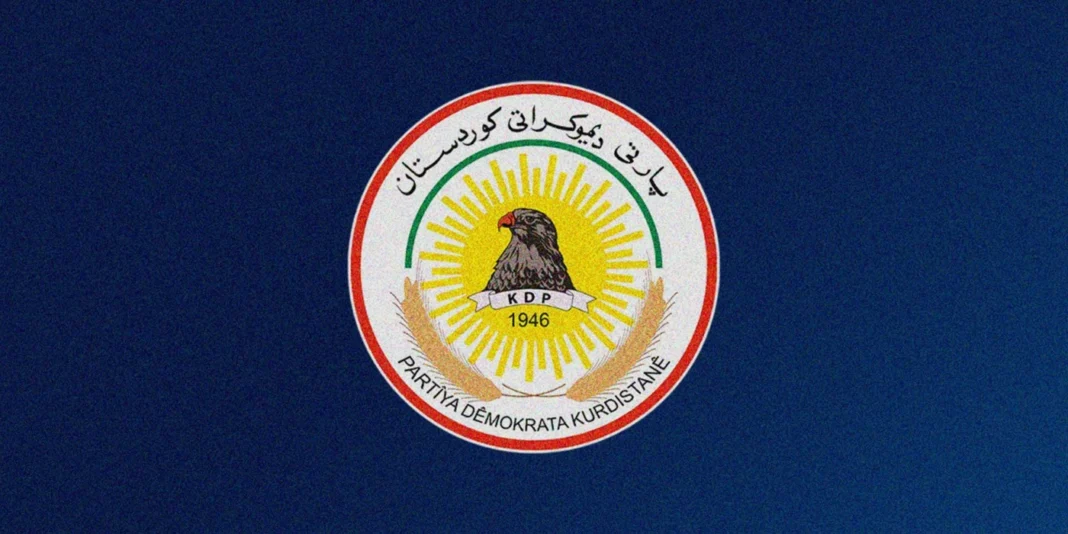
Iraq presidency dispute intensified on Saturday as the Kurdistan Democratic Party rejected the election process. The party questioned the legitimacy of the parliamentary session. Moreover, Iraq presidency dispute has now deepened divisions between major Kurdish factions.
The Kurdistan Democratic Party stated that it rejects the manner of electing Nizar Amedi. In addition, the party refused to recognize the outcome as representative of Kurdish consensus. Therefore, it declared it will not engage with the result.
Nizar Amedi secured 227 votes in the second round of voting. Consequently, he won the presidency through a simple majority system. However, opposition groups immediately challenged the procedure. As a result, political tensions increased inside parliament.
The Kurdistan Democratic Party argued that the session violated parliamentary rules. It also claimed that the agenda lacked proper approval from leadership. Moreover, lawmakers insisted that the speaker bypassed required procedures. Therefore, they described the session as invalid.
Sherwan Dubardani stated that the session broke Article 37 of the parliamentary by-laws. He emphasized that approval from senior leadership remained necessary. Meanwhile, other officials supported this interpretation of procedural rules. Consequently, legal debate surrounding the session intensified.
Farhad Atroushi also rejected the parliamentary session. His position aligned with concerns raised by KDP lawmakers. In addition, he questioned the legitimacy of the voting process. Therefore, institutional disagreement widened further.
Earlier, Amedi and Kurdistan Islamic Union candidate Muthanna Ameen advanced to a runoff. However, no candidate achieved the required two-thirds majority in the first round. As a result, the vote shifted to a second round under simpler rules.
At the same time, the Kurdistan Democratic Party candidate Fuad Hussein failed to reach the runoff stage. This outcome further increased frustration within the party. Moreover, leaders described the process as politically unbalanced. Therefore, tensions between Kurdish parties escalated.
In addition, the KDP claimed the presidential selection lacked a unified Kurdish mechanism. The party argued that an internal Kurdish agreement should guide nominations. However, rival factions rejected this claim. Consequently, consensus broke down between key political actors.
Iraq held legislative elections earlier in November. Subsequently, parliament elected its speaker and deputies in December. Furthermore, the constitution requires a president to be in place within 30 days of forming leadership. Therefore, timelines continue to pressure political blocs.
Disagreements between the KDP and the Patriotic Union of Kurdistan delayed government formation. Both parties previously nominated separate candidates. Moreover, neither side agreed on a joint nominee. As a result, negotiations repeatedly stalled.
Nouri al-Maliki’s State of Law coalition also boycotted the session. Leaders cited a lack of political consensus as the reason. Therefore, major blocs reduced their participation in the vote.
Iraq’s power-sharing system divides key offices among ethnic and sectarian groups. Kurds hold the presidency, Sunni Arabs hold the speakership, and Shiite parties hold the premiership. Moreover, this arrangement shapes every major political negotiation.
Ultimately, Iraq presidency dispute continues to challenge parliamentary unity. Leaders remain divided over legality, procedure, and representation. Furthermore, ongoing disputes threaten to delay government formation. Therefore, political uncertainty continues to define Iraq’s leadership process.