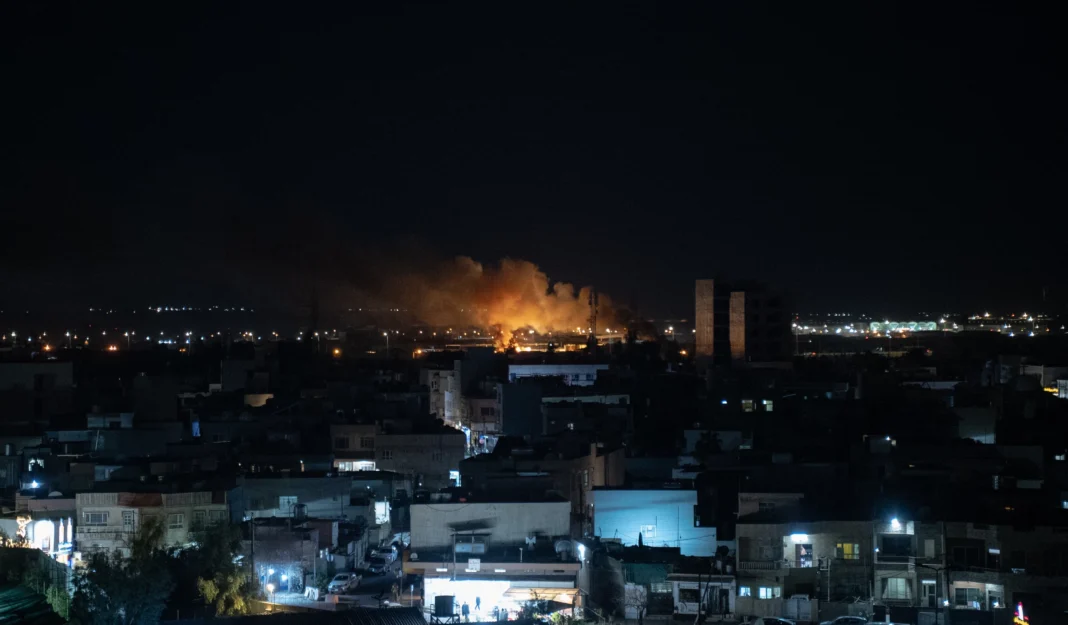
Erbil missile and drone attacks continue to escalate as the regional conflict expands. Moreover, officials report heavy strikes across the Kurdistan Region. These attacks connect to wider tensions involving Iran, the United States, and Israel. Consequently, security concerns continue to rise across northern Iraq.
Erbil missile and drone attacks have already exceeded 500 incidents. Authorities confirmed this figure during a recent press briefing. In addition, the strikes caused both human casualties and infrastructure damage. Economic facilities also suffered significant disruption.
Officials in Erbil stated that attacks damaged key civilian and economic sites. Furthermore, they warned that continued escalation threatens long-term stability. Many residents now face increased insecurity in daily life.
Erbil missile and drone attacks also affected oil and gas infrastructure. Moreover, several transport and logistics hubs reported operational interruptions. These disruptions weakened regional economic activity further.
Local leadership urged Baghdad to take a stronger national stance. Additionally, they demanded international attention to repeated violations. They described the attacks as unjustifiable and deeply harmful.
The Kurdistan Regional Government emphasized its neutral position in the conflict. Moreover, it communicated this position to both Baghdad and Tehran. Officials stated they seek stability rather than confrontation.
Authorities also confirmed efforts to secure compensation for victims. In addition, they continue documenting damages across affected areas. Families impacted by violence remain a central concern for local administration.
Erbil missile and drone attacks intensified after the regional military escalation began on February 28. At that time, coordinated strikes targeted Iranian facilities. Since then, retaliation has expanded across multiple fronts.
Iran responded with widespread missile and drone operations. Moreover, these actions extended across several Middle Eastern countries. U.S. assets in the Gulf region also faced repeated targeting.
In Iraq, multiple sites experienced direct strikes. Furthermore, Kurdish regions reported repeated drone incursions. These included military bases and critical infrastructure locations.
Targets included Erbil International Airport and Harir Air Base. In addition, Peshmerga camps and energy facilities suffered repeated threats. Some attacks also struck hotels and civilian areas.
Casualties increased as strikes continued across the region. Moreover, damage extended to opposition offices and transport systems. Local authorities continue assessing total losses.
Erbil missile and drone attacks now define a major security challenge. Therefore, officials call for urgent regional de-escalation. Meanwhile, civilians remain caught in an expanding conflict zone.