
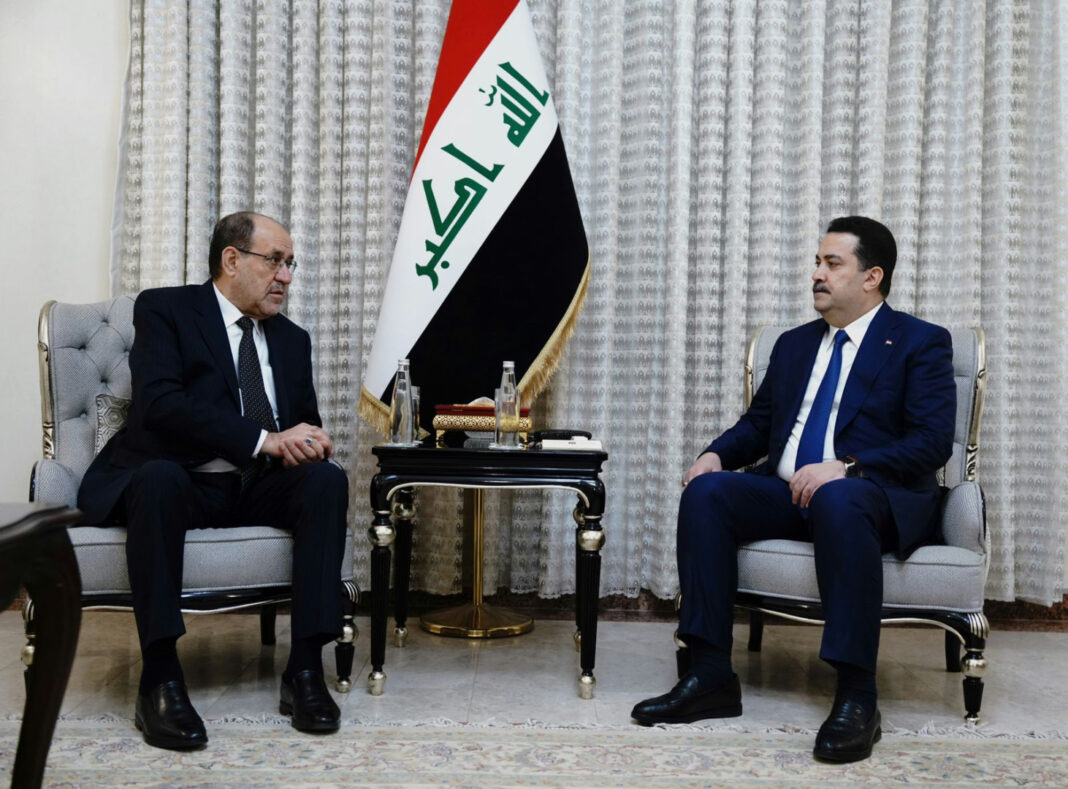
U.S. opposes Maliki and Sudani, a claim that could reshape Iraq’s political landscape. The statement comes from Dhia al-Nasiri, a member of the State of Law Coalition. He said Washington delivered a clear message to Iraq’s Coordination Framework leaders.
Al-Nasiri explained that U.S. Chargé d’Affaires Joshua Harris met with Framework officials. He reportedly warned against replacing Prime Minister Mohammed Shia al-Sudani with Nouri al-Maliki. Harris also opposed renewing al-Sudani’s current term. Consequently, the top two Shiite candidates may lack American approval.
The Coordination Framework nominated al-Maliki in January. That decision drew internal divisions and public opposition. Former U.S. President Donald Trump had warned that al-Maliki’s return could halt Washington’s support. Now, al-Nasiri suggests the U.S. position has expanded to exclude al-Sudani as well.
Al-Nasiri described intense political pressure within the Framework. Members faced internal disagreements and public scrutiny. “When I rose to take charge, one group broke its pledge, and another defected,” he said. Some even waited for signals from foreign envoys or social media posts. Threats and warnings poured in during the session, he added.
Al-Maliki missed a recent Coordination Framework meeting to attend the funeral of Abu Mujtaba, a major religious figure. Al-Nasiri emphasized that scheduling the meeting immediately after the funeral was inappropriate. Later, al-Maliki attended the session, despite heightened political tension and public demonstrations.
Meanwhile, Iraq’s government formation has remained deadlocked since November’s parliamentary elections. Parliament scheduled an April 11 session to elect a president, a step required before naming a prime minister. However, the Kurdistan Democratic Party (KDP) and Patriotic Union of Kurdistan (PUK) remain divided on the presidency. The stalemate persists amid growing security and economic pressures.
Analysts note that U.S. opposition significantly narrows the field of viable candidates. The Shiite alliance may struggle to present a leader acceptable both domestically and internationally. Meanwhile, public and political pressure continues to mount.
In conclusion, the U.S. opposes Maliki and Sudani, leaving Iraq’s Coordination Framework in a critical deadlock. With no approved candidate, the government faces rising challenges to manage security, the economy, and public expectations.