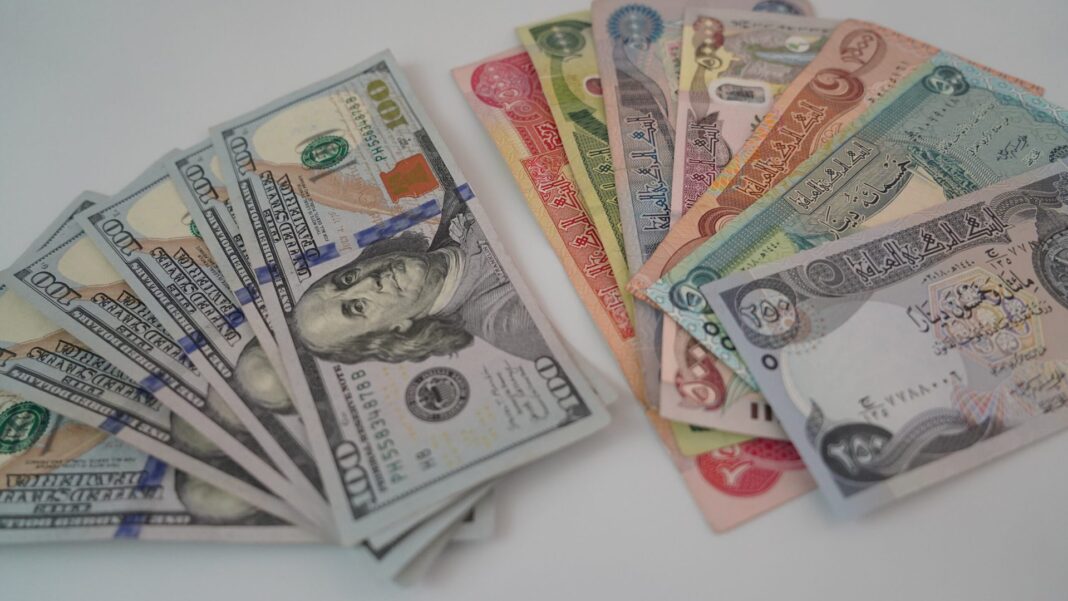
The U.S. dollar in Iraq opened Monday’s trading higher, reflecting continued demand across the country.
Market surveys by Shafaq News showed the dollar hovering around 155,000 dinars per 100 dollars. This represents an increase from the previous session, highlighting market volatility and investor confidence in foreign currency.
In Baghdad, exchange offices such as Al-Kifah and Al-Harithiya sold the dollar at 155,200 dinars. This price rose from last session’s 154,500 dinars, showing steady upward momentum.
Additionally, local exchange shops in the Iraqi capital sold the dollar at 155,750 dinars and bought it at 154,750 dinars. These figures illustrate a narrowing gap between buying and selling rates, reflecting active market participation.
Meanwhile, in Erbil, the dollar also strengthened. Selling prices stood at 155,100 dinars, while buying rates reached 155,050 dinars. Analysts attribute this rise to a combination of local demand and broader economic factors impacting currency exchange.
Traders noted that the U.S. dollar in Iraq is influenced by global market trends, imports, and government financial policies. Consequently, fluctuations often respond to both local conditions and international developments.
Economic observers warn that continued upward movement in the dollar could affect inflation rates and the cost of imported goods. Businesses and consumers must monitor currency changes closely, as the dollar’s strength directly impacts daily transactions.
Furthermore, small fluctuations in Baghdad and Erbil show regional differences in demand and liquidity. While Baghdad saw higher selling prices, Erbil’s buying rates indicate strong local interest in holding U.S. dollars.
Market experts advise that residents plan for currency exchanges, especially when rates are rising. Traders also recommend monitoring official announcements, as government interventions can temporarily stabilize the U.S. dollar in Iraq.
In summary, the U.S. dollar in Iraq continues its upward trajectory, trading above 155,000 dinars in Baghdad and Erbil. Market participants remain attentive, balancing local demand with broader economic conditions.
This trend signals that currency fluctuations are likely to continue in the short term, making careful financial planning essential for individuals and businesses alike.