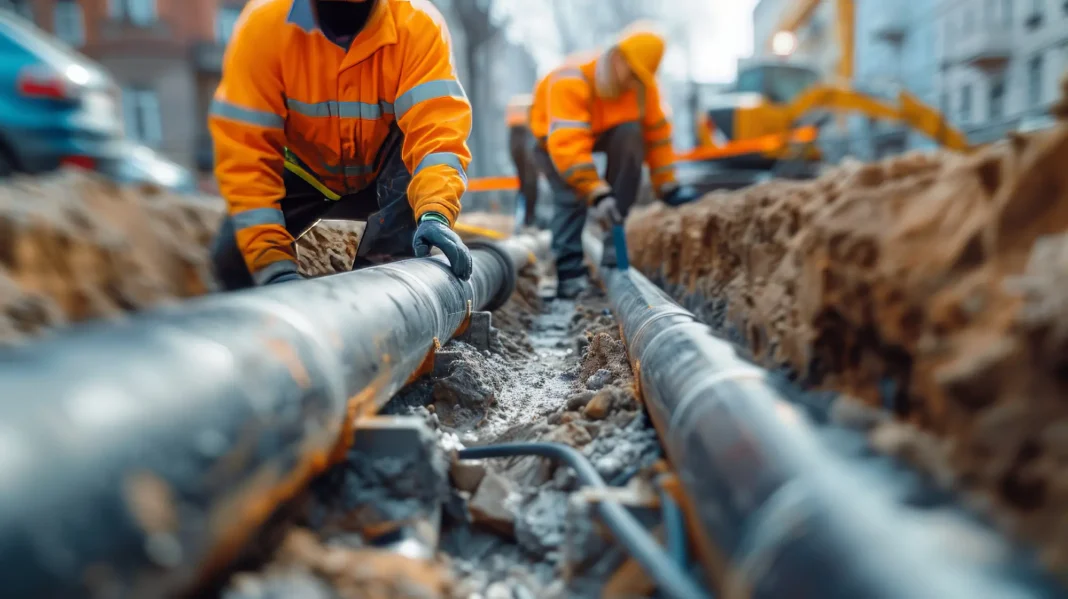
Northern export pipeline repairs are advancing rapidly as Iraq seeks alternatives to southern oil routes. Moreover, crews in Saladin province are working around the clock to rehabilitate the Iraq-Turkiye crude oil pipeline. They operate in three daily shifts, 24 hours a day, to maintain continuous progress.
A senior official at the state-run Oil Projects Company confirmed that hydrostatic testing is underway on both the main pipeline and its 32-node feeder line. Consequently, completion rates remain on schedule despite occasional obstacles. Teams address challenges immediately to keep work moving smoothly.
Hadeer Jaloub, assistant director general of geographic bodies, visited Saladin province to inspect the final project phases. Additionally, the head of the Northern Projects Authority and site directors attended a project management meeting to review progress. Their presence ensures coordinated execution and quick problem-solving.
The Iraq-Turkiye Crude Oil Pipeline stretches about 970 kilometers from Kirkuk to the Mediterranean port of Ceyhan. The line has largely been idle since 2014 due to repeated attacks by armed groups. However, Iraq resumed pumping 250,000 barrels per day as of 18 March after a Baghdad-Erbil agreement reopened the northern corridor.
The rehabilitation push comes as Iraq’s southern export infrastructure suffers disruptions. The US-Israel-Iran war and the closure of the Strait of Hormuz have slowed southern exports dramatically. Production in southern oilfields fell to around 800,000 barrels per day, down from 4.3 million barrels per day before the conflict. Storage tanks reached critical capacity, forcing tankers to wait offshore.
Oil Minister Hayan Abdul Ghani stated on 9 March that the government is “studying several alternatives to ensure continued crude exports through secure routes.” Consequently, domestic refineries in the southern, central, and northern regions now operate at full capacity to meet local demand.
As a result, northern export pipeline repairs have become crucial to Iraq’s oil strategy. Furthermore, the project strengthens the country’s resilience against regional disruptions. Analysts suggest that completing rehabilitation on schedule could prevent wider export shortages.
In conclusion, northern export pipeline repairs are vital for maintaining Iraq’s oil flow. Rising regional tensions and southern export limitations make this project a national priority. Therefore, Iraq continues working tirelessly to secure its energy exports and stabilize the market.