Baghdad/Erbil – Iraq has resumed oil exports from Kirkuk to Turkiye’s Ceyhan port following a recent Erbil-Baghdad agreement. The North Oil Company confirmed the restart on Wednesday.
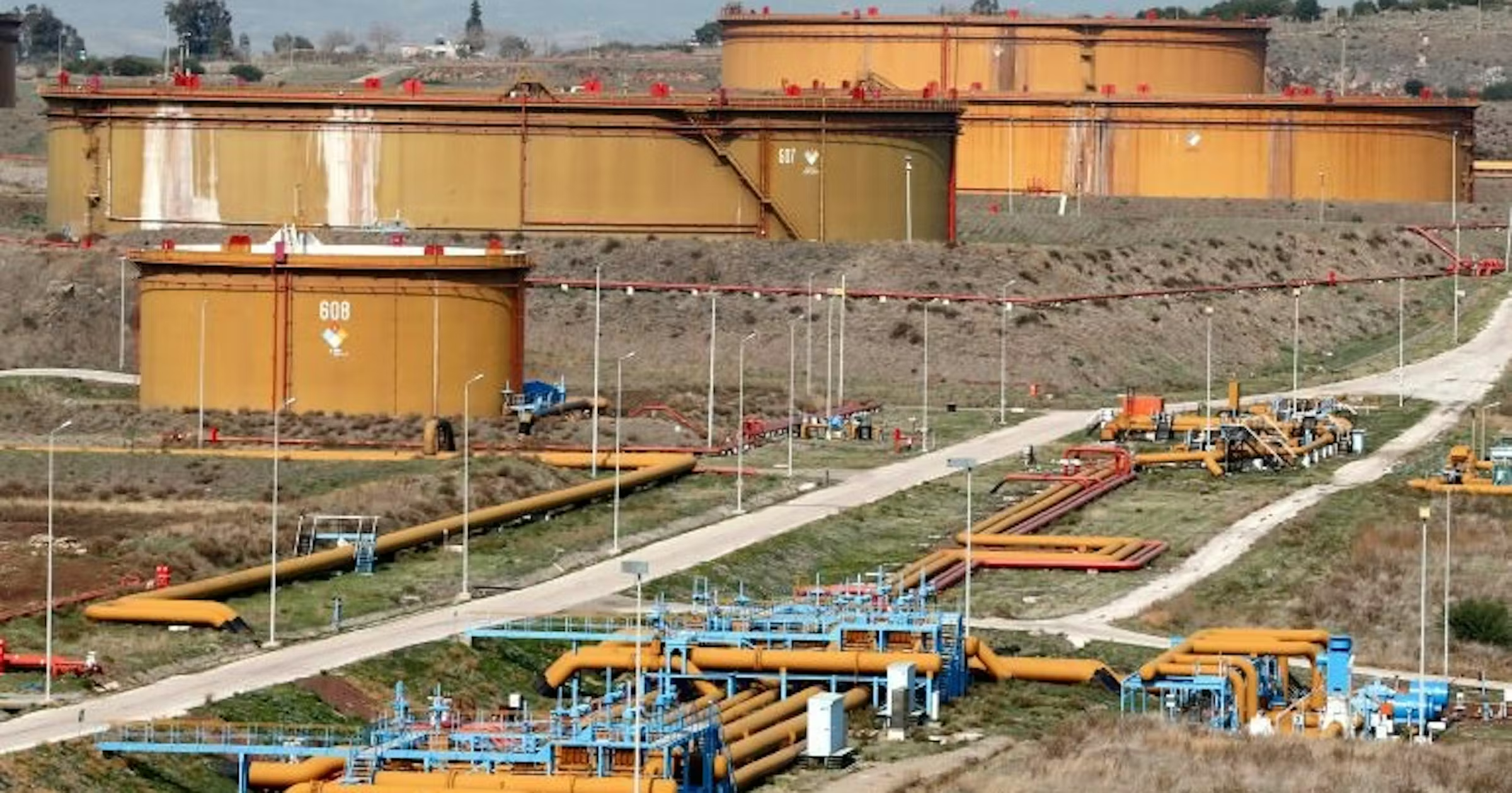
Officials activated the Saralu pumping station, setting initial output at 250,000 barrels per day. This marks the first major flow through the Kurdistan–Ceyhan pipeline since exports paused. The restart provides an immediate alternative to southern maritime routes, which faced recent disruptions.
The agreement between Baghdad and the Kurdistan Regional Government (KRG) allows Kirkuk and Kurdistan Region oil to reach international markets directly. Analysts noted that coordination between the two governments improved pipeline management and security measures.
Iraq’s overall oil exports have declined recently due to regional tensions. Shipping disruptions in the Strait of Hormuz have further reduced southern flows. In this context, the northern route offers both strategic and economic relief.
Economists highlighted that resuming shipments could stabilize Iraq’s oil revenue. With crude selling at roughly $100 per barrel, the initial 250,000 barrels per day could generate significant daily income. Traders emphasized that the move may also boost investor confidence in Iraq’s energy sector.
Energy experts added that the northern pipeline cannot fully replace southern exports. However, it diversifies Iraq’s export channels, helping mitigate risk from geopolitical instability. Officials plan to monitor pipeline performance closely and consider gradual capacity increases in the coming weeks.
In conclusion, Iraq resumes oil exports to Turkiye’s Ceyhan port after the Erbil-Baghdad agreement, offering a crucial alternative amid southern supply disruptions. Analysts repeated that pipeline diversification strengthens Iraq’s energy security and provides reliable revenue streams for the country.