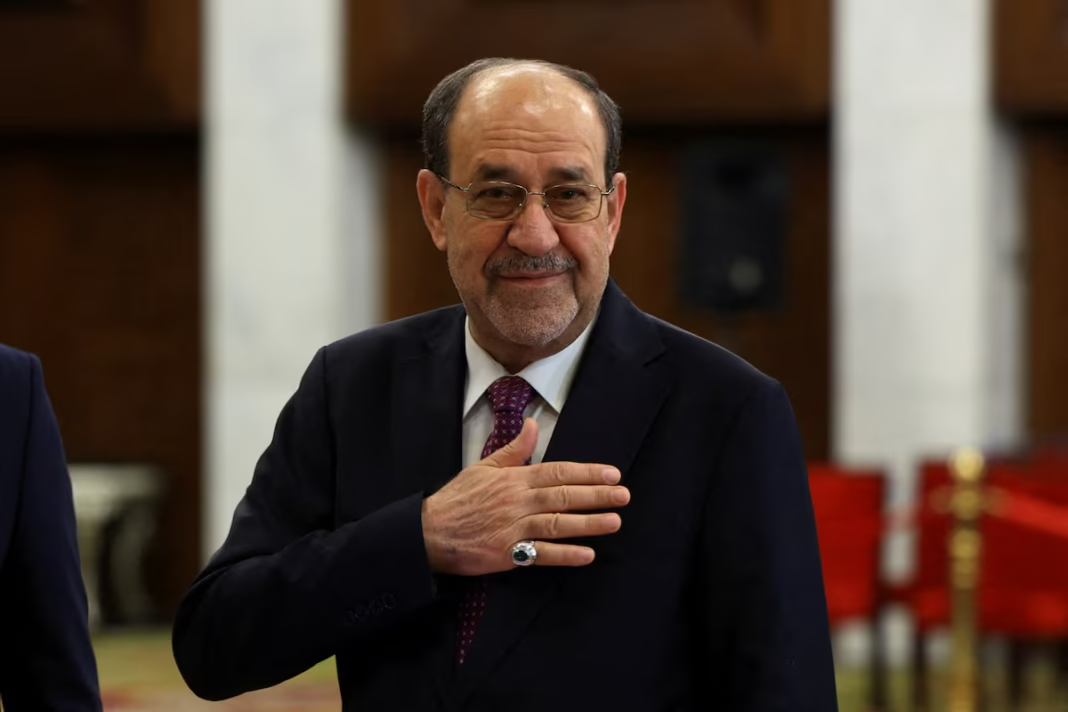
Iraq political stakes are intensifying as US pressure continues to shape the Coordination Framework’s premiership decisions. Qusay Mahbooba, a leading figure in the Reconstruction and Development Coalition, announced a significant shift in position Wednesday night. He cited what he called a firm American veto against Nouri al-Maliki’s return.
Mahbooba explained that the veto remains steadfast, signaling that the Coordination Framework does not want a confrontation with Washington. He said during an interview on Iraq 24: “Today we are hearing American messages that the veto against Maliki is still strong. I do not believe that Maliki, the Coordination Framework, or anyone wants to confront the United States.”
He added that Iraq’s limited security and economic independence restrict political options. “If America maintains its position, we are a state that cannot challenge it,” Mahbooba said. He concluded that Maliki must ultimately respect the veto if he cannot overcome it.
Meanwhile, the State of Law Coalition, led by Maliki, reaffirmed his nomination. Spokesperson Aqeel al-Fatlawidismissed sanctions speculation as unfounded. Despite US warnings, the coalition insists that Maliki remains the preferred candidate for prime minister.
The rivalry between Maliki and Prime Minister Mohammed Shia al-Sudani began after the November 2025 elections. Sudani’s Reconstruction and Development Coalition secured the largest share of seats within the Coordination Framework. However, internal rivalries prevented him from gaining full support. In January, Sudani formally withdrew and endorsed Maliki, aiming to preserve unity within the framework.
Maliki previously served as prime minister from 2006 to 2014. He stepped down under immense domestic and international pressure after Mosul fell to the Islamic State group. Following the elections, the Coordination Framework again nominated him, prompting warnings from Washington. Former US President Donald Trump publicly stated the United States would not continue support for Iraq if Maliki returned to office.
As political negotiations continue, Iraq political stakes remain high. Leaders must balance internal alliances, the US veto, and broader security and economic constraints. Observers say the coming weeks will determine whether Maliki can overcome opposition or whether the framework will seek alternative leadership. Iraq political stakes now dominate both domestic and international discussions.