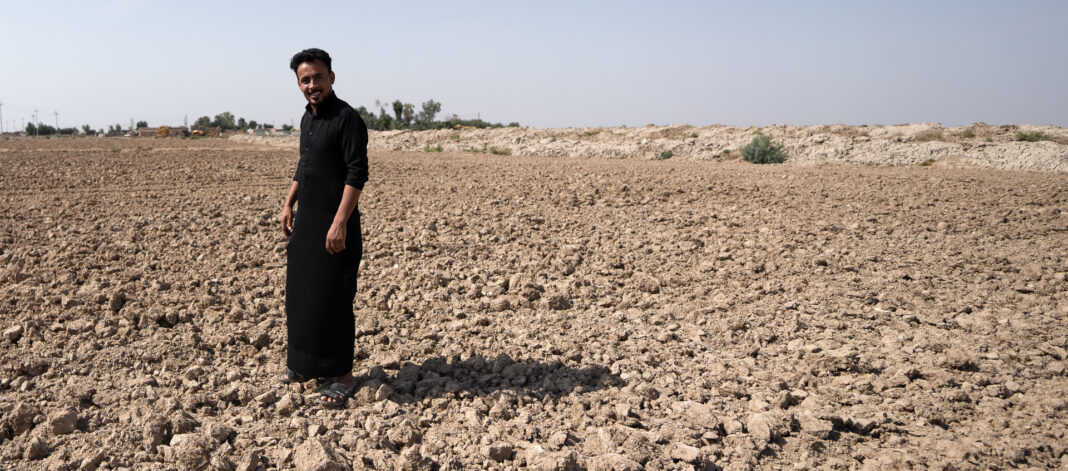
Water scarcity now tightens its grip across southern Iraq with alarming speed. What once appeared seasonal now feels permanent and destructive. In Maysan province, drought has moved beyond distant marshes and reached rivers and homes. Consequently, communities struggle daily to secure drinking water. Since early 2025, reduced water releases worsened conditions across rural districts. At the same time, treatment plants failed one after another. Extended dry spells also intensified pressure on limited supplies. As a result, families increasingly depend on tanker trucks for survival. However, trucks often arrive late or not at all. Therefore, many residents travel more than thirty kilometers searching for usable water. Previously, marshlands softened drought impacts, but now they lie completely dry. This exposure reveals the true scale of the crisis.
Environmental activist Mortadha Al-Janoubi continues to warn about worsening consequences. He describes the situation as both humanitarian and environmental. According to him, drought began sharply in April 2025. Soon afterward, residents organized repeated protests in Al-Kahla and Al-Mashrah. They demanded restored water allocations and functional infrastructure. However, authorities failed to deliver tangible results. Consequently, frustration spread quickly among affected communities. Al-Janoubi explained that water shortages now affect rivers directly. Reservoir levels continue falling across Iraq. Moreover, he rejected claims that upstream countries alone caused the disaster. Instead, he criticized weak negotiations and poor planning. He stressed that communities care little about politics. They simply want enough water to survive.
As drinking water disappeared, migration followed without delay. Families abandoned homes and farms to seek stability elsewhere. Purchased water also became scarce after treatment facilities shut down. Consequently, prices rose beyond what many households could afford. Livestock numbers collapsed across grazing lands. Fish stocks vanished from rivers and canals. Meanwhile, farming nearly stopped across wide areas. Dozens of villages now stand empty. Children, elders, and farmers moved toward cities in search of security. This migration reshapes rural life every month. Food security weakens as local production declines. Social ties fracture as communities scatter across provinces.
Meanwhile, the wider picture reveals overlapping national pressures. Climate change increases temperatures and evaporation rates. Rainfall continues declining year after year. Reduced inflows from upstream states add further strain. In response, authorities cut cultivated areas nationwide. They also promoted modern irrigation methods. However, these measures arrived too late for many villages. On the ground, damage already reshapes ecosystems. Soil quality deteriorates with each dry season. Longstanding ecological balances weaken steadily. Residents exhausted every possible appeal, including protests and media outreach. Yet water levels kept receding. Today, uncertainty defines life in Maysan. Without urgent action, displacement and environmental damage will only grow.