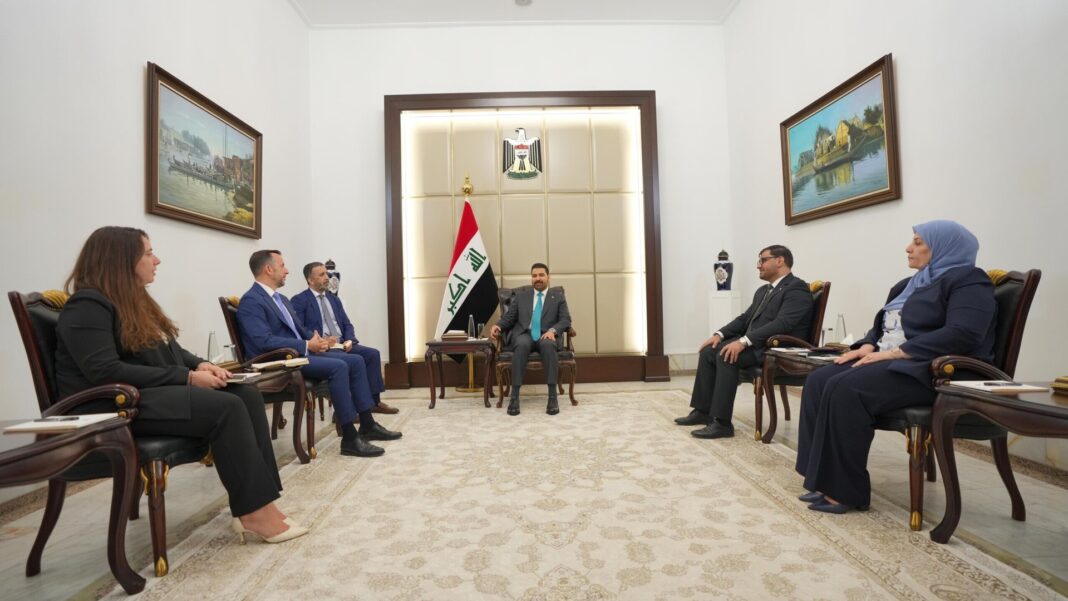
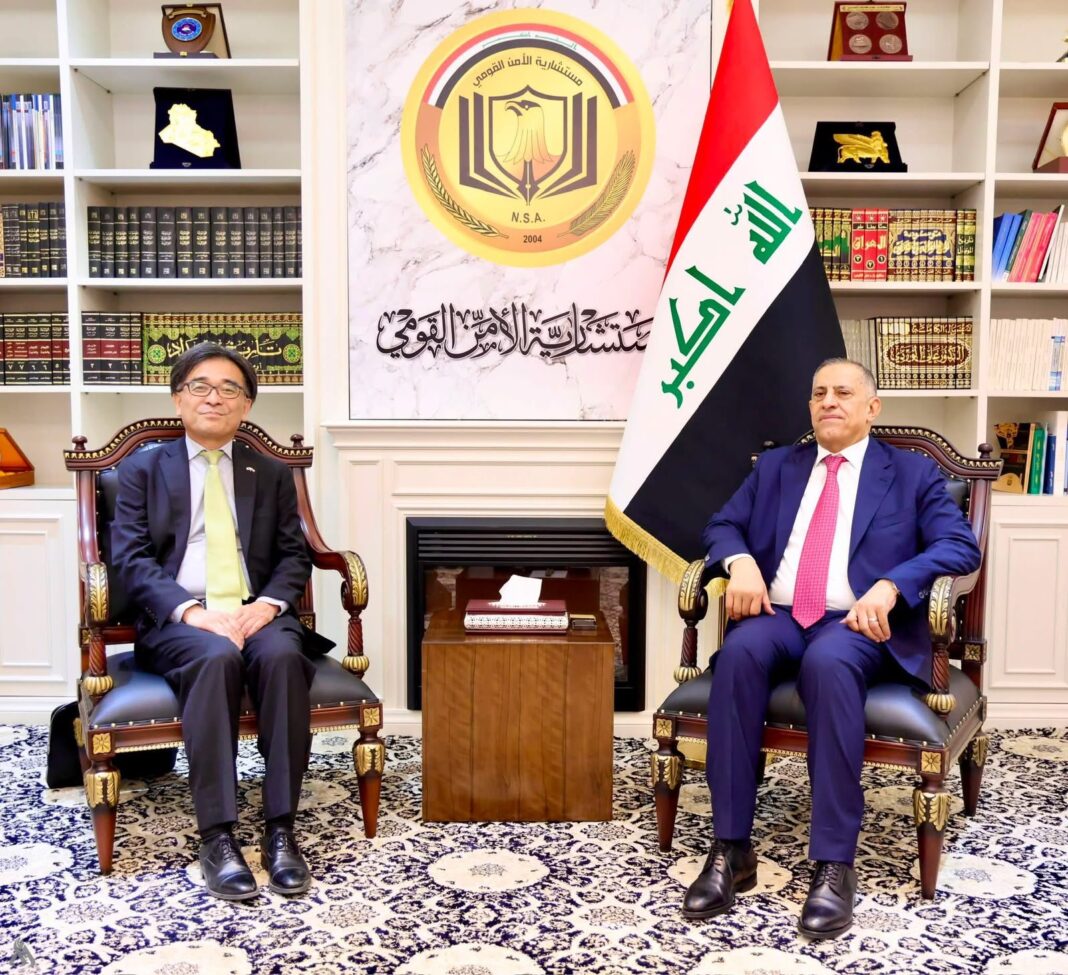
National Security Advisor Qasim Al-Aboudi encouraged leading Japanese companies to expand their operations across Iraq. He delivered the invitation during talks with Japanese Ambassador Akira Endo. Both officials discussed security, economic cooperation, industrial development, and stronger commercial relations. Meanwhile, Baghdad highlighted its efforts to create a safer investment environment.
Japanese investment could support Iraq’s plans for economic growth and wider private-sector participation. The government wants foreign companies to enter industrial, energy, water, and infrastructure projects. Additionally, officials hope international capital will reduce Iraq’s dependence on government spending. These opportunities could create jobs and strengthen the private sector.
Al-Aboudi said the federal government wants to provide secure conditions for foreign businesses. He stressed that strong security measures protect corporate offices, employees, equipment, and other assets. Furthermore, Iraq wants simpler licensing rules for international firms. Clear procedures could reduce delays and improve investor confidence.
Prime Minister Ali Falih al-Zaidi’s administration places foreign capital among its major economic priorities. Accordingly, security institutions plan to support stable commercial operations across the country. The government also wants international companies to receive reliable protection during long-term projects. These measures could encourage larger commitments from experienced global corporations.
Al-Aboudi linked investor safety with broader economic stability. He argued that secure markets attract capital, technology, and skilled management. Moreover, successful foreign projects can support local suppliers and smaller Iraqi businesses. This activity can spread economic benefits beyond major government contracts.
Iraq also wants to reduce unemployment through stronger private-sector growth. Many young Iraqis currently seek stable employment and professional development opportunities. Therefore, private companies could offer alternatives to traditional government jobs. New industrial projects could provide technical roles, management positions, and specialized training.
The advisor also highlighted the long relationship between Baghdad and Tokyo. Iraq and Japan have maintained cooperation across several economic and developmental areas. Furthermore, Japanese companies hold extensive experience in engineering, manufacturing, and advanced technology. Their experience could help Iraq improve essential services and industrial capacity.
Al-Aboudi invited respected Japanese corporations to explore opportunities throughout Iraq. He particularly highlighted energy, infrastructure, water management, and industrial development. Additionally, Japanese engineering firms could support electricity networks and modern transportation projects. Modern equipment could improve efficiency while reducing operational costs.
Ambassador Akira Endo welcomed Iraq’s interest in stronger bilateral cooperation. He expressed Japan’s readiness to support development across several important sectors. Moreover, Endo supported deeper commercial relations between Japanese businesses and Iraqi institutions. He also stressed Tokyo’s interest in building a comprehensive economic partnership.
Iraq wants partnerships that combine foreign capital with local workers and companies. Japanese firms could help Iraqi employees develop advanced technical and managerial skills. At the same time, Iraqi businesses could support construction, logistics, maintenance, and supply operations. This exchange could create lasting benefits for both countries.
The Iraqi government views private enterprise as an important source of economic growth. However, officials know that companies require security, legal clarity, and predictable regulations. Therefore, Baghdad wants to connect security policies with its economic development strategy. Long-term partnerships could also strengthen Iraq’s reputation among international investors.
The meeting also showed how economic development can support national stability. Stable conditions allow companies to operate, hire workers, and expand production. Likewise, successful investments can improve incomes and reduce economic pressure on families. Consequently, both sides linked commercial cooperation with wider social progress.
Japanese investment could bring advanced industrial solutions to major Iraqi projects. It could also improve technology transfer, professional training, and infrastructure quality. In return, Japanese companies could access opportunities within Iraq’s expanding market. This combination offers both countries a foundation for lasting economic cooperation.
However, Iraq must continue improving regulations and administrative procedures. Investors often examine political stability, banking access, contracts, and dispute resolution. Therefore, consistent policies can help Baghdad compete for international capital. Regular dialogue with foreign companies can also identify obstacles before projects begin.
For now, the meeting signals Iraq’s growing interest in Japanese commercial expertise. Baghdad wants major companies to support national development and private-sector expansion. Meanwhile, Japan wants broader economic and commercial relations with Iraq. Both governments now need practical agreements that turn diplomatic discussions into active projects.