Iraq’s disarm armed factions plan has moved forward as political leaders agree on a weapons handover mechanism. The plan would place faction weapons under state supervision through the Popular Mobilization Forces.
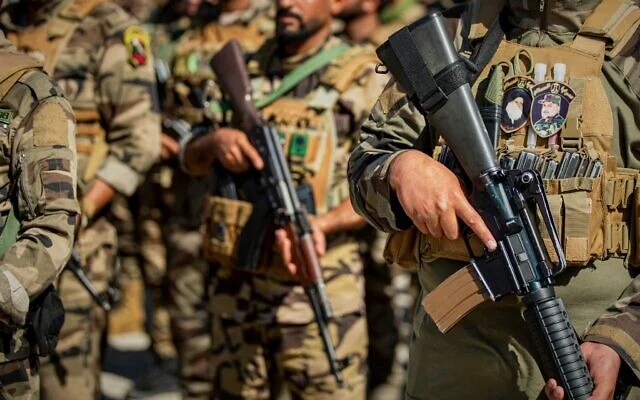
A senior source within the Shiite Coordination Framework said leaders reached the agreement on Sunday. Under the arrangement, the PMF would receive and register weapons from participating factions. Officials would also record each weapon’s type and storage location.
Furthermore, the PMF would monitor any future movement of weapons or personnel. Such movements would require orders from Iraq’s commander-in-chief of the armed forces. The arrangement aims to strengthen government control over the country’s weapons.
Meanwhile, political leaders have set September 30 as the deadline for resistant factions. The deadline follows discussions between Coordination Framework leaders and Prime Minister Ali Falih al-Zaidi. Some groups have yet to accept demands to surrender their independent arsenals.
The agreement builds on a broader decision reached by the State Administration Coalition. The coalition includes Iraq’s major political forces and governing parties. During its latest meeting, leaders reaffirmed the need to restrict weapons to state institutions.
The meeting also included senior officials from Baghdad and the Kurdistan Region. Kurdistan Region President Nechirvan Barzani attended the gathering in Baghdad. The discussions focused on implementing the government’s broader security arrangements.
However, several armed factions continue to oppose full weapons handovers. Some groups argue that their military capabilities remain necessary for national defense. They have also linked disarmament to wider regional security developments.
Kataib Hezbollah Secretary-General Abu Hussein al-Hamidawi has called for expanding the group’s capabilities. He cited recent regional developments and attacks involving the United States and Saudi Arabia. Other factions have expressed similar concerns about external threats.
Harakat al-Nujaba and Kataib Sayyid al-Shuhada have also resisted immediate disarmament. Both groups have connected weapons restrictions to the withdrawal of foreign forces. They have additionally demanded guarantees against potential attacks from abroad.
Nevertheless, other factions have shown greater willingness to reorganize their relationship with the state. The government hopes this approach can bring security decisions under official authority. It also seeks to establish clearer control over weapons across Iraq.
The Iraq disarm armed factions plan now faces its most important implementation stage. Authorities must convince resistant groups to accept the September deadline. They must also ensure that the weapons transfer process remains orderly and transparent.
At the same time, Iraqi security forces remain on heightened alert amid regional tensions. Authorities recently increased nationwide security measures and strengthened checkpoint procedures. Officials remain concerned that regional developments could affect Iraq’s internal security.
The September 30 deadline could therefore become a major test for the government. If factions comply, Baghdad could strengthen its control over armed groups. However, resistance could create further political and security challenges.
For now, the Iraq disarm armed factions plan represents a significant attempt to consolidate weapons under state authority. Its success will depend on political consensus and cooperation from armed groups.