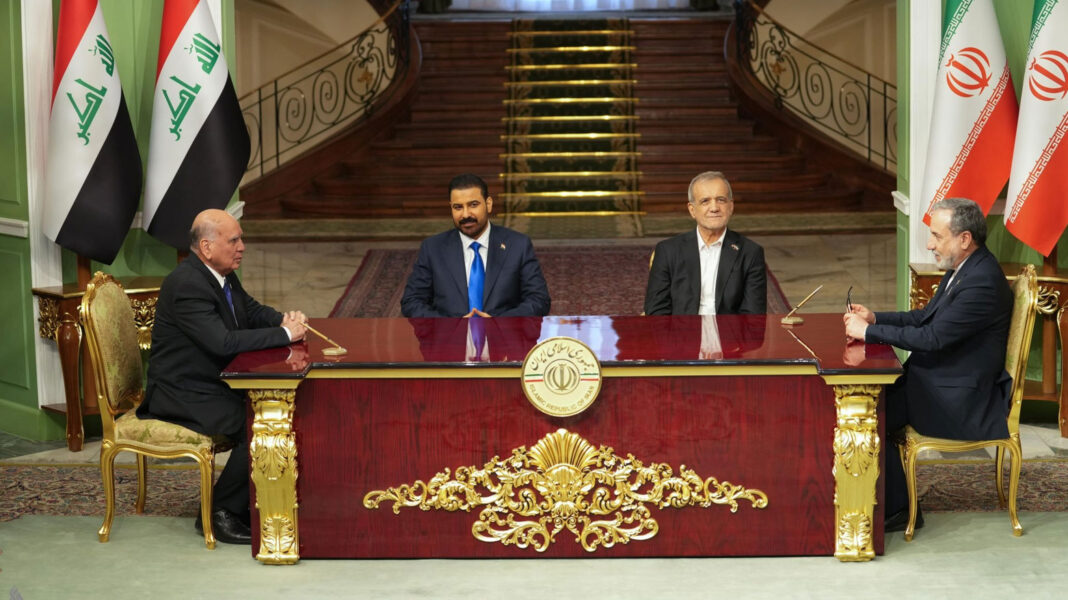
Iraq and Iran signed four major agreements during high-level meetings in Tehran. The deals focus on transportation, rail connectivity, municipal cooperation, and government training.
Iraqi Prime Minister Ali al-Zaidi and Iranian President Masoud Pezeshkian oversaw the talks. Senior officials from both governments also joined the meetings.
The Iraq-Iran agreements aim to improve regional networks and strengthen cooperation across the border. The package also supports wider economic and administrative partnerships.
Transportation officials signed the first agreement to regulate international road transit. The framework will guide the movement of commercial goods between the two countries.
Clearer transit rules could help companies transport products more efficiently. Moreover, coordinated procedures could reduce delays for trucks at border crossings.
The agreement may also encourage greater trade across regional markets. Iraqi companies could gain easier access to Iran and neighboring countries.
Meanwhile, the second agreement supports a new railway between Baghdad and Kermanshah. The planned route will cross Khosravi in Iran and Khanaqin in Iraq.
The rail connection could strengthen passenger and freight transportation. Furthermore, businesses could use the route to move goods more quickly.
Better railway links may also reduce transportation costs for traders. However, both governments must develop clear construction and financing plans.
The railway could increase economic activity in communities along the route. Logistics companies, warehouses, and local businesses could gain new opportunities.
Additionally, stronger rail connectivity could support Iraq’s regional trade ambitions. Baghdad wants to connect Gulf markets with Iran, Türkiye, and wider international routes.
The third agreement created a municipal partnership between Baghdad and Tehran. Both capitals will exchange knowledge and strengthen cooperation between local administrations.
Municipal officials could share experience in planning and public services. Moreover, the partnership may improve management skills within both city governments.
The fourth agreement focuses on administrative education and human resource development. Government employees could receive new training and professional development opportunities.
Training programs may strengthen leadership, planning, and organizational performance. Additionally, better skills could help public institutions deliver more efficient services.
Human resource cooperation could also support government modernization. Both countries want stronger administrative systems and better institutional performance.
The four agreements combine infrastructure development with public-sector training. Therefore, the partnership covers both physical networks and government capacity.
Road and railway projects could improve Iraq’s position within regional commerce. Businesses need reliable transport corridors to reach customers and suppliers.
Furthermore, efficient trade routes could attract new investment. International companies often consider logistics before launching production or distribution projects.
Successful Iraq-Iran agreements could increase trade and improve cross-border movement. They could also support businesses across transportation, construction, and logistics.
However, both governments must create detailed implementation schedules. Officials should also identify funding sources and responsible departments.
Regular meetings could help officials review progress and solve emerging problems. Transparent project management may also strengthen public and investor confidence.
The agreements reflect Baghdad’s wider economic strategy. Iraq wants to diversify its economy and strengthen industries beyond the oil sector.
Improved transportation could support agriculture, manufacturing, and consumer goods. Moreover, better connections could help Iraqi companies export more products.
Al-Zaidi’s Tehran meetings followed his major visit to the United States. Iraq signed 48 business agreements worth more than $60 billion with American companies.
Those commercial deals showed growing international interest in Iraq’s economy. They also demonstrated Baghdad’s effort to attract investment from several global partners.
The Iranian agreements focus more directly on regional connectivity and government cooperation. However, they also carry important economic and commercial benefits.
Baghdad wants balanced relations with neighboring countries and international powers. This approach could protect Iraq’s interests while expanding trade opportunities.
Moreover, stronger ties with Iran could complement Iraq’s partnerships with American companies. Baghdad can work with both sides while maintaining an independent foreign policy.
The agreements also support Iraq’s goal to become a regional gateway. Its geographic position gives the country significant potential across trade and transportation.
A Baghdad-Kermanshah railway could strengthen Iraq’s eastern trade connections. Meanwhile, road transit cooperation could support wider commercial routes.
Border communities could benefit from increased transportation and trade activity. New commercial flows may create jobs in storage, services, and distribution.
Furthermore, municipal cooperation could improve local government performance. Baghdad and Tehran can exchange practical knowledge about administration and urban development.
Human resource training may also help public employees develop new skills. Better professional training could support stronger government services and management.
However, infrastructure agreements require sustained political and financial support. Construction projects can face delays without clear responsibilities and dependable funding.
Both governments must also coordinate customs rules and transportation standards. Consistent regulations could help companies use the new routes effectively.
Ultimately, the four agreements strengthen economic and administrative ties between Iraq and Iran. They also advance Baghdad’s broader goal of deeper regional integration.
Successful implementation could improve transportation, trade, public administration, and workforce development. It could also reinforce Iraq’s position as a regional commercial gateway.