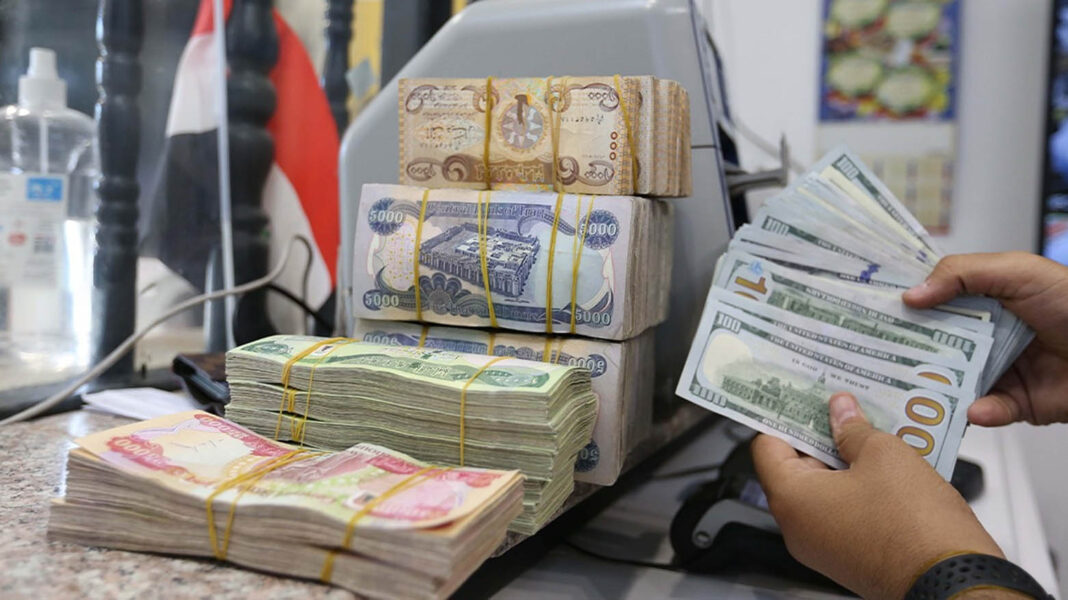

Central Bank of Iraq figures show a steep decline in physical cash liquidity during a four-month reporting period. The balance dropped from 1.9 trillion dinars to 566 billion dinars. That movement removed about 1.34 trillion dinars from the recorded total. Therefore, the cash balance contracted by 70.3%.
The starting balance equaled approximately $1.45 billion. Meanwhile, the final reading equaled about $432.7 million. Consequently, the dollar value fell by roughly $1.02 billion. The figures reveal a sustained decline throughout the reporting period.
The Iraq Cash Reserves data show a continuous monthly downward pattern. The first monthly reading reached 1.52 trillion dinars, or about $1.16 billion. That level marked a 380 billion dinar decline from the starting point. In percentage terms, the first decrease reached 20%.
The following reading fell to one trillion dinars, or approximately $764.5 million. Therefore, the balance lost another 520 billion dinars. That monthly movement represented the largest numerical decline during the period. It also reduced the previous balance by roughly 34%.
The next monthly figure reached 849 billion dinars, or about $649.1 million. This change removed another 151 billion dinars from the total. Although the decline slowed, the balance continued moving downward. Moreover, the figure remained far below the starting level.
The final monthly reading dropped to 566 billion dinars. That amount equaled approximately $432.7 million. Consequently, the balance lost another 283 billion dinars. This final movement reduced the preceding monthly total by roughly one-third.
The data also provide two earlier benchmarks for comparison. The latest balance remained above an earlier level of 323 billion dinars. That lower figure equaled nearly $247 million. However, the latest total remained far below another benchmark of two trillion dinars.
The two trillion dinar benchmark equaled about $1.52 billion. Compared with that level, the latest balance recorded a 72.9% decline. Therefore, the current figure reflects a major contraction from previous highs. Nevertheless, it still exceeds the earlier 323 billion dinar reading.
These figures concern cash liquidity inside the central bank’s vaults. They do not necessarily represent Iraq’s entire foreign currency reserve position. The central bank may also hold foreign deposits, securities, gold, and other financial assets. Therefore, readers should distinguish vault cash from total international reserves.
The data did not explain the main reasons behind the decline. Consequently, analysts need broader financial statements before reaching firm conclusions. Government payments, banking operations, and currency management can affect central bank cash balances. However, the available figures alone cannot identify the leading factor.
A major cash decline can still attract attention from businesses and financial markets. Banks rely on liquidity to manage withdrawals and complete daily transactions. Moreover, strong liquidity supports confidence across the wider financial system. The overall impact depends on other available assets and incoming funds.
Meanwhile, the central bank maintained the official exchange rate at 1,300 dinars per US dollar. The rate remained unchanged throughout the reporting period. Therefore, the falling cash balance did not produce an official currency adjustment. However, official rates can differ significantly from prices in local markets.
The stable official rate could help businesses plan government-related transactions. Importers and public institutions often need predictable currency costs. Nevertheless, market demand can still create different prices outside official channels. Consequently, authorities must monitor both official and commercial exchange activity.
Inflation also increased during the same reporting period. The inflation rate moved from 0.9% to 1.7%. Therefore, price growth nearly doubled while the vault balance declined. Rising inflation can weaken household purchasing power and increase business expenses.
However, the inflation rate remained relatively limited in absolute terms. Policymakers must still monitor its direction and underlying causes. Continued increases could affect food, housing, transportation, and other household costs. Moreover, higher prices could place greater pressure on lower-income families.
Iraq’s economy depends heavily on oil revenue and government spending. Changes in export income can influence public finances and banking liquidity. Additionally, government payments can move large amounts of money through the financial system. These factors can also affect central bank cash management.
Financial officials may need to explain whether the decline reflects routine operations or wider pressure. Clear communication could reduce market speculation and support public confidence. Furthermore, regular balance-sheet updates would help analysts evaluate Iraq’s monetary position. Transparency becomes especially important during sharp financial movements.
The monthly pattern shows that the decline did not result from one isolated movement. Instead, every reported reading recorded a lower balance than the previous figure. The second and final monthly declines produced especially large reductions. Together, those changes pushed the cash total toward 566 billion dinars.
Ultimately, Iraq’s cash reserves showed a dramatic decline across the reporting period. However, the figures require broader context about the central bank’s other assets. The stable official exchange rate offers another important indicator. Future financial reports could clarify the reasons and wider economic effects.