Iraq gold prices held steady in Baghdad, while Erbil recorded a slight increase. Market traders watched the movement across both cities. The latest prices showed calm trading in Baghdad’s main gold market. However, Erbil posted higher levels across several gold categories.
On Baghdad’s Al-Nahr Street, 21-carat Gulf, Turkish, and European gold sold for 887,000 dinars per mithqal. Traders bought the same gold type for 883,000 dinars. These figures showed no major change in Baghdad. Therefore, the capital’s gold market stayed stable during trading.
The mithqal equals five grams in local gold trading. Buyers often use this measure in jewelry markets across Iraq. Because of that, small price changes can affect household purchases. Many families track gold prices before weddings, gifts, and savings decisions.
Iraq’s gold prices also showed a gap between foreign and local gold. Traders sold 21-carat Iraqi gold for 857,000 dinars per mithqal. They bought it for 853,000 dinars. As a result, Iraqi gold stayed cheaper than Gulf and European varieties.
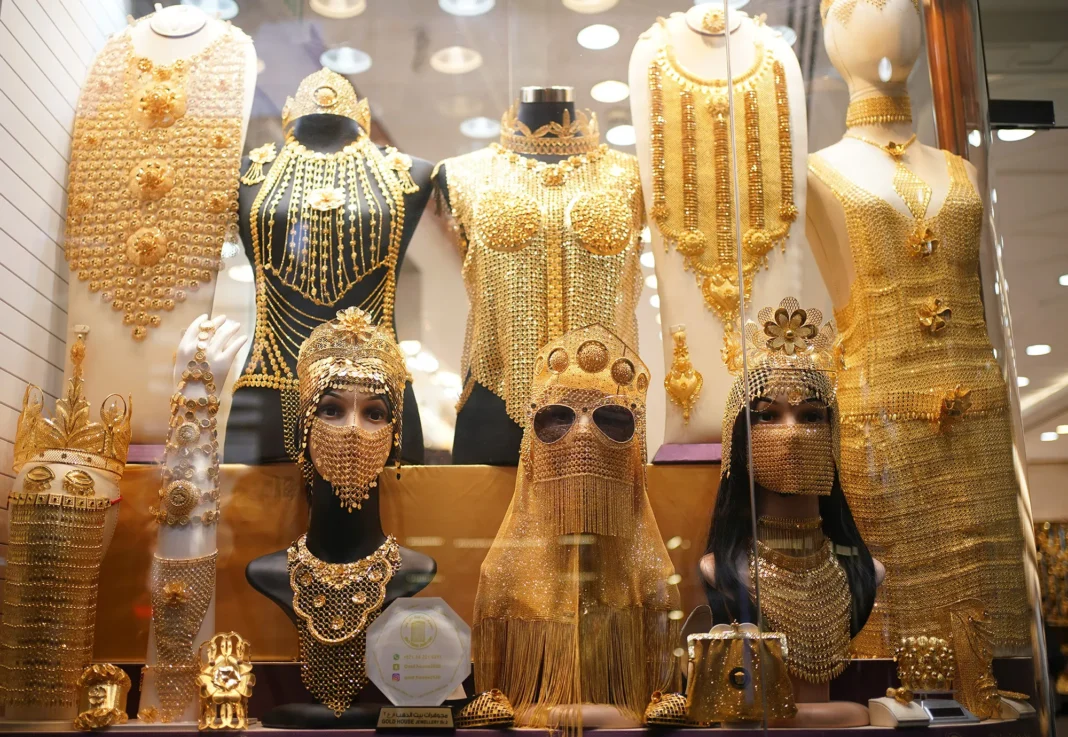
In jewelry shops, 21-carat Gulf gold ranged between 890,000 and 900,000 dinars per mithqal. Meanwhile, Iraqi gold sold between 860,000 and 870,000 dinars. These retail prices reflected shop costs and market demand. They also showed the difference between wholesale and customer prices.
Moreover, Erbil recorded slightly stronger gold prices. Jewelers sold 22-carat gold for 940,000 dinars per mithqal. They sold 21-carat gold for 897,000 dinars. They also sold 18-carat gold for 770,000 dinars.
The rise in Erbil showed different market conditions from Baghdad. Demand can vary between the two cities. Transport costs, trader supply, and customer activity can also affect prices. Therefore, Erbil sometimes records different levels from the capital.
Iraq’s gold prices matter because many citizens treat gold as a safe asset. Families often buy gold for savings and social occasions. Investors also watch gold during currency pressure and market uncertainty. Consequently, prices can shape both consumer and financial decisions.
Furthermore, gold prices often react to global trends. International bullion prices, currency movement, and local demand all influence the market. Iraq’s local exchange rate also plays a major role. When the dinar weakens, gold can become more expensive.
Baghdad’s Al-Nahr Street remains a key indicator for Iraq’s gold trade. Many traders follow its prices before setting retail rates. The street also serves as a central point for wholesale activity. Because of that, its price levels influence wider market sentiment.
Erbil’s market also carries importance in northern Iraq. The city sees steady demand from shoppers, traders, and families. It also connects with regional commerce and tourism. As a result, Erbil’s gold prices attract regular public attention.
However, stable prices in Baghdad gave buyers some relief. A calm market helps customers plan purchases more easily. It also gives traders a clearer pricing range. Meanwhile, Erbil’s small rise showed that local demand still matters.
In addition, the price gap between 18-carat, 21-carat, and 22-carat gold remained clear. Higher carat gold usually costs more because it contains more pure gold. Lower carat gold costs less but offers stronger durability. Buyers often choose based on budget and purpose.
The latest movement showed a mixed picture across Iraq’s gold market. Baghdad stayed mostly unchanged, while Erbil edged higher. Traders continued to watch demand and currency shifts. Customers also followed prices before making purchases.
In the end, Iraq’s gold prices remained a key financial signal for shoppers and traders. Baghdad showed stability in wholesale and retail markets. Erbil recorded modest gains across major carat levels. The market now waits for the next shift in demand.