The Iraqi counter-terrorism operation entered a critical stage on Sunday after an Iraqi military officer lost his life during fierce clashes with Islamic State (ISIS) militants in Kirkuk province. Moreover, security forces continued their campaign for a second consecutive day as they searched for remaining sleeper cells. The Iraqi counter-terrorism operationremains focused on preventing militants from rebuilding their networks across the province.
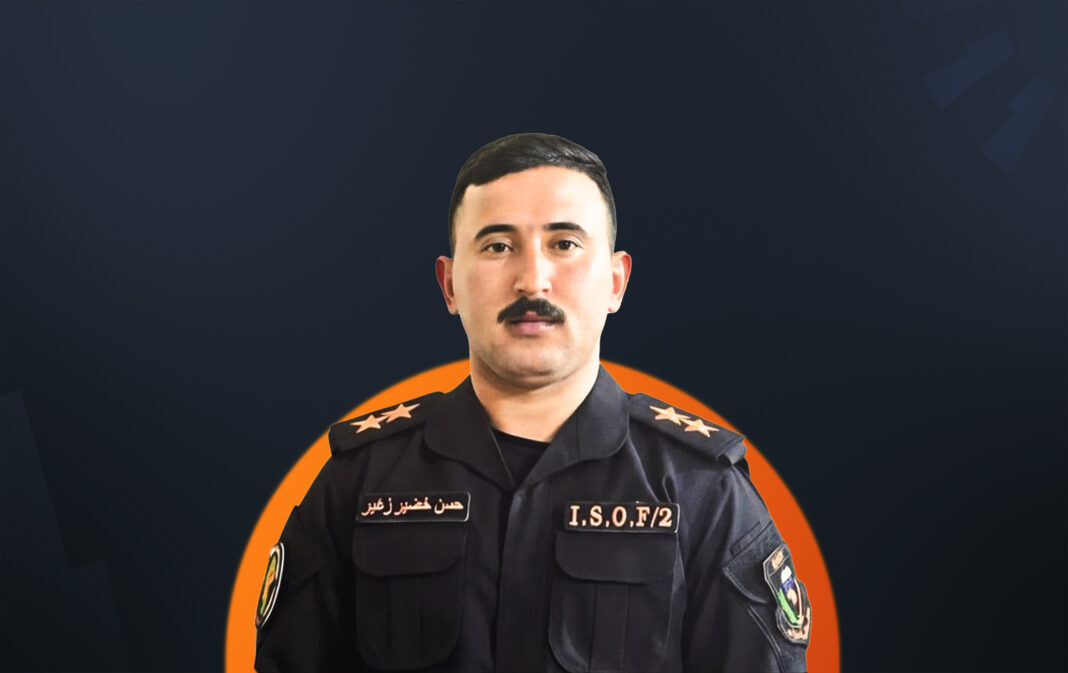
The Iraqi Counter-Terrorism Service (ICTS) confirmed the death of First Lieutenant Hassan Khudhair Zughair in an official statement. The agency expressed deep sorrow over the officer’s death and honored his service during the confrontation with ISIS fighters. Furthermore, officials described him as a courageous member of Iraq’s security forces who died while carrying out his mission.
Meanwhile, military operations continued across several parts of Kirkuk. Iraqi troops increased security measures while specialized units searched areas believed to contain ISIS hideouts. At the same time, security forces coordinated closely with intelligence teams to locate remaining militant cells.
Videos from the area showed Iraqi fighter jets and military helicopters flying over Kirkuk throughout Sunday. Their presence highlighted the scale of the ongoing security campaign. In addition, air support continued as ground forces advanced through targeted locations.
Security officials stated that one ISIS suspect died during the first day of the operation. However, authorities believe additional militants remain hidden throughout remote terrain. Therefore, troops continue searching valleys, abandoned structures, and isolated areas where extremist groups often seek shelter.
The ICTS stressed that its forces will continue pursuing ISIS remnants across Iraq. Officials also pledged to eliminate terrorist threats wherever they emerge. Furthermore, the service emphasized that protecting civilians remains a top priority throughout the operation.
On Saturday, Iraq’s Security Media Cell announced another important development. Iraqi F-16 fighter jets carried out precision airstrikes against ISIS positions in the Dibis district of northern Kirkuk. Additionally, the strikes received support from the US-led Global Coalition to Defeat ISIS.
According to Iraqi officials, the airstrikes targeted locations used by ISIS militants as shelters and operational bases. These sites reportedly served as gathering points and logistical centers. Consequently, the strikes aimed to weaken the group’s ability to organize future attacks.
Many of the targeted areas lie within territories disputed between Erbil and Baghdad. Security experts frequently identify these regions as vulnerable because rugged landscapes and security gaps create opportunities for militant activity. Therefore, Iraqi forces continue strengthening cooperation to improve security across these districts.
ISIS captured large areas of northern and western Iraq during its 2014 offensive. The group controlled several major cities before Iraqi forces, Kurdish Peshmerga, and international coalition partners defeated it in 2017. Nevertheless, ISIS continues to operate through small sleeper cells despite losing territorial control.
Today, the extremist group mainly relies on surprise attacks and hidden networks instead of conventional warfare. As a result, Iraqi security forces regularly launch operations to disrupt militant movements and prevent future violence.
Military leaders believe continuous pressure limits ISIS’s ability to reorganize. Consequently, intelligence sharing, aerial surveillance, and coordinated ground missions remain essential parts of Iraq’s long-term security strategy.
Although ISIS no longer controls territory, officials continue treating the group as a serious security threat. Authorities also warn that remote areas across Diyala, Kirkuk, Nineveh, and Salahaddin still require constant monitoring. The Iraqi counter-terrorism operation will therefore remain a key element of Iraq’s efforts to strengthen national security and prevent extremist groups from regaining influence.