By Kamiyar Deraney
At the end of February 2026, the world experienced a new oil shock. The outbreak of war between Israel and the United States against Iran on February 28 didn’t just change the political and military landscape of the Middle East. It threw global oil markets into one of their most turbulent periods in recent history.
In this article, we will look at how this war is affecting oil prices and what it means for the economies of Iraq and the Kurdistan Region. This is very important when it comes to the latest agreement between Erbil and Baghdad. First, let us understand the current relationship between the Kurdistan Regional Government and the Federal Government in Baghdad. They are working based on an agreement signed in September 2025. This agreement has been renewed several times since then.
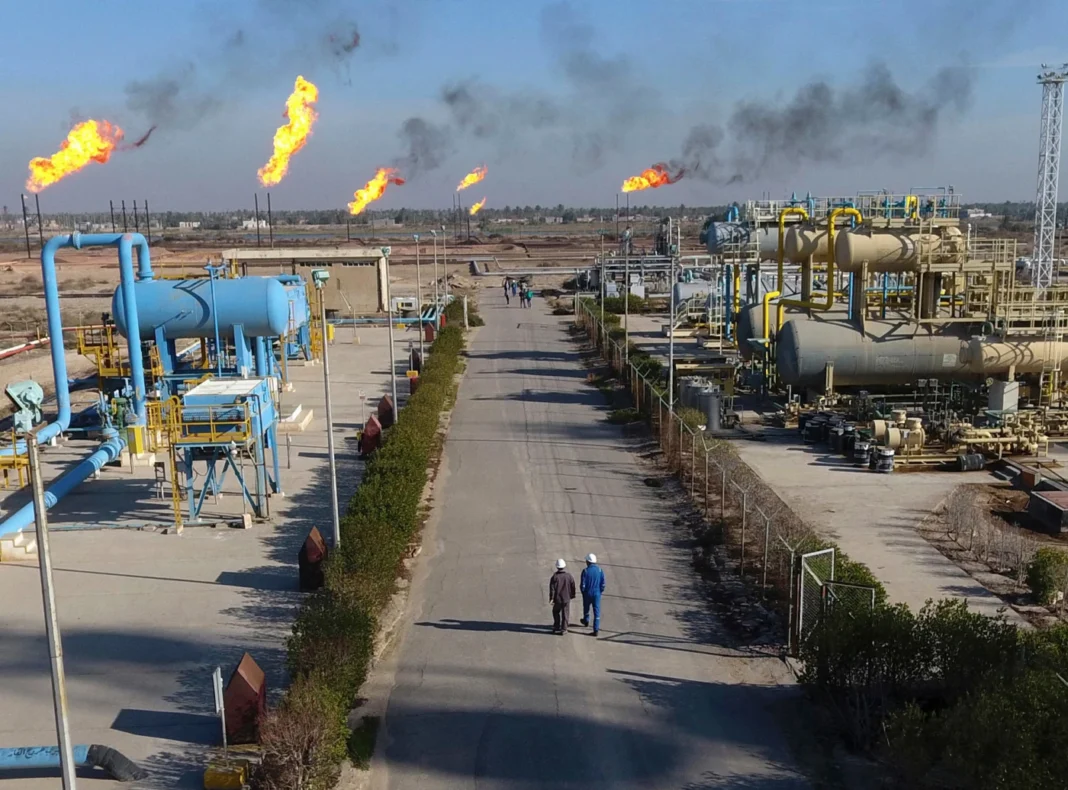
According to the latest official information, this agreement has been extended until March 2026. The amount of oil the Kurdistan Region delivers to SOMO (Iraq’s official oil marketing organization) ranges between 185,000 and 230,000 barrels per day. Dr. Luay Al-Khatteeb, an energy expert, told France Press that the deal is basically “oil in exchange for money.” This means the Kurdistan Region hands over its oil to SOMO. In return, it receives its share from Iraq’s general budget.
When the war started, oil prices jumped significantly. Brent crude (the international benchmark for oil prices) rose sharply during the first week of the conflict. It reached over $118 per barrel by March 8. West Texas Intermediate (the American oil benchmark) saw similar increases.
First, shipping through the Strait of Hormuz came to a halt. This narrow passage is incredibly important. About one-fifth of the world’s oil passes through it. When traffic stopped, neighboring countries like Kuwait and the UAE had to reduce their oil production.
Second, there is the fear that the war could drag on. President Trump’s comments that Iran must “surrender unconditionally” as the only way to end the war made markets even more nervous. This pushed prices higher.
Iraq now finds itself in an interesting position with two opposing forces at play. On the one hand, higher oil prices mean more revenue for the country. On the other hand, security concerns and threats to pipelines mean Iraq cannot export as much as it would like.
Despite this complicated situation, Iraq approved a massive budget on March 1, 2026. The budget is $152 billion with a deficit of $48 billion. This means the country plans to spend $48 billion more than it expects to earn. In this budget, the Kurdistan Region’s share was set at 12.6 percent. Economists have criticized this budget heavily. The International Monetary Fund (IMF) has said Iraq needs to tighten its fiscal policy and reduce spending.
The agreement is built on four main principles: First, all oil produced in the Kurdistan Region must be exported through SOMO. Second, the money from oil sales goes into Iraq’s general treasury. Then the Kurdistan Region’s share is separated. Third, Wood Mackenzie (an international consulting company specializing in energy) has been asked to study how much it actually costs to produce oil in the Region. They are supposed to finish their report by the end of March 2026. Lastly, until that report is ready, oil companies receive $16 per barrel as an advance payment. This means they get their money early.
But the agreement faces two major problems. The first problem is oil quality. Kurdistan’s oil varies in density and quality. This does not always match what was specified in the agreement, causing issues when selling it. The second problem is debt. Around $1 billion is owed to oil companies operating in the Region, especially Norway’s DNO company.
According to S&P, Iraq has strong foreign currency reserves of around $100 billion. This means it can weather economic shocks.
But this requires careful management of financial resources. However, deeper structural problems remain. Iraq depends on oil for 90 percent of its revenue, and government spending keeps growing. This is a real risk for the economy.
Ali Nizar, the head of SOMO, told Rudaw on February 18, 2026, that the agreement will “definitely” be extended. They are just waiting for approval from Iraq’s Council of Ministers. This shows both sides want to keep the deal alive. But several issues remain unresolved. What exactly should the Kurdistan Region’s budget share be? How much does oil production really cost? How will company debts be paid? How will differences in oil quality be handled? These questions still do not have answers. They could cause problems between Erbil and Baghdad in the future.
At the end of all these negotiations and agreements, we have to ask a simple question. What benefit does all of this bring to ordinary people in Kurdistan? The real answer is not about how many barrels are exported each day or how high oil prices have climbed. It is about whether public employees get their salaries on time. It is about whether daily services are improving. It is about whether people’s lives are getting better.
While reports talk about increasing oil production and rising prices, ordinary people in Kurdistan still face problems with salaries and basic services. This raises a big question. Where does the oil money actually go, and how is it being used?
The future of oil in Iraq and the Kurdistan Region depends on four main factors.
First, the political and military situation in the region. How will the Iran-Israel war continue, and what will its impact be? Second, the relationship between Erbil and Baghdad. Will their agreements continue and be properly implemented? Third, the relationship with Turkey. The oil pipeline agreement with Turkey expires in July 2026. Will it be renewed or not? Fourth, the global oil market. What will happen to prices and demand worldwide?
Based on these factors, we can expect the current agreement to continue at least until the end of March or April 2026. But after that, we might see changes that will determine the direction of the future.
The war between Israel, the U.S., and Iran has caused a significant rise in global oil prices. Iraq is facing a two-sided situation. Higher prices mean more revenue, but security risks mean fewer exports. The Erbil-Baghdad agreement continues on an “oil-for-money” basis. The Region delivers around 185,000 to 230,000 barrels per day to SOMO.
However, Kurdistan still faces challenges with oil company debt and quality differences. The future of oil in the Region depends on maintaining the agreement with Baghdad and renewing the pipeline deal with Turkey. But the real question remains whether oil revenues actually improve the daily lives of ordinary people in Kurdistan.