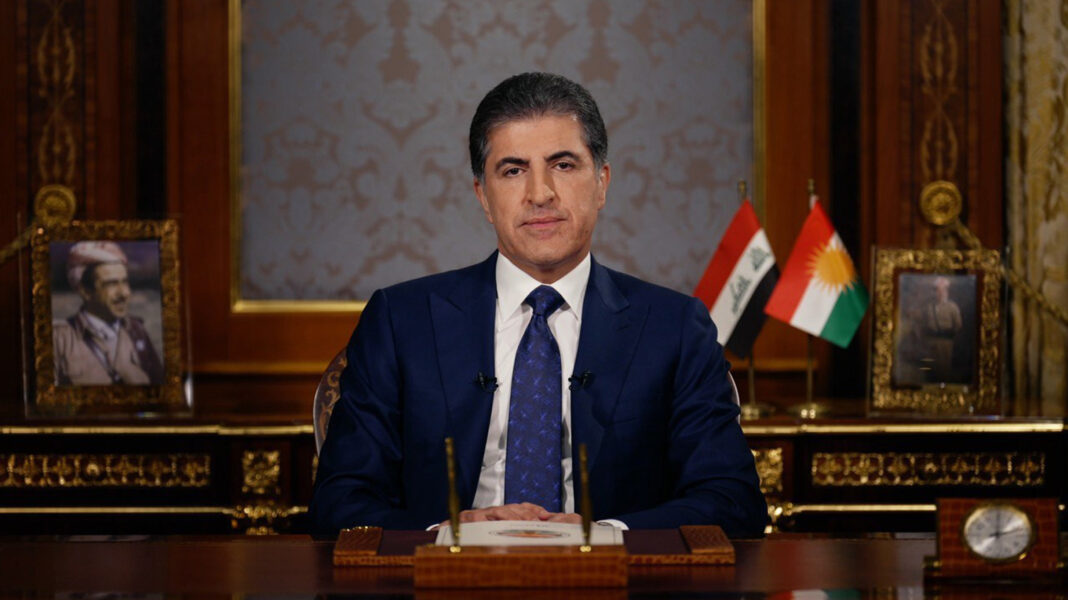
Kurdistan Region President Nechirvan Barzani spoke by phone Monday evening with Syrian President Ahmed al-Sharaa. They discussed regional tensions and the ongoing conflicts affecting both countries.
During the conversation, the leaders shared their perspectives on the regional situation. They focused on the war’s recent developments and its direct impact on local communities. Both officials emphasized the urgent need to strengthen diplomatic initiatives. They agreed that peaceful resolutions are essential to halt the ongoing violence.
Barzani highlighted the importance of maintaining stability across the Kurdistan Region. President al-Sharaa condemned recent attacks targeting civilians and security locations. The two leaders stressed cooperation to safeguard peace and protect citizens.
The dialogue also addressed the conditions of Kurds and other communities in Syria. They explored ways to enhance Syria-Iraq relations and discussed other mutual concerns. Both sides expressed commitment to ongoing dialogue as a tool for conflict prevention.
Recent weeks have seen multiple drone and missile strikes in the Kurdistan Region. Civilians and infrastructure have suffered damage in Erbil and surrounding areas. Local authorities reported casualties and destruction from repeated attacks. These incidents have heightened regional tensions and raised urgent security concerns.
Kurdistan officials called for stronger defenses against future strikes. Meanwhile, regional leaders continue diplomatic contacts to prevent escalation. The conversation between Barzani and al-Sharaa marks another step in stabilizing the region.
Analysts note that such high-level discussions may improve coordination between Baghdad, Erbil, and Damascus. Leaders aim to secure lasting peace through consistent dialogue and prompt action. Observers expect these talks to influence future security policies and regional collaboration.
Overall, both leaders reiterated the shared responsibility to protect civilians and promote stability. They agreed to monitor developments closely and continue regular communication. With tensions rising, active diplomatic engagement remains vital.