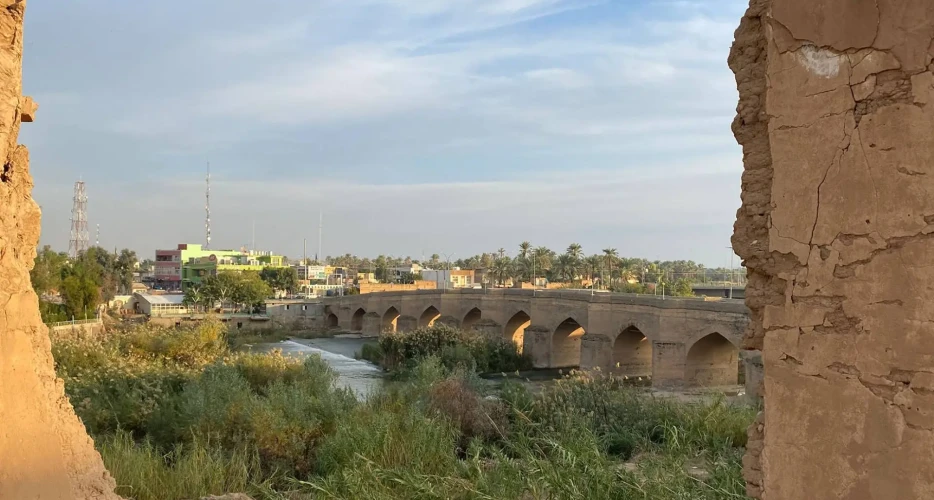
Khanaqin faces demographic change, according to a Kurdistan Regional Government official who warned that developments in the disputed city could violate Iraq’s constitution.
Fahmi Burhan, chairman of the General Board for Kurdistani Areas Outside KRG Administration, raised concerns about developments in Khanaqin, eastern Diyala province. He said Arab newcomers increasingly purchase land and orchards across the city. Meanwhile, he warned that authorities have separated several sub-districts administratively from Khanaqin.
According to Burhan, authorities have also elevated some of these areas to full district status. He argued that such changes could gradually affect the city’s demographic balance and administrative boundaries.
However, Burhan distinguished between indigenous Arab residents and newcomers. He stressed that the concern does not involve Arab families historically rooted in Khanaqin. Instead, he focused on people who authorities allegedly bring into the area outside the framework of Article 140.
Article 140 outlines a process for resolving the status of Iraq’s disputed territories. The process includes normalization, a census and a referendum. Khanaqin represents one of several disputed areas covered by the constitutional provision.
Furthermore, Burhan accused Kurdish representatives of failing to adequately defend the city’s position. He said Kurdish-speaking residents face restrictions when using Kurdish in government offices. He described the situation as a dangerous development.
At the same time, Burhan argued that Baghdad does not carry all responsibility for the situation. He said Kurdish parties that represent Khanaqin within federal institutions also share responsibility. Therefore, he called for stronger action from Kurdish political forces.
The comments came as Kurdish parties postponed a planned mass demonstration in Khanaqin. Organizers intended to protest what they describe as Arabization in the city. However, they cited security concerns behind the decision to delay the event.
Organizers also demanded the release of detained individuals. In addition, they called for authorities to cancel arrest warrants reportedly issued against activists, political figures and young people.
Reports indicated that authorities issued warrants for 20 individuals. Several people also faced detention in connection with the planned demonstration. A member of the protest organizing committee said two people had already been arrested.
Meanwhile, federal authorities have reportedly taken steps to address some Kurdish grievances in Khanaqin. Nevertheless, tensions surrounding the city’s demographic and administrative status remain.
Khanaqin faces demographic change as Kurdish officials increasingly raise concerns about land ownership, administrative restructuring and language rights. These issues remain closely connected to the unresolved status of Iraq’s disputed territories.
Ultimately, the developments highlight the continuing challenges surrounding Article 140. Khanaqin faces demographic change amid renewed political tensions, while Kurdish parties face pressure to defend the city’s constitutional and political status.