
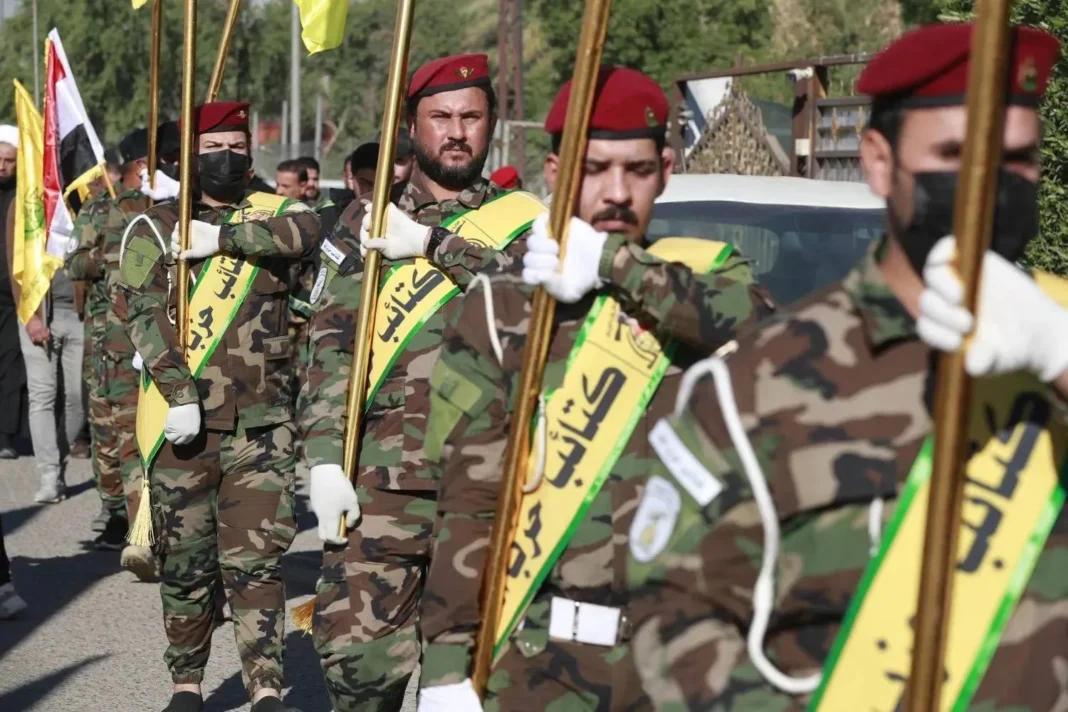
The Kataib Hezbollah weapons stance remained firm despite recent diplomatic developments between the United States and Iran. Moreover, the Iraqi armed faction warned that future confrontations could still emerge.
Kataib Hezbollah Secretary-General Ahmad al-Hamidawi, also known as Abu Hussein, issued the statement on Wednesday. He spoke at the beginning of Muharram and addressed the group’s position on regional tensions.
Al-Hamidawi declared victory after what he described as a completed round of conflict. However, he stressed that the broader struggle had not ended.
Furthermore, he said the group must remain prepared for any future emergency. He also emphasized the importance of retaining weapons and maintaining readiness.
According to al-Hamidawi, more dangerous phases could lie ahead. Therefore, he urged members to stay alert and ready for possible developments.
His remarks followed a recent memorandum of understanding between Washington and Tehran. The agreement ended months of hostilities and established a framework for future negotiations.
Nevertheless, al-Hamidawi rejected claims that the wider conflict had concluded. He questioned efforts to open what supporters of diplomacy called a new chapter.
In addition, he referred to the deaths of several prominent figures. Those figures included former Iranian Supreme Leader Ali Khamenei. He also mentioned former Hezbollah leader Hassan Nasrallah and others.
Al-Hamidawi criticized individuals whom he accused of siding with the group’s opponents. Likewise, he dismissed calls for reconciliation with those forces.
At the end of his statement, he thanked Hezbollah in Lebanon. He also praised Iran’s armed forces and fighters in Yemen. Furthermore, he expressed support for allied movements in Palestine, Iraq, Bahrain and Syria.
Kataib Hezbollah remains one of Iraq’s most influential Iran-backed factions. In addition, the group plays a major role within the Islamic Resistance in Iraq.
The Kataib Hezbollah weapons stance comes as Baghdad seeks to place all arms under state authority. Earlier this month, the Coordination Framework endorsed a plan to limit weapons to government control.
Since then, several factions have responded positively. Saraya al-Salam began procedures to integrate into state institutions. Asaib Ahl al-Haq also supported the initiative. Likewise, the Imam Ali Battalions started transferring weapons to state control.
However, Kataib Hezbollah rejected disarmament efforts. Harakat al-Nujaba and Kataib Sayyid al-Shuhada also opposed the initiative.
The groups argue that their arsenals remain necessary for Iraq’s security. In late May, a Kataib Hezbollah official said the faction could purchase specialized weapons from groups that surrender their stockpiles.
As debates continue, the Kataib Hezbollah weapons stance highlights growing divisions over the future of armed groups in Iraq. Consequently, the issue remains one of the country’s most sensitive political and security challenges.