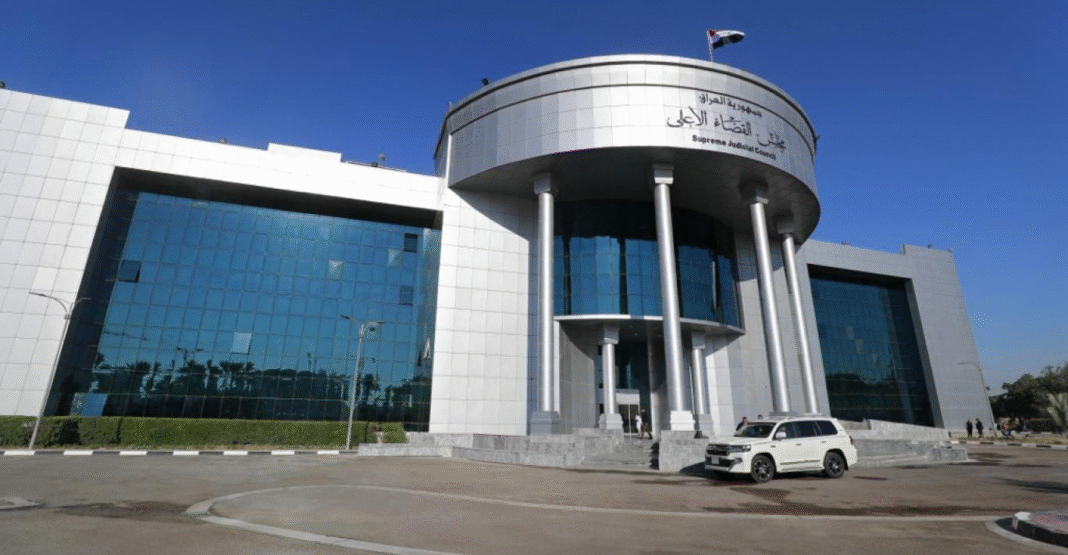
Baghdad – Iraq’s legal boundaries are once again in the spotlight. The Federal Supreme Court has dismissed four major lawsuits in a single day. These included challenges to Halabja’s provincial status and Iraq’s maritime border plans.
On Tuesday, the court rejected two lawsuits that opposed Halabja becoming Iraq’s nineteenth province. Lawmakers had filed these cases after Parliament’s vote on April 14, 2025. They claimed the session lacked a valid quorum.
However, the court disagreed. It cited Article 59 of Iraq’s Constitution. This article states a quorum exists with an absolute majority present. Therefore, the court ruled the session was legal and binding.
Additionally, the court addressed a separate lawsuit against Presidential Decree No. 19. This decree formally established Halabja as a province on April 29, 2025. MP Amir al-Mamouri filed this case. Still, the court rejected it, affirming the decree followed all legal steps.
Halabja holds historical and political significance in Iraq. It became symbolic after the 1988 chemical attack that killed thousands of civilians. The court’s rulings now firmly place Halabja within Iraq’s federal structure.
Meanwhile, the court also dismissed two lawsuits about Iraq’s maritime boundaries. MPs Saud al-Saadi and Amir al-Mamouri challenged Cabinet Decision No. 266 of 2025. That decision had approved Iraq’s updated maritime map.
The plaintiffs argued the new map endangers Iraqi sovereignty. They even requested a court order to delay its implementation. However, the court found no legal basis for a delay.
Furthermore, the court emphasized that Cabinet decisions fall within the government’s executive powers. Iraq’s coastline along the Persian Gulf remains limited. Yet its maritime boundaries carry weight in diplomacy, oil exploration, and regional stability.
As a result, the updated map defines Iraq’s exclusive economic zone and national waters. The court concluded that these actions do not violate the Constitution.
In conclusion, Iraq’s legal boundaries now appear more stable after these court decisions. Still, political tensions surrounding Halabja and maritime issues are unlikely to fade. The court’s move reinforces state authority and clarifies key constitutional questions.
These rulings will likely shape future debates over Iraq’s legal boundaries in both domestic and international arenas.