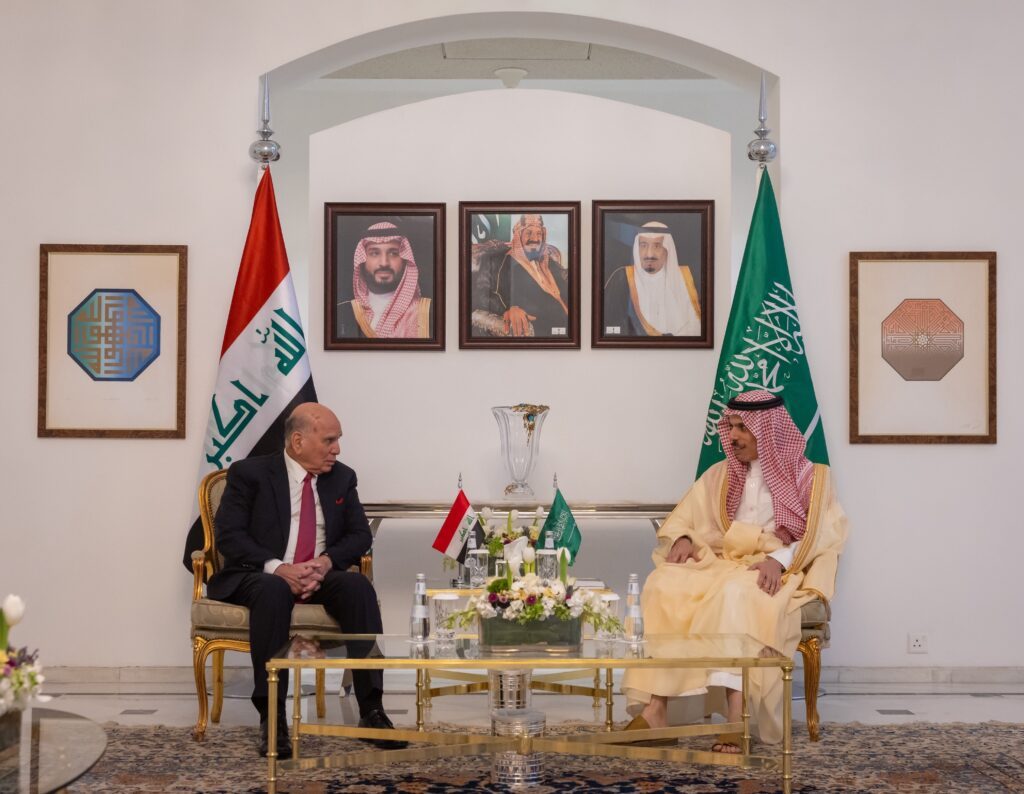
Iraqi Foreign Minister Fuad Hussein met Saudi counterpart Prince Faisal bin Farhan in Saudi Arabia. The talks focused on Iraq-Saudi relations, regional security, and broader bilateral cooperation. National Security Adviser Qasim al-Aboudi and intelligence chief Hamid al-Shatri joined the meeting. Both governments expressed interest in closer coordination across several strategic areas.
Prince Faisal welcomed Hussein and the accompanying Iraqi delegation. He highlighted the historical and social ties connecting both countries. Moreover, he confirmed Saudi Arabia’s commitment to expanding cooperation with Iraq. He said stronger ties could serve the interests of both nations and their citizens.
Hussein delivered greetings from Prime Minister Ali al-Zaidi and Iraq’s new government. He thanked Saudi officials for their welcome and hospitality. Furthermore, he praised the direct and constructive discussions between both delegations. He said both sides shared a desire to move bilateral ties forward.
Prince Faisal described Iraq’s security as a vital part of wider regional security. He urged both countries to protect their close relationship from destabilizing actions. Additionally, he supported stronger coordination with Baghdad on peace and stability. Saudi Arabia also pledged continued cooperation with Iraqi institutions.
Hussein reaffirmed Iraq’s commitment to balanced relations with every neighboring country. He placed Saudi Arabia among Baghdad’s important regional partners. However, he said the regional war had damaged relations and created serious consequences. He added that Iraq faced both direct and indirect effects from the conflict.
According to Hussein, some actions also sought to damage Iraq’s ties with neighboring Arab states. He stressed Baghdad’s determination to prevent further pressure on those relationships. Therefore, Iraq wants steady dialogue with Riyadh and other regional capitals. This approach aims to protect national interests while reducing regional tensions.
The ministers also reviewed economic, investment, energy, political, and security cooperation. Hussein called for wider commercial partnerships and stronger investment links. Moreover, he supported deeper energy cooperation between Iraqi and Saudi institutions. Both sides viewed economic ties as another path toward regional stability.
Iraq-Saudi relations could also benefit from regular political and security consultations. Such talks could help both governments address shared risks and prevent misunderstandings. Additionally, closer coordination could support stronger responses to regional crises. Both ministers linked bilateral progress with wider peace across the Middle East.
Prince Faisal expressed Saudi support for Iraq’s new government. He said Riyadh wanted to strengthen its partnership with Baghdad. The statement reflected Saudi interest in long-term institutional cooperation. It also signaled support for Iraq’s security, stability, and national institutions.
After the meeting, both governments released a joint statement outlining shared principles. They pledged continued consultation on regional and international issues. Furthermore, they stressed sovereignty, good-neighborly relations, and noninterference in domestic affairs. They also rejected actions that threaten another country’s security or stability.
Iraq promised to prevent any party from using its territory or airspace for regional attacks. The commitment covered Saudi Arabia, Gulf Cooperation Council members, and other regional countries. Both sides also rejected using national territory to undermine neighboring states. These pledges addressed growing concerns about cross-border threats and regional escalation.
Finally, both governments supported stronger Iraqi institutions and greater national stability. They argued that a secure Iraq would strengthen peace across the region. However, lasting progress will require continued dialogue and practical cooperation. The meeting, therefore, marked another step toward closer ties between Baghdad and Riyadh.