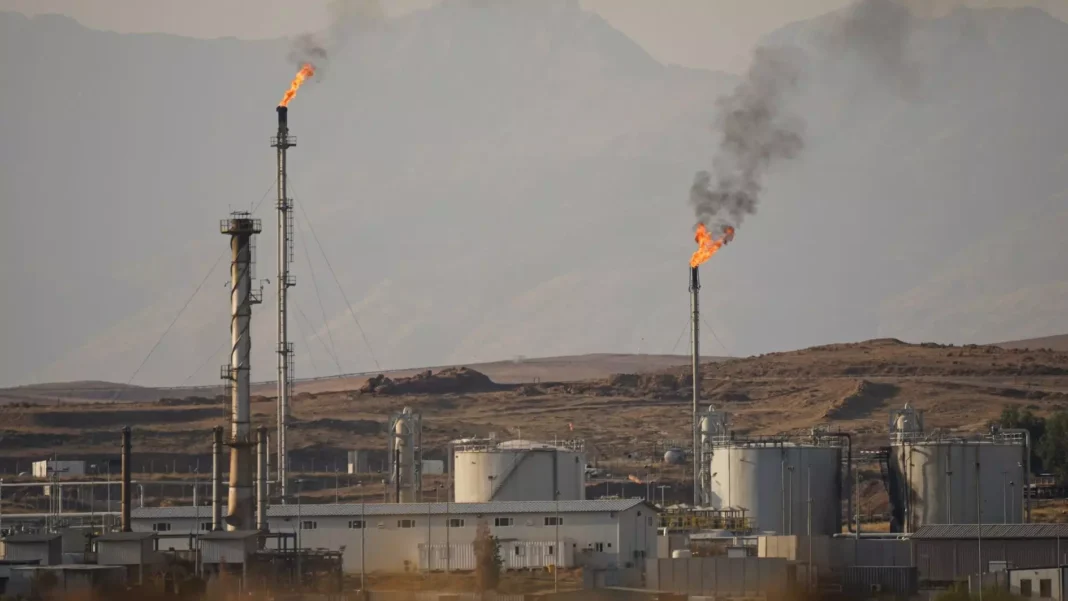

Brent crude surges past $80 on Tuesday as fears over the Strait of Hormuz intensify. Traders reacted to escalating U.S.-Israeli-Iran conflict. Consequently, energy markets experienced significant volatility. Meanwhile, shipping disruptions increased concerns about Middle East oil supply.
Brent crude futures reached $80.89 a barrel, rising $3.15, or 4.1%, by 0745 GMT. On Monday, the contract briefly touched $82.37, its highest since January 2025, before paring gains. Similarly, U.S. West Texas Intermediate crude climbed $2.55, or 3.6%, to $73.78 a barrel. Analysts noted continued upward pressure as regional tensions persist.
Tony Sycamore, IG market analyst, explained that with no immediate de-escalation, the Strait of Hormuz acts as effectively closed. He added that Iran shows willingness to target energy infrastructure, keeping upside risks high. Consequently, Brent crude surges reflect the heightened geopolitical danger.
The conflict expanded as Israel attacked Lebanon, and Iran responded with strikes on energy facilities and tankers in the Strait. Tankers and container ships are avoiding the waterway, and insurers canceled coverage for vessels. Therefore, shipping rates for oil and gas soared dramatically. About 20% of the world’s oil and gas flows through this strategic channel.
Market observers warned that risks are not limited to shipping alone. Additional strikes on regional energy infrastructure could trigger prolonged outages. Analysts from ING noted that markets continue to digest escalation risks in the Middle East. Consequently, traders are paying close attention to both oil flows and geopolitical developments.
Refined product futures also rose sharply, as Middle East fuel processing faces disruption. Saudi Arabia shut its largest domestic refinery after a drone strike. Meanwhile, U.S. ultra-low-sulfur diesel futures climbed 8.3% to $3.1404 per gallon, and gasoline futures increased 3.8% to $2.4620 per gallon. European gasoil futures surged 9.2% to $967.75 per metric ton.
Bernstein analysts raised the 2026 Brent oil price estimate to $80 per barrel from $65, warning that prices could reach $120-$150 in a prolonged conflict scenario. Analysts expect oil prices to remain elevated while markets focus on the Middle East crisis and supply disruptions.
Overall, Brent crude surges highlight the vulnerability of global energy markets. Traders and investors remain cautious, closely monitoring regional tensions and infrastructure risks. Meanwhile, shipping companies and refiners adapt quickly to prevent further disruptions.