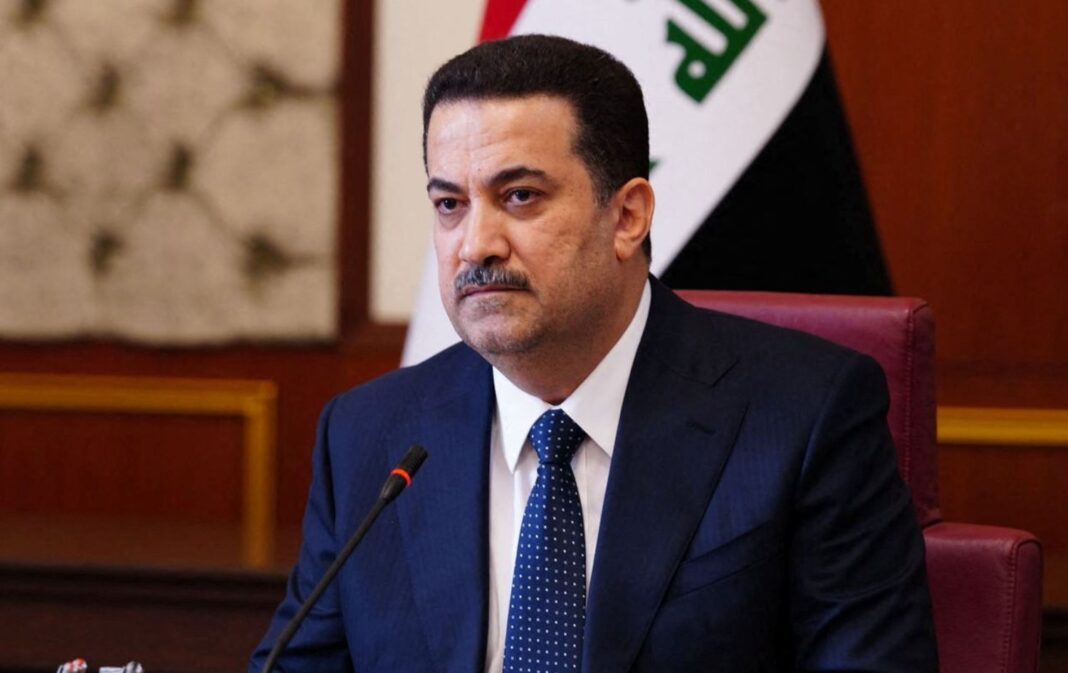
Prime Minister Mohammed S. Al-Sudani held phone talks with Qatar’s Emir, Sheikh Tamim bin Hamad Al Thani, on Wednesday. They discussed recent developments in the region and ongoing conflicts.
Both leaders emphasized the repercussions of the war on regional and international peace. Furthermore, they discussed its impact on energy markets, supply chains, and global trade.
The Prime Minister’s Media Office stated that both sides rejected attempts to expand the conflict. Moreover, they affirmed the importance of joint Arab coordination to address arising challenges.
Al-Sudani and the Emir stressed supporting all diplomatic initiatives aimed at resolving the conflict. They highlighted that constructive dialogue can contribute to ending the war and strengthening regional security.
In addition, they discussed practical measures to ensure the safety of maritime and air navigation. Both leaders agreed that secure trade routes remain essential for regional stability and economic continuity.
Analysts noted that Al-Sudani Qatar talks signal Iraq’s proactive diplomatic approach. The discussions demonstrate Baghdad’s commitment to collaboration with Gulf states. Moreover, they aim to prevent further escalation in the region.
The phone call also reinforced commitments to international cooperation. Both leaders agreed on intensifying coordination with Arab partners and global stakeholders. This approach can mitigate risks to energy markets and maintain supply chain stability.
Observers emphasized that diplomatic communication, like the Al-Sudani Qatar talks, can serve as a mechanism to de-escalate tensions. They also noted that such coordination enhances the credibility of Iraq’s foreign policy.
In conclusion, the phone call between Al-Sudani and Qatar’s Emir underlined Iraq’s dedication to regional security. They combine diplomatic measures, economic awareness, and multilateral cooperation. Furthermore, these efforts reflect the importance of safeguarding energy markets and trade.
Overall, Al-Sudani Qatar talks highlight the critical role of dialogue in addressing conflicts. They also show Iraq’s commitment to working with partners to ensure peace, stability, and economic resilience.