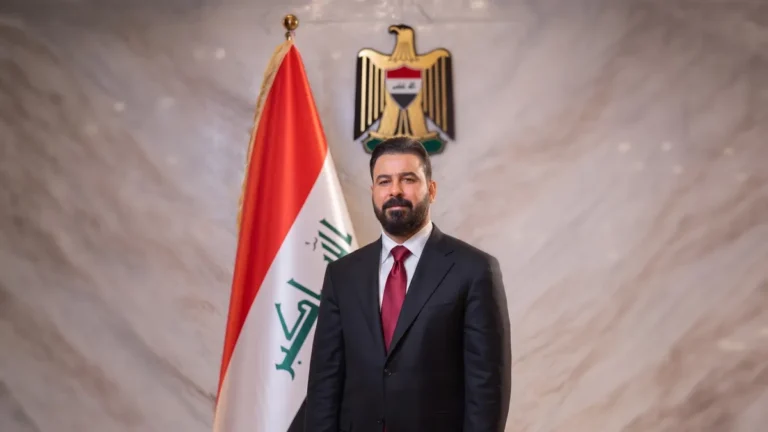
The Iraqi PM’s financial probe has drawn major attention after a U.S. law firm released findings about Ali al-Zaidi’s financial background. Furthermore, the report stated that investigators found no evidence linking al-Zaidi to Iran’s Revolutionary Guards or illicit financial transfers.
K2 Integrity conducted the independent investigation after restrictions were imposed on Al-Janoob Islamic Bank in 2024. Moreover, the firm said the measures focused on reputational concerns rather than proven money laundering violations.
Representatives from the company explained that investigators reviewed financial records and ownership structures carefully. However, they did not discover credible evidence connecting al-Zaidi or the bank to the Quds Force.
The firm also confirmed that investigators found no direct transfers to entities classified as high risk. In addition, officials said restrictions only affected U.S. dollar transactions through Iraq’s financial system.
The Iraqi PM’s financial probe gained attention after al-Zaidi unexpectedly received the nomination to form Iraq’s next government. He now seeks to replace Mohammed Shia al-Sudani during a tense political period.
Political rivals quickly questioned al-Zaidi’s business activities and financial network. Consequently, debate intensified across Iraq’s political scene and financial sector.
Al-Zaidi owns several companies with business partners and family members. These businesses include Al-Oweis, Al-Janoob Islamic Bank, and Dijlah TV.
Meanwhile, analysts described al-Zaidi as a relatively unclear figure in Iraqi politics. Nevertheless, his nomination reshaped political calculations inside the Coordination Framework.
In February 2024, Iraqi authorities imposed restrictions on eight local banks, including Al-Janoob Islamic Bank. The decision followed pressure from Washington to prevent illegal money transfers connected to Iran.
At the time, U.S. officials stressed the importance of protecting Iraq’s banking sector. They also warned against the misuse of U.S. currency in suspicious financial activities.
Iraq depends heavily on U.S. dollar flows to stabilize its economy. According to official estimates, Iraq receives nearly $10 billion annually from the Federal Reserve.
As a result, banking restrictions often create major political and economic consequences inside Iraq. Financial oversight also remains highly sensitive because of Iraq’s relationship with both Washington and Tehran.
The U.S. Embassy in Baghdad welcomed al-Zaidi’s nomination and encouraged efforts to form a stable government. Additionally, officials expressed support for a cabinet that reflects public demands after months of political tensions.
The nomination arrived during growing regional instability following military strikes on Iran earlier this year. Armed groups also increased attacks targeting U.S. interests across Iraq after those developments.
Al-Zaidi now faces a difficult political challenge while negotiating with rival factions. Furthermore, he must form a government within 30 days under Iraq’s constitutional timeline.
The Iraqi PM’s financial probe continues to shape political debate as parties negotiate Iraq’s next leadership. At the same time, observers expect financial transparency and foreign relations to remain central issues during government formation talks.