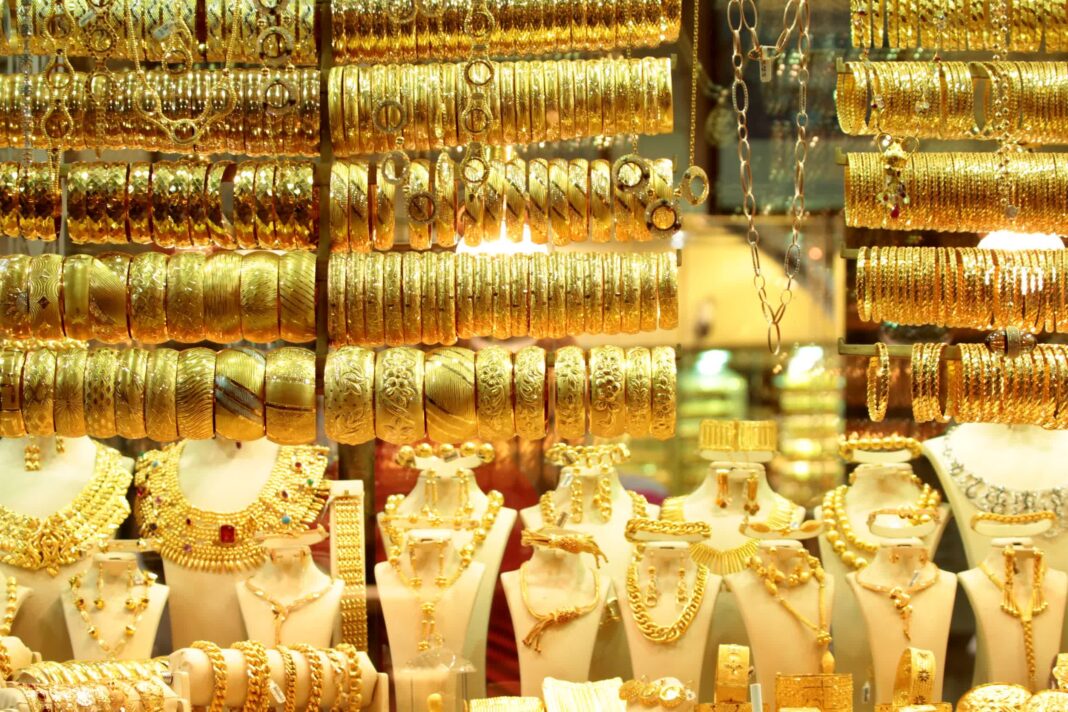
Gold prices fell in Baghdad as markets experienced notable drops on Thursday. 21-carat gold hovered around 1 million IQD per mithqal.
On Al-Nahr Street, traders set the selling price for 21-carat Gulf, Turkish, and European gold at 1,005,000 IQD per mithqal. Buyers paid 1,001,000 IQD. On Wednesday, the same gold sold for 1,026,000 IQD. Clearly, prices fell sharply within 24 hours.
Iraqi 21-carat gold also declined. Sellers offered it at 975,000 IQD per mithqal, while buyers paid 971,000 IQD. Jewelry stores listed Gulf gold between 1,005,000 and 1,015,000 IQD per mithqal. Iraqi gold ranged from 975,000 to 985,000 IQD. These trends indicate a gradual market slowdown.
Economists explain that gold prices often react to global economic signals and local currency movements. Recent shifts in the Iraqi dinar’s value and international gold trends influence Baghdad’s markets. As a result, buyers and sellers remain cautious.
Investors monitor these changes closely. Many prefer Gulf gold for stability, while others choose Iraqi gold due to lower costs. Despite falling prices, demand persists across Baghdad. Traders encourage buyers to act fast before further declines occur.
Moreover, the market shows dynamic behavior. Sellers adjust prices daily, while buyers track rates carefully. These fluctuations reflect broader economic signals impacting Baghdad’s trading environment.
In summary, gold prices fall in Baghdad, showing a clear downward trend. Al-Nahr Street reflects market patterns accurately. Both buyers and sellers adjust quickly to evolving dynamics. Experts predict a moderate recovery if currency and global demand stabilize.
Gold prices fall in Baghdad, reminding consumers that market shifts can be swift. Investors and jewelers watch daily fluctuations carefully to make informed decisions. This active trading environment highlights the importance of timing in gold transactions.