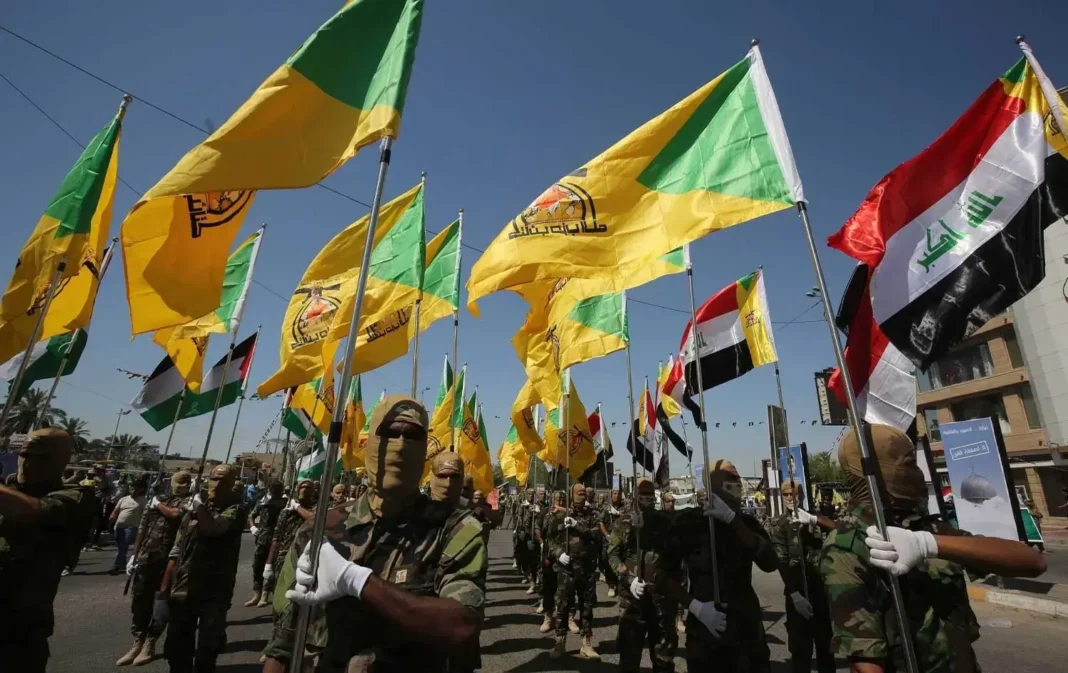
Kata’ib Hezbollah has set new conditions for handing its weapons to the Iraqi state. The demands include major changes involving foreign forces and the Peshmerga.
Abu Mujahid al-Assaf, the group’s security official, announced the conditions Tuesday. He outlined three requirements before the group would engage with Baghdad.
First, the group demands the complete withdrawal of US forces from Iraq. It also seeks guarantees against continued American influence over Iraqi decisions.
Second, Kata’ib Hezbollah demands the removal of Turkish forces from northern Iraq. Turkey maintains military positions in areas of the Kurdistan Region.
Third, the group calls for the dissolution of the Peshmerga forces. It described the Kurdish forces as a threat to Iraq’s territorial unity.
However, the Peshmerga hold official status under Iraq’s constitutional framework. The Kurdistan Region also recognizes the force as its official armed institution.
The demands come amid Baghdad’s efforts to place all weapons under state control. Iraqi authorities have increasingly pushed armed factions toward integration or disarmament.
Prime Minister Ali al-Zaidi has set September 30 as the deadline. The deadline coincides with the planned departure of US forces from Iraq.
Consequently, the deadline has increased pressure on armed factions across the country. Some Iran-aligned groups continue to reject the government’s disarmament push.
Kata’ib Hezbollah and Harakat al-Nujaba remain among the most prominent opponents. Both groups maintain close ties with Iran and oppose the continued foreign military presence.
The groups argue that US forces justify their continued possession of weapons. They have also criticized foreign military operations and external influence in Iraq.
Meanwhile, Baghdad faces a difficult challenge in enforcing its weapons policy. The government must balance state authority with powerful armed groups.
The latest statement therefore adds another obstacle to Baghdad’s disarmament efforts. It also introduces demands involving the Kurdistan Region into the wider dispute.
Furthermore, the call to dissolve the Peshmerga could intensify political tensions. Kurdish leaders have consistently defended the force’s constitutional and security role.
The issue could also complicate relations between Baghdad and Erbil. Both sides already face disagreements over security, budgets, and other constitutional matters.
At the same time, the US withdrawal deadline creates additional urgency. Iraqi authorities want to establish clearer control over weapons before foreign forces leave.
The Kata’ib Hezbollah weapons dispute now extends beyond the group’s relationship with Baghdad. Its demands involve US forces, Turkish troops, and Kurdish security institutions.
For Baghdad, the next challenge involves turning its disarmament policy into practical action. The government must also prevent new confrontations with armed factions.
The Kata’ib Hezbollah weapons issue could therefore become a major test for Iraq’s state authority. Developments before September 30 may determine the direction of the government’s policy.