
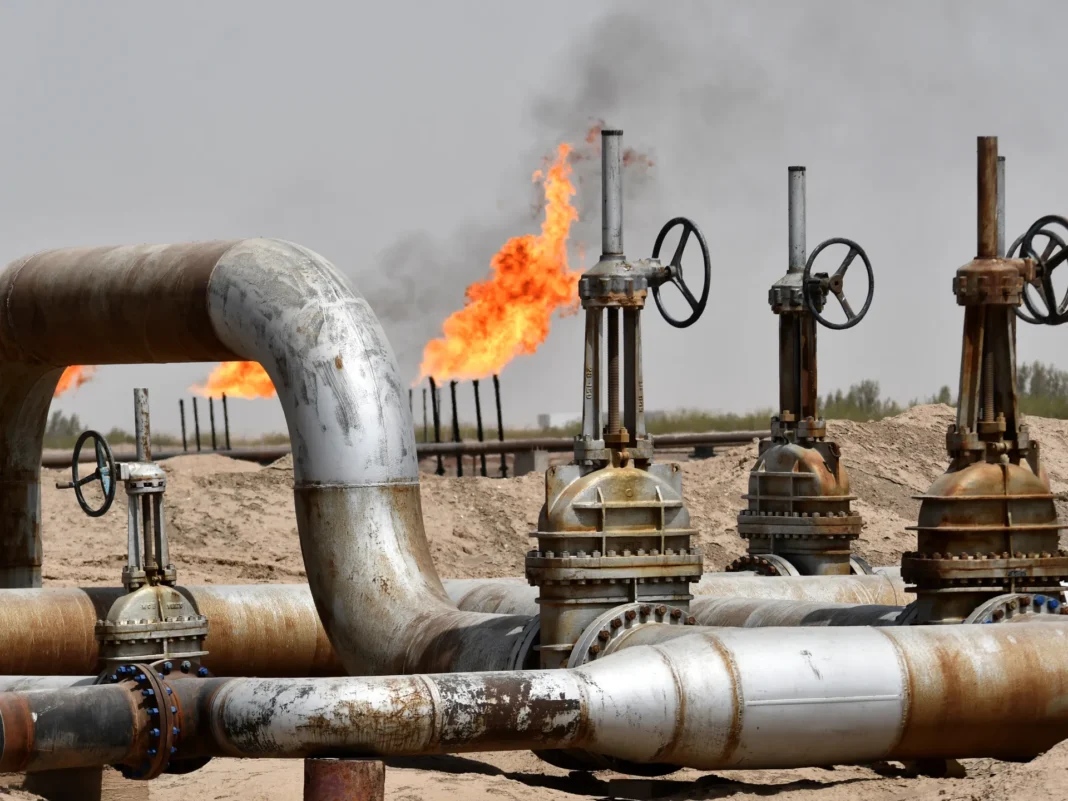
A new academic report warns that Iraq needs major reforms across its oil, gas, and electricity sectors. Iraq energy risks now threaten government finances, power supplies, and wider economic stability. Moreover, a recent regional crisis exposed deep weaknesses within the country’s energy system. Researchers urged Baghdad to strengthen infrastructure before another disruption occurs.
The analysis examined how regional conflict can affect shipping through the Strait of Hormuz. Iraq sends most southern crude exports through this important maritime route. Therefore, any closure or restriction can quickly reduce oil exports and government revenue. That dependence creates serious economic and national security concerns.
The recent crisis forced Iraq to reduce southern oil production during shipping disruptions. Authorities also declared force majeure at several foreign-operated energy assets. Consequently, the government faced immediate pressure from lower export capacity. The situation highlighted Iraq’s reliance on one commodity and one major route.
The report urged Iraq to develop additional oil export corridors. Routes through Turkey, Jordan, Syria, and Mediterranean ports could provide alternative outlets. Furthermore, several land-based options could reduce dependence on the Strait of Hormuz. Diverse routes would help Iraq maintain exports during regional emergencies.
The government should also accelerate the proposed Basra-Haditha pipeline. That project could move crude toward western Iraq and possible regional connections. Additionally, Baghdad and Erbil need an agreement on energy management and exports. Stronger cooperation could unlock northern routes and improve national planning.
The analysis also proposed future corridors through Jordan and Egypt. These connections could eventually provide Iraqi crude with access to Mediterranean markets. However, such projects require large investments, political agreements, and long construction schedules. Iraq must therefore begin planning before the next crisis tests export capacity.
The electricity sector faces equally serious problems. Peak national demand could exceed 55 gigawatts, while available supply remains below 20 gigawatts. As a result, Iraq may face a shortage of at least 35 gigawatts. This massive gap continues to cause outages and heavy pressure on households.
The report argued that new power plants alone cannot solve the electricity crisis. Iraq also needs reliable fuel, efficient networks, and stronger sector governance. Moreover, weak maintenance and poor management reduce the value of generation investments. Comprehensive reforms could improve output without relying only on new construction.
Distribution losses create another major challenge for the electricity system. Iraq generated around 166 terawatt-hours during a recent annual period. However, customers received only about 67 terawatt-hours from that total. The distribution network alone lost approximately 82 terawatt-hours.
These losses mean that nearly half of generated electricity brought no customer revenue. Illegal connections, weak billing, old equipment, and technical failures contribute to the problem. Therefore, Iraq must modernize meters, transmission lines, and distribution systems. Better collection systems could also improve the electricity sector’s finances.
Dependence on Iranian gas creates another major vulnerability. Iranian supplies have historically provided more than 40% of Iraq’s power-generation fuel. However, sanctions, regional instability, and Iran’s domestic needs make deliveries less predictable. Any reduction can force Iraqi power plants to lower production.
Meanwhile, Iraq burns large quantities of associated gas at domestic oil fields. The country then imports gas to operate many electricity stations. Consequently, the report urged Baghdad to expand local gas processing facilities. Capturing more associated gas could reduce imports and improve fuel security.
Government finances also depend heavily on oil income. Baghdad has managed pressure through domestic borrowing, treasury notes, budget changes, and delayed payments. However, these measures only provide temporary financial relief. They do not reduce Iraq’s exposure to oil prices or export disruptions.
Energy subsidies add another substantial burden to public finances. Recent estimates placed explicit fossil-fuel subsidies above $8 billion. That amount nearly tripled an earlier level, although it remained below a $14.5 billion peak. Therefore, subsidy reform could support more sustainable government spending.
China’s growing role also shapes Iraq’s energy sector. Chinese companies continue expanding across oil production, infrastructure, electricity, and trade. Nevertheless, the report warned against an increasingly unbalanced economic relationship. Iraq needs partnerships that protect its independence and long-term national interests.
Security problems further weaken the country’s energy system. The report urged the state to control armed groups outside official command structures. Authorities must also dismantle oil-smuggling networks and protect energy facilities. Stronger state control could safeguard revenue and improve investor confidence.
Iraq energy risks reflect problems across exports, electricity, fuel, finance, governance, and security. The country holds enormous reserves, yet its economy remains vulnerable to regional shocks. Therefore, Baghdad must diversify routes, process local gas, and repair the national grid. Effective reforms could protect Iraq’s economy during future emergencies.