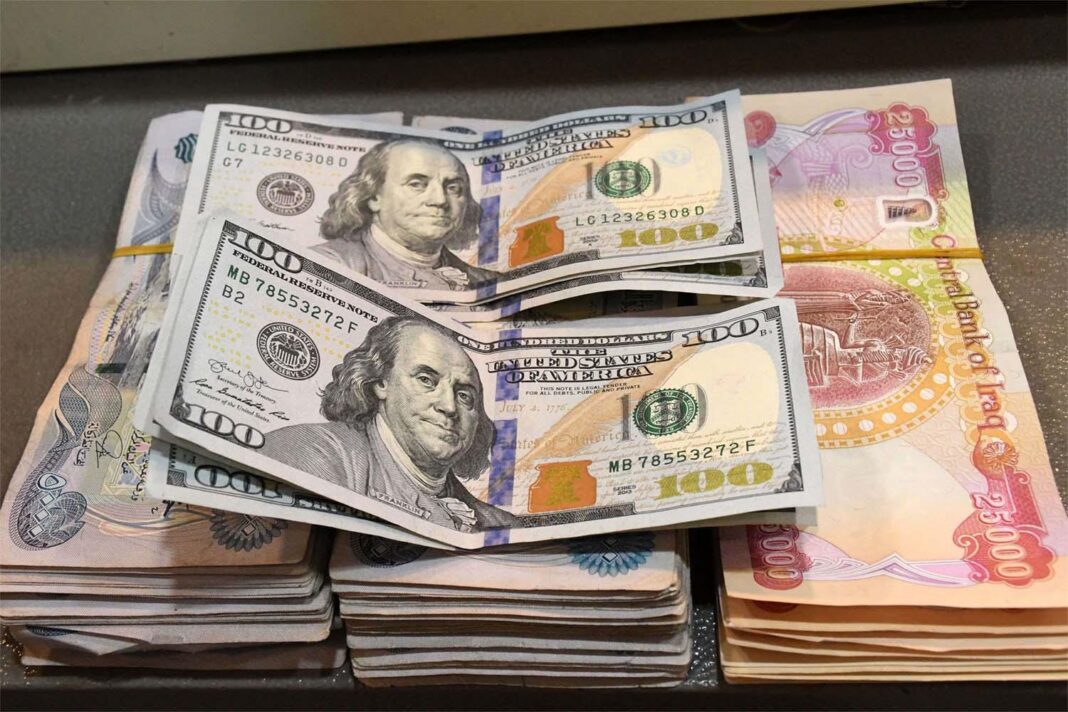
Iraq dollar rates climbed across Baghdad, Erbil, and Basra during the latest parallel market trading. Sellers in all three cities asked for 154,500 dinars per $100. Meanwhile, buying prices ranged between 153,500 and 154,000 dinars. The increases widened the gap between official and parallel market prices.
Baghdad’s Al-Kifah and Al-Harithiya bourses recorded a selling price of 154,500 dinars per $100. Buyers offered 153,500 dinars for the same amount. Therefore, Baghdad registered a 1,000-dinar difference between its selling and buying prices. The capital’s rates often influence currency trading across other Iraqi markets.
In Erbil, dealers sold $100 for 154,500 dinars. Meanwhile, buyers paid 154,000 dinars for every $100. Consequently, Erbil recorded a smaller spread than Baghdad. Strong cash demand continues to influence trading throughout the Kurdistan Region.
Basra also posted a selling price of 154,500 dinars per $100. Buyers in the southern city offered 154,000 dinars. As a result, Basra matched Erbil’s selling and buying levels. Similar prices across both cities suggest broadly shared market pressures.
The Central Bank of Iraq maintains an official rate of 131,000 dinars per $100. That level equals 1,310 dinars for one U.S. dollar. However, parallel market sellers now charge 23,500 dinars more for every $100. Therefore, the market premium has grown to nearly 18%.
The wider gap affects businesses that need physical dollars for commercial payments. Importers may face higher costs when they cannot access official banking channels. Moreover, merchants can pass some additional expenses to consumers through higher retail prices. This process can increase pressure on household budgets.
The central bank’s electronic platform supports authorized trade and official corporate transactions. Banks process eligible transfers at the government’s fixed exchange rate. However, many smaller businesses still rely on cash settlements. These companies often need faster access to dollars for daily operations.
Physical dollar demand also comes from travelers and regional traders. Some customers prefer banknotes for expenses outside the formal banking system. Furthermore, cross-border commerce can increase cash demand in major Iraqi cities. Limited availability can therefore push parallel prices higher.
Liquidity conditions influence the price differences between Baghdad, Erbil, and Basra. Currency dealers adjust their rates according to available cash and customer demand. Consequently, each city can show different buying prices during the same trading period. Local commercial activity also shapes these small variations.
Baghdad hosts large wholesale currency markets and many commercial companies. Therefore, traders across Iraq closely follow movements in the capital. Erbil responds to northern trade routes and demand across the Kurdistan Region. Meanwhile, Basra reflects southern commerce, port activity, and regional business payments.
The latest increase shows continuing pressure on the Iraqi dinar outside official channels. Higher demand for physical dollars can weaken the dinar in parallel trading. By contrast, larger dollar supplies can reduce prices and narrow the market premium. Central bank policies can also influence expectations among dealers and merchants.
A wider exchange-rate gap can create challenges for government economic policy. Businesses may compare official prices with the cash costs they face locally. Additionally, inconsistent access to dollars can complicate pricing and financial planning. Clear banking procedures could help more companies use official transfer channels.
Consumers also monitor exchange rates because currency movements affect imported products. Iraq buys many goods, materials, medicines, and machines from foreign markets. Consequently, a weaker parallel-market dinar can increase costs across several sectors. Retailers may adjust prices when import expenses rise.
Iraq dollar rates could continue changing with liquidity, trade activity, and market expectations. Stronger dollar supplies may ease pressure across the main currency centers. However, sustained cash demand could keep the premium near its current level. Traders will continue watching official policies and regional commercial flows.