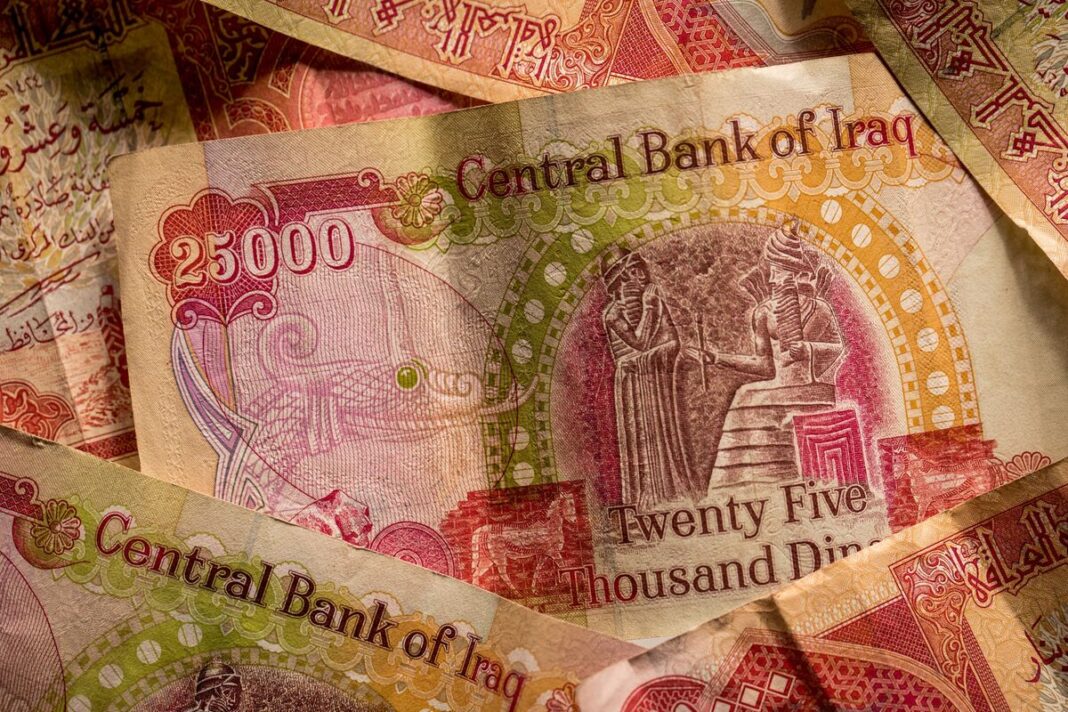
Iraqi dollar rates held within a narrow range across Baghdad, Basra, and Erbil. Exchange dealers reported prices between 152,750 and 153,250 dinars per $100. Meanwhile, the official exchange rate remained significantly lower than parallel market prices. The gap continues to affect merchants, importers, travelers, and consumers.
Baghdad’s Al-Kifah and Al-Harithiya bourses recorded a selling price of 152,750 dinars per $100. Buyers paid 153,000 dinars for the same amount. Therefore, the capital recorded only a small difference between both prices. Even so, Baghdad’s parallel rate remained far above the official level.
In Erbil, sellers asked for 153,250 dinars per $100. Meanwhile, buyers offered 153,150 dinars for every $100. Consequently, Erbil posted one of the highest selling prices among the three cities. The close figures indicate steady activity within the Kurdistan Region’s currency market.
Erbil traders often respond to demand from merchants and travelers. Moreover, regional commerce regularly creates demand for physical dollar notes. Cross-border businesses also need dollars for transportation, imports, and commercial payments. Therefore, cash availability can quickly influence local exchange prices.
Basra dealers set their selling price at 153,250 dinars per $100. Meanwhile, buyers paid 152,750 dinars for the same amount. As a result, Basra matched Erbil’s selling price but recorded a lower buying price. This pattern suggests different cash requirements among southern market traders.
Basra’s commercial position also shapes its currency market. The city supports major port, transport, energy, and import activities. Consequently, companies often require dollars for payments and regional business operations. Changes in commercial demand can therefore affect Basra’s daily exchange prices.
The Central Bank of Iraq maintains an official rate of 131,000 dinars per $100. Therefore, parallel prices stand roughly 16% to 17% above the official level. This premium increases costs for businesses seeking physical dollars outside official banking channels. It also influences the local prices of imported goods and services.
Furthermore, the price difference separates official trade payments from cash-market activity. Authorized importers can access dollars through approved banking procedures. However, many smaller traders continue to depend on local exchange counters. These traders often prioritize faster access and simpler settlement methods.
The central bank’s electronic platform supports authorized commercial imports and international payments. Depending on the transaction, official pricing follows 1,310 or 1,320 dinars per dollar. However, open-market traders often require physical banknotes instead of electronic transfers. Physical dollars support travel, smaller deals, border trade, and informal settlements.
Consequently, cash distribution plays an important role in daily price movements. Limited dollar supplies can push exchange prices higher across major markets. By contrast, stronger cash availability can reduce pressure on local exchange counters. Merchant activity also affects each city differently.
Baghdad usually guides national currency sentiment because the capital hosts major wholesale dealers. However, Erbil and Basra respond to their own regional trade flows. Erbil supports northern routes and businesses throughout the Kurdistan Region. Meanwhile, Basra handles extensive commerce through Iraq’s southern ports.
The narrow range suggests a stable trading session across the three cities. Still, the persistent premium shows different pressures within official and parallel markets. Banks handle approved transactions, while exchange shops meet immediate cash demand. Moreover, some merchants pay extra for speed, accessibility, and flexibility.
Iraq dollar rates could change when dollar supplies or merchant demand shift. Higher supplies usually narrow the market gap, while stronger demand can widen it. Regional trade, banking rules, and cash distribution will guide future currency movements. For now, the parallel market remains significantly higher than the official rate.