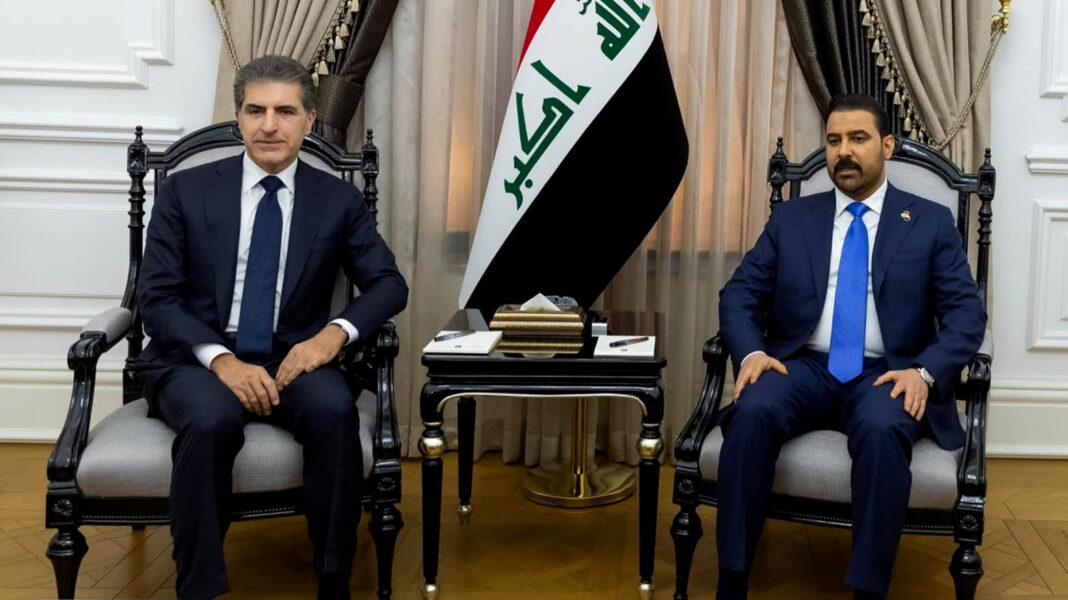
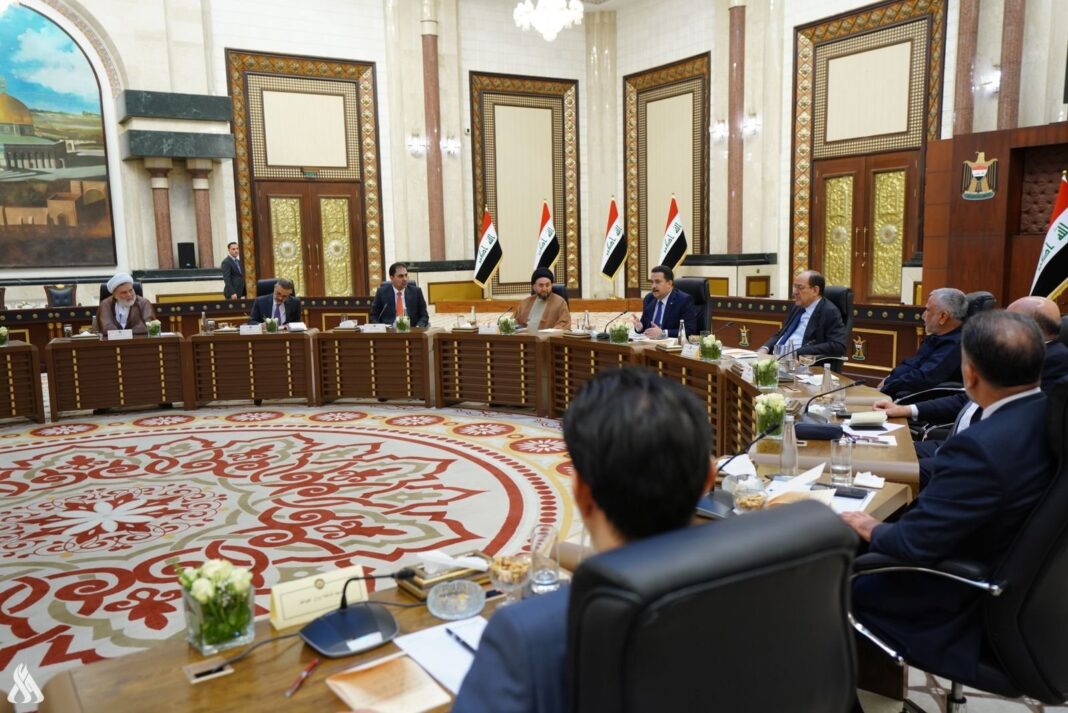
The State Administration Coalition held its 37th regular meeting in Baghdad on Wednesday evening under the chairmanship of Iraqi Prime Minister Ali Faleh al-Zaidi. The meeting brought together President Abdul Latif Rashid, Parliament Speaker Mahmoud al-Mashhadani, Supreme Judicial Council President Faiq Zaidan, Kurdistan Region President Nechirvan Barzani, and leaders representing Iraq’s major political forces. Participants reviewed Iraq’s political, security, economic, and service conditions alongside recent regional developments.
Prime Minister al-Zaidi opened the meeting by outlining the government’s latest efforts to strengthen security and stability. He also highlighted ongoing work to improve public services and implement the government’s reform agenda. Furthermore, he stressed that protecting citizens and addressing economic and financial challenges remain top national priorities.
During the discussions, the State Administration Coalition reaffirmed its support for maintaining security and stability across Iraq. Members also backed government efforts to ensure that all weapons remain under state authority. They emphasized that this commitment follows the government program approved by the Council of Representatives. In addition, they rejected any attempt to use Iraqi territory to launch attacks against neighboring countries or drag Iraq into regional conflicts.
Coalition leaders warned that anyone carrying out such actions threatens Iraq’s national security. They stressed that authorities must enforce the Constitution against armed groups operating outside official state institutions. Moreover, they reaffirmed support for applying Iraqi law to anyone violating these constitutional principles.
The participants also condemned recent attacks targeting members of the Iraqi Armed Forces. They honored the service members who lost their lives during those attacks. At the same time, they called for completing measures that place all weapons under state authority before September 30, 2026. After that deadline, authorities will address unauthorized armed activities under Iraq’s Anti-Terrorism Law.
Economic issues also featured prominently during the meeting. Leaders discussed ways to maintain essential public services and continue strategic development projects. They also encouraged diversifying Iraq’s oil export routes while increasing non-oil revenues. Additionally, they called for stronger efforts to combat corruption, waste, and smuggling.
On regional affairs, participants renewed Iraq’s support for dialogue and peaceful solutions to regional disputes. They rejected the use of force and emphasized Iraq’s willingness to help reduce tensions through diplomacy. Meanwhile, they reviewed developments in neighboring countries and called for stronger border security. They also supported expanding cooperation against terrorism, narcotics trafficking, and organized crime.
The State Administration Coalition concluded the meeting by urging faster completion of the government formation process. Members also called for submitting the government program to parliament for debate and approval.