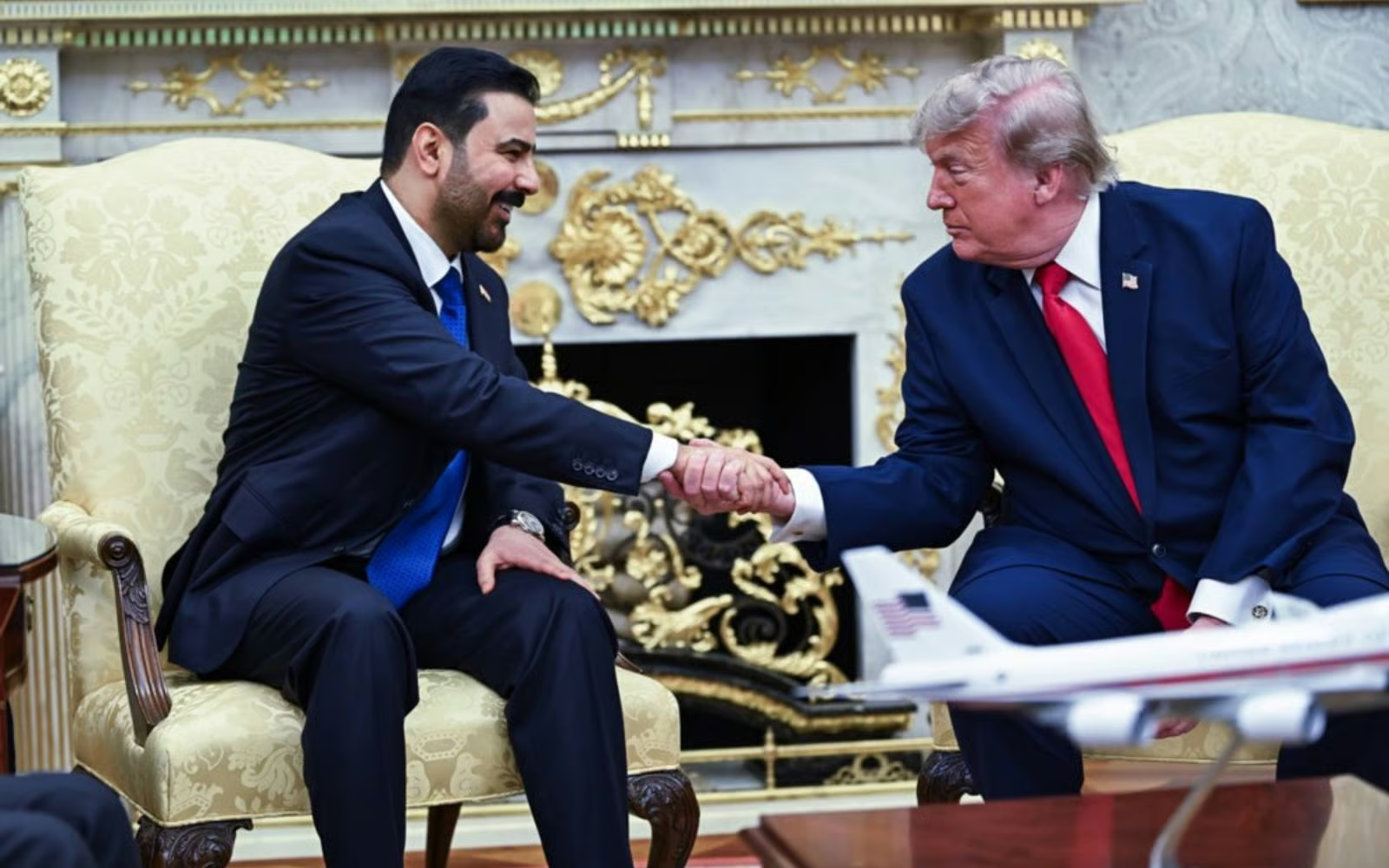
U.S. President Donald Trump said Washington no longer needs to keep troops in Iraq. He made the statement during White House talks with Iraqi Prime Minister Ali Falih Al-Zaidi. Meanwhile, Al-Zaidi promised to bring every armed faction under state authority. Both leaders presented their meeting as the beginning of a new bilateral phase.
Trump argued that Iraq’s security progress had reduced the need for an American military presence. The Iraq troop exit could therefore become a central feature of changing relations with Washington. Furthermore, Trump said American forces had remained in Iraq to provide protection. However, he now believes Iraq can move forward without that military support.
Trump also connected his position with recent regional developments involving Iran. He described Iran as a major source of pressure on Iraq. Moreover, he argued that Iraq no longer faces the same regional burden. His comments suggested that Washington sees a different security environment around Baghdad.
The leaders also discussed the American strike that killed Qassem Soleimani and Abu Mahdi al-Muhandis. Reporters asked Al-Zaidi about the controversial operation and its lasting political impact. However, the Iraqi prime minister chose to focus on future cooperation. He said earlier conflicts should not determine the direction of current relations.
Al-Zaidi then reaffirmed his plan to place all weapons under government control. He said armed factions must transfer their weapons to official state institutions. Furthermore, he promised that only the Iraqi state would control military force. This pledge placed militia disarmament at the center of his security agenda.
The commitment directly addresses armed organizations that maintain forces outside full government control. Several factions also maintain close political or military connections with Iran. Washington has long treated independent militia activity as a major concern. Therefore, Al-Zaidi’s promise could remove a persistent source of tension with the United States.
The Iraq troop exit discussion also depends on Baghdad’s ability to manage internal security. A successful disarmament process could strengthen trust between Iraq and its international partners. Additionally, unified state control could improve coordination across Iraq’s security institutions. However, the government must translate its public commitment into clear action.
Al-Zaidi’s statement represents one of his administration’s clearest positions on militia weapons. His government wants security institutions to hold exclusive authority over armed forces. Moreover, the pledge signals a possible change in Baghdad’s approach toward powerful factions. The policy could reshape Iraq’s internal security structure and regional relationships.
Trump praised Iraq’s progress and welcomed the country’s changing relationship with Washington. He also reduced the importance of America’s future military mission inside Iraq. Instead, both leaders highlighted economic cooperation, investment, and government reform. Consequently, their discussions shifted attention from military operations toward broader strategic cooperation.
Economic ties could now play a larger role in the relationship. American companies may explore investment opportunities as political cooperation grows. Meanwhile, Iraq wants international partnerships that can support development and institutional improvements. Both governments could use commercial engagement to strengthen long-term bilateral stability.
The Iraq troop exit could mark an important turning point for both governments. For Washington, withdrawal would reduce its direct military role inside the country. For Baghdad, militia disarmament would strengthen national sovereignty and institutional authority. Together, both developments could redefine security cooperation between Iraq and the United States.
Nevertheless, Iraq must complete several steps before both leaders achieve their stated goals. The government must enforce its weapons policy across every armed organization. Meanwhile, Washington must coordinate any troop changes with Iraqi authorities. Future negotiations will show whether both sides can convert their political statements into lasting policy.