
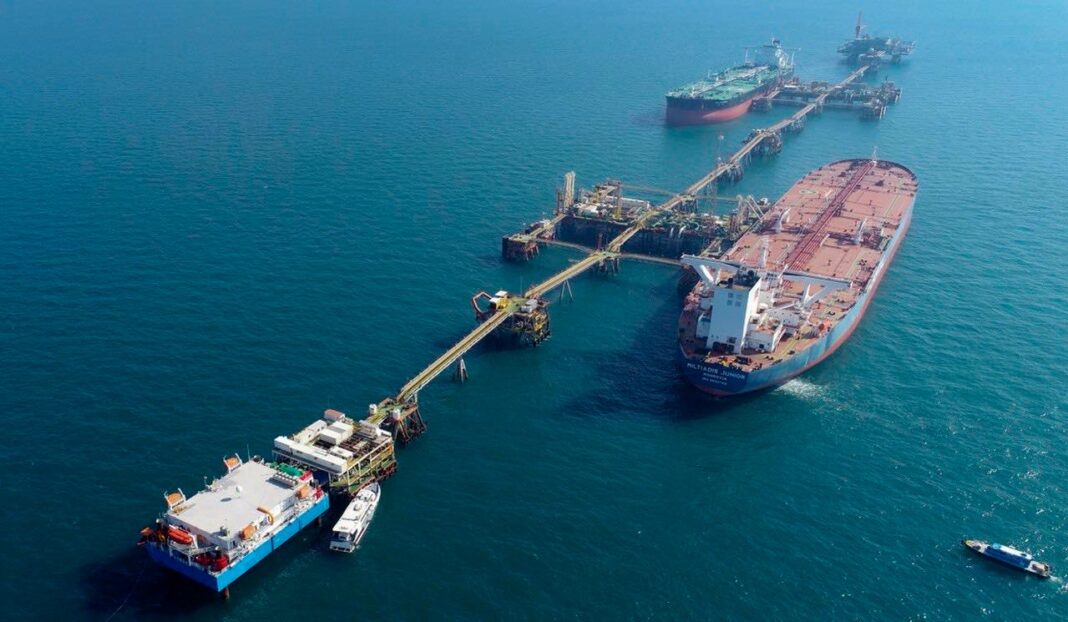
Iraq’s oil exports to the United States surpassed one million barrels in the latest monthly reading. The increase kept Iraq among Washington’s key crude suppliers. U.S. energy data showed total Iraqi shipments at 1.35 million barrels. However, the figure still came below the previous monthly level.
The data showed Iraq sent 1.62 million barrels in the earlier period. Therefore, the latest total marked a decline in overall monthly volume. Still, the number kept Iraq inside the U.S. crude import map. It also showed continued demand for Iraqi barrels.
Iraqi crude shipments moved unevenly during the reporting period. During the first weekly reading, exports averaged 107,000 barrels per day. Then, supplies stopped completely during the next weekly reading. As a result, the monthly flow showed sharp changes.
Later, shipments recovered strongly during the third weekly reading. Iraq sent 270,000 barrels per day to the U.S. market. However, exports stopped again during the final weekly reading. This pattern showed unstable but important trade movement.
Iraq ranked eighth among oil exporters to the United States. Canada led the list as Washington’s largest supplier. Venezuela, Mexico, Colombia, Ecuador, Brazil, and Saudi Arabia also ranked ahead. Iraq still remained a notable source in the American market.
Moreover, Iraq ranked second among Arab oil suppliers to the United States. Saudi Arabia led Arab shipments with 2.04 million barrels. Libya followed Iraq with 1.1 million barrels. Therefore, Iraq kept a strong regional position despite shipment gaps.
Iraq’s oil exports also gained attention because of wider regional developments. Maritime traffic through the Strait of Hormuz began to recover gradually. That helped Gulf producers move more crude by sea. It also gave Iraq more room to increase shipments.
The rebound followed a difficult period for regional energy flows. Military tensions had disrupted shipping confidence across key routes. Traders watched the Gulf closely because it carries major oil traffic. Consequently, every improvement in movement affected export planning.
Iraq’s seaborne crude shipments rose sharply to 488,000 barrels per day. That compared with about 98,000 barrels per day in the previous period. The increase showed a major recovery in maritime export activity. It also reflected stronger tanker movement from regional ports.
The change represented a major jump in shipment levels. Iraq’s crude flow increased by about 390,000 barrels per day. That marked a surge of around 400 percent. Therefore, energy markets watched Iraq’s export recovery closely.
However, Iraq still faces major export risks. The country depends heavily on southern oil routes. Any regional tension can quickly threaten shipping and revenues. Because of that, Baghdad continues to need safer and more flexible export channels.
The U.S. market remains important because of its huge energy demand. American refiners buy crude from several global producers. Iraqi oil can support that supply mix. Yet Iraq must compete with larger suppliers, especially Canada and Saudi Arabia.
In addition, export changes can affect Iraq’s public finances. Oil revenues support most government spending. When shipments fall, budget pressure can rise. When shipments recover, Baghdad gains more financial breathing room.
Iraq’s oil exports now remain tied to security, shipping, and global demand. Stronger maritime movement can support higher crude sales. At the same time, renewed tension can disrupt flows quickly. The latest data showed both recovery and uncertainty.
In the end, Iraq kept a visible place in the U.S. oil market. Its shipments passed one million barrels despite weekly stoppages. The country also ranked high among Arab suppliers. Still, unstable flows showed the pressure facing Iraq’s oil trade.