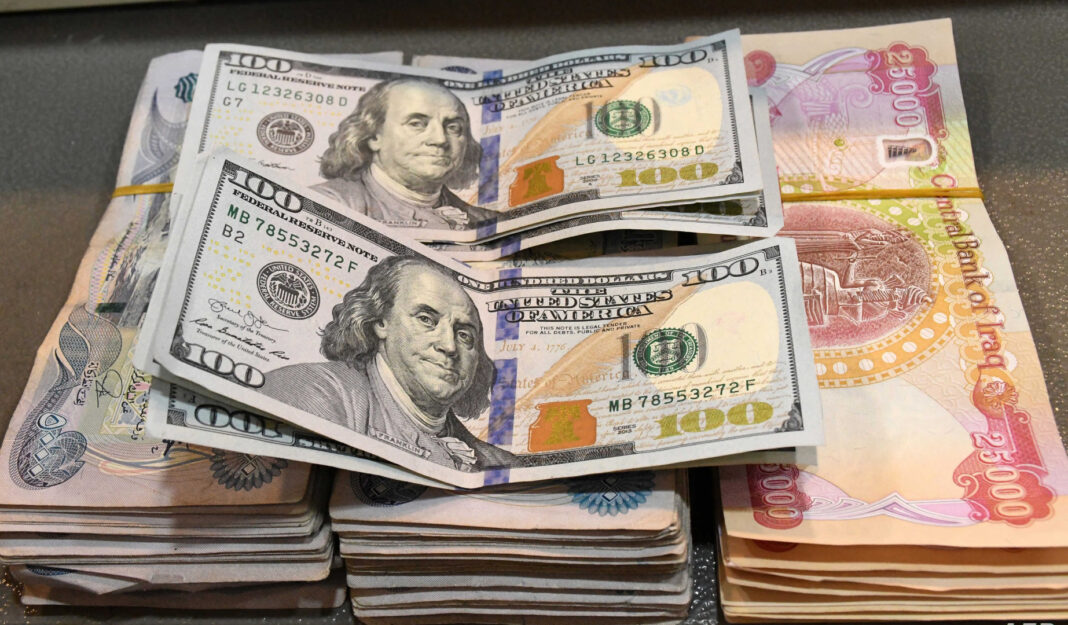
Iraq’s dollar drop continued as the dinar gained fresh strength in Baghdad and Erbil. Currency traders reported lower dollar rates during the market close. Moreover, the decline extended recent gains for the Iraqi dinar. This movement showed stronger confidence across local exchange markets.
In Baghdad, major currency exchanges closed at 153,700 Iraqi dinars for every 100 dollars. The rate had opened higher at 154,250 dinars for every 100 dollars. Therefore, the dollar lost ground during the trading session. This shift quickly affected retail exchange prices across the capital.
Exchange shops in Baghdad also lowered their customer rates. Many shops sold 100 dollars for around 154,250 Iraqi dinars. Meanwhile, they bought 100 dollars for about 153,250 Iraqi dinars. As a result, customers saw cheaper dollar prices by the evening.
Erbil followed the same direction as Baghdad’s market. Currency boards in the city showed 153,700 dinars for every 100 dollars. In addition, local brokers bought 100 dollars for about 153,600 dinars. This close alignment showed a wider market correction.
The drop also reflected a stronger supply in local currency markets. Traders said more dollars entered the market through regulated channels. Furthermore, tighter controls reduced the space for informal speculation. These measures helped support the dinar against the dollar.
Financial observers also linked the decline to banking reforms. More importers now use official banking routes for foreign currency needs. Consequently, demand in the parallel market has started to ease. This change reduced pressure on exchange shops and brokers.
The Central Bank’s official framework continues to shape market behavior. Banks now handle more legitimate trade payments through formal systems. Moreover, authorities continue to monitor exchange activity more closely. These steps aim to narrow the gap with official rates.
However, the parallel market still reacts quickly to supply changes. Any sudden demand from traders can push rates higher again. Still, the latest movement gave the dinar another short-term boost. Many market participants now expect further gradual easing.
Iraq’s dollar drop may continue if regulated dollar flows remain strong. Import activity through official channels could support this trend further. In addition, stronger oversight may discourage speculative buying. Therefore, the dinar could keep gaining ground in local markets.
For households and businesses, lower dollar rates can bring some relief. Importers may face less pressure when buying foreign currency. Meanwhile, consumers could benefit if cheaper dollars lower import costs. Yet, prices may take time to reflect exchange changes.
Overall, Baghdad and Erbil showed the same downward trend. Both markets closed with weaker dollar rates and stronger dinar demand. Therefore, the latest movement suggests broader confidence in Iraq’s currency market. Analysts will now watch whether this trend reaches the official rate.