
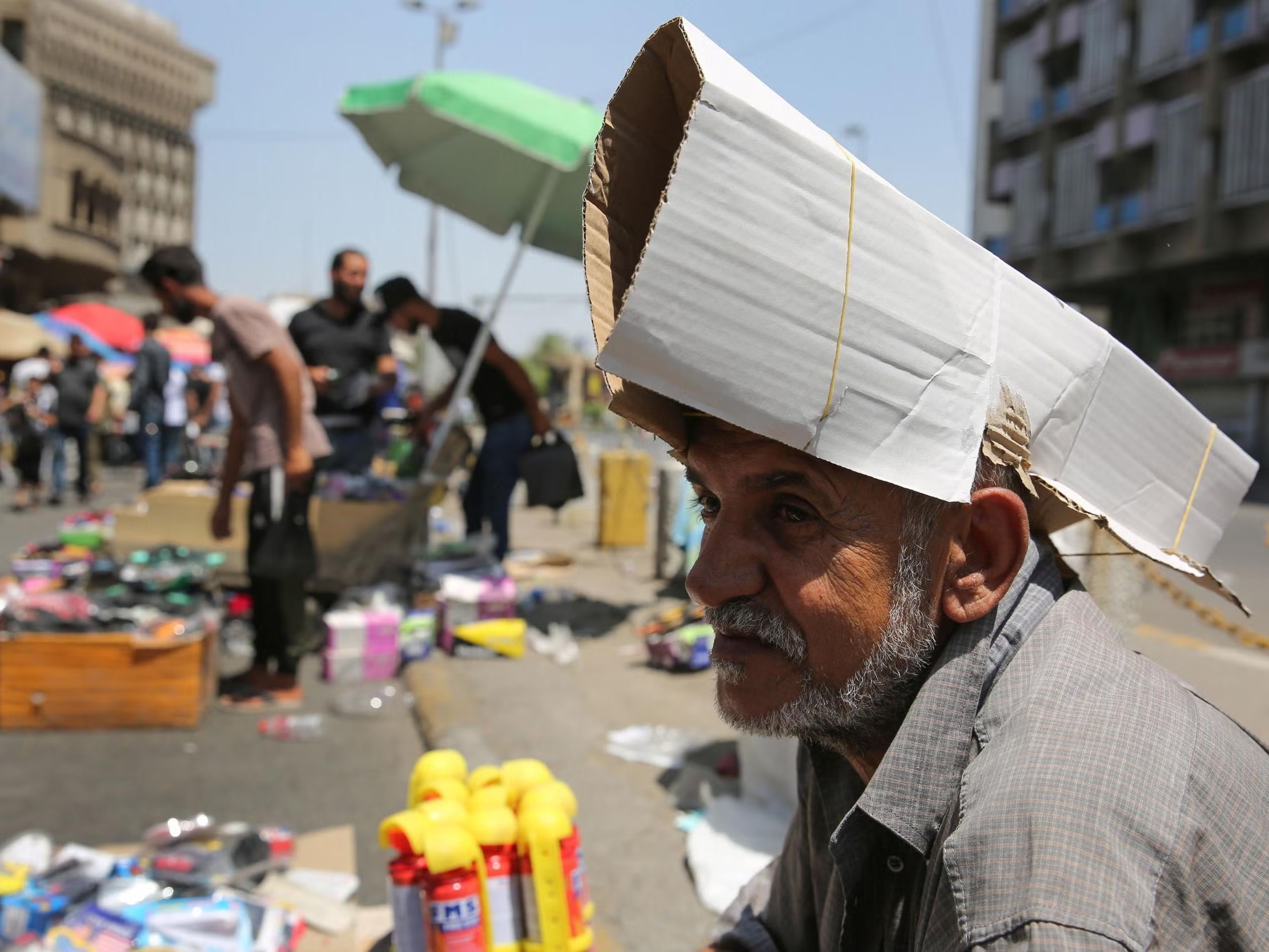
Iraq’s extreme heat risks have gained global attention after new research identified Basra and Baghdad among the world’s most vulnerable cities. Scientists found that rising temperatures, population vulnerability, and limited infrastructure have increased the danger facing millions of residents.
Researchers from the University of Oxford examined 205 cities with populations exceeding one million people. Their findings placed Basra at the top of the global ranking. Meanwhile, Baghdad ranked sixth among the cities facing the greatest threats from extreme heat.
For decades, the Tigris and Euphrates rivers helped moderate temperatures across Iraq. In addition, extensive palm groves once provided natural cooling. However, environmental changes and urban expansion have reduced those protections over time.
As a result, many residents now face increasingly severe summers. Heatwaves, droughts, and wildfires have become more frequent. Consequently, authorities and communities continue to struggle with mounting challenges.
Basra regularly experiences temperatures above 40 degrees Celsius during summer. Moreover, the city recorded temperatures of 51 degrees Celsius last year. Baghdad also endured extreme conditions, with temperatures reaching 49 degrees Celsius.
According to the study, heat exposure alone does not determine risk. Researchers also considered income levels, age distribution, and available infrastructure. Therefore, cities with limited resources face greater difficulties during extreme weather.
Scientists highlighted the importance of coping mechanisms. Air conditioning systems, green spaces, and tree coverage all help reduce temperatures. Nevertheless, many communities lack access to these protections.
Experts explained that vulnerability increases when several factors combine. High temperatures, aging infrastructure, and economic pressures can create dangerous conditions. Consequently, extreme heat can threaten public health and daily life.
Beyond Iraq, several cities across Asia and Africa also appeared on the list. Ahmadabad in India ranked second. Bamako in Mali secured third place. Meanwhile, Nagpur in India and Quezon City in the Philippines rounded out the top five.
Researchers stressed that cities must adapt to changing climate conditions. They called for investments in infrastructure and stronger support systems. Furthermore, they urged governments to develop long-term strategies.
Specialists warned that dependence on air conditioning presents another challenge. Demand for cooling systems continues to rise worldwide. However, many families cannot afford them. In addition, heavy energy consumption can worsen global warming.
Therefore, experts support alternative solutions. Expanding green areas and increasing tree coverage could help reduce temperatures naturally. Likewise, modern urban planning may improve resilience against heatwaves.
The findings also highlighted concerns for major tourism destinations. Cairo, Bangkok, Hanoi, and Jaipur ranked among the world’s most vulnerable cities. Consequently, climate adaptation has become a growing priority for governments.
Environmental experts believe proactive measures remain essential. Strong infrastructure and better planning can reduce risks. At the same time, communities need support to cope with rising temperatures.
As climate challenges intensify, Iraq’s extreme heat risks are expected to remain a major concern. Scientists warn that temperatures could continue rising in the coming years. Therefore, policymakers may face increasing pressure to strengthen adaptation efforts.
For millions of residents in Basra and Baghdad, the stakes continue to rise. Consequently, Iraq’s extreme heat risks have become one of the country’s most urgent environmental challenges.