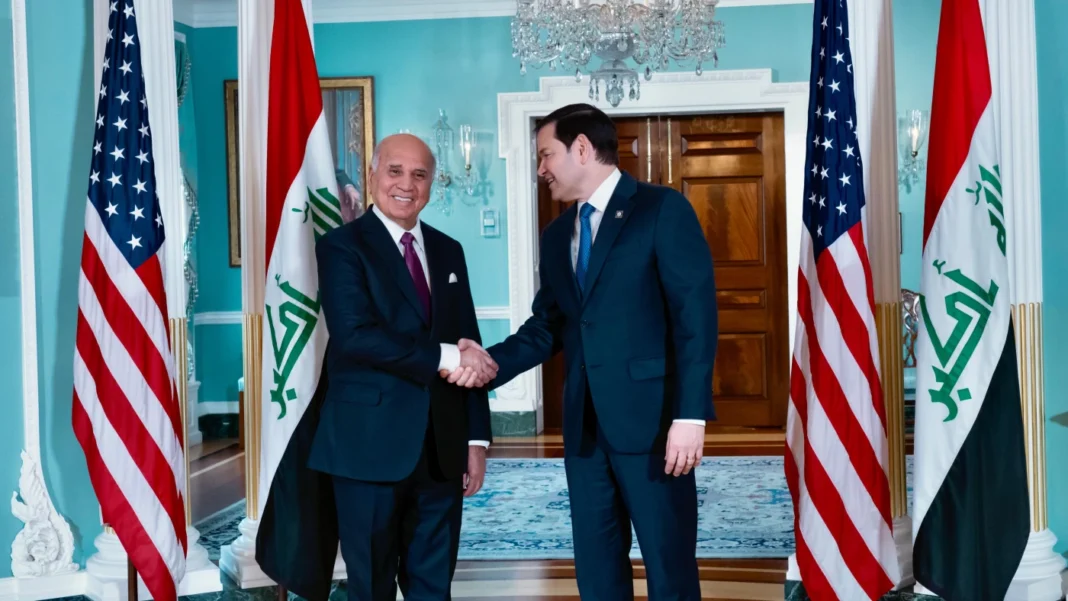
Safeguarding Iraqi Stability dominated a new congressional report that outlines strict conditions on US funding for Iraq’s security forces. A document attached to the draft National Defense Authorization Act (NDAA) urges War Secretary Pete Hegseth to restrict most Iraq-related funds in the 2026 budget. Lawmakers want Baghdad to take credible action against armed groups, including Iran-aligned factions such as the Badr Organization led by Hadi al-Ameri.
The report appears in section 1228 of the NDAA amendments. It places conditions on nearly 75% of support earmarked for Iraqi security units. The funding cannot move forward until the War Secretary assures congressional defense committees that Iraq took verifiable steps toward reform. The report stresses that US officials want tangible progress, not symbolic gestures.
Lawmakers call for a comprehensive campaign to limit the influence of Iran-backed groups across Iraq. They urge Baghdad to adopt transparent disarmament, demobilization, and reintegration programs and argue that these programs can shrink militia capabilities and reduce their leverage over state institutions. They also highlight the need for clear government authority over all armed entities.
Additionally, the document emphasizes the importance of reinforcing the Iraqi prime minister’s role. Lawmakers want the prime minister to maintain full control over both the military and the wider security structure. They believe that stronger executive authority can reduce interference from foreign actors and internal factions.
Moreover, the report demands strict accountability measures. It calls for consequences for any militia member or security officer who ignores the chain of command. It also targets individuals who attack US or Iraqi forces or participate in destabilizing activities. Lawmakers argue that accountability strengthens institutions and protects national sovereignty. They claim that disorder grows when armed groups act without limits.
The document also includes a waiver option. The War Secretary may approve a 180-day waiver if it serves US national interests. However, the secretary must submit written justification to congressional committees. The explanation must show how the decision supports the objectives listed in the report.
In an important exception, the restrictions do not affect assistance intended for Kurdish Peshmerga forces. Lawmakers state that Peshmerga units continue to support regional security. They also argue that the Peshmerga maintain coordination with US advisors and operate under formal structures.
As debate continues in Washington, legislators insist that Safeguarding Iraqi Stability requires consistent pressure and measurable action. They argue that Iraq must show commitment to national security reforms. They also claim that regional tensions increase when armed factions overshadow state authority. Through sustained oversight, they hope to support a stronger Iraqi state and promote Safeguarding Iraqi Stability across the region.