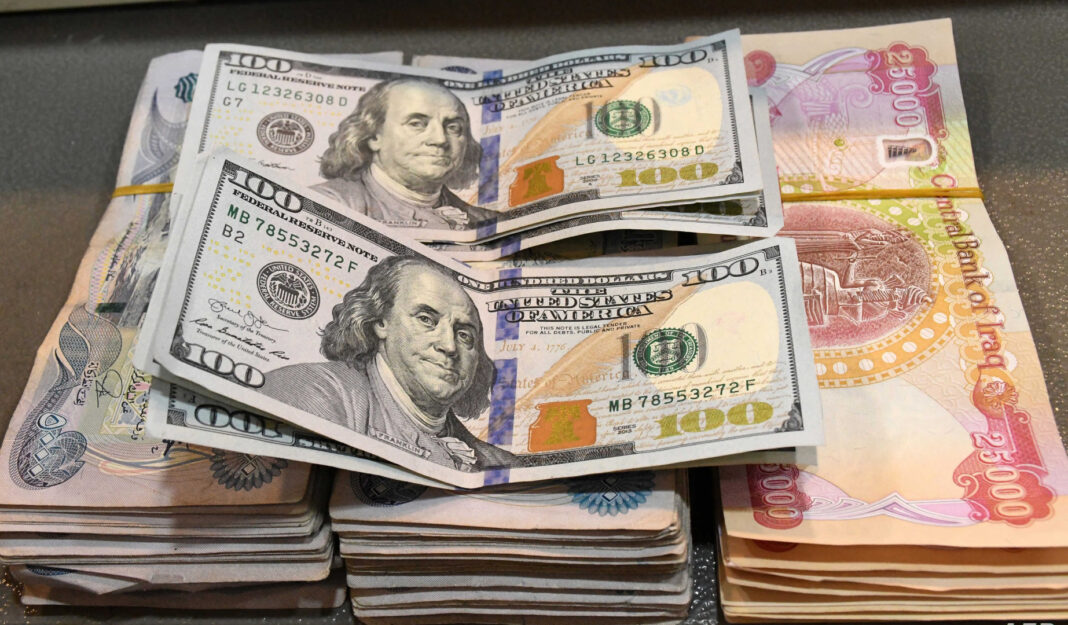
The US dollar fell in Baghdad and Erbil on Sunday as traders closely monitored currency markets. Consequently, many buyers acted quickly.
In Baghdad, the dollar opened at 155,700 dinars per 100 dollars, down from Saturday’s 156,400 dinars. This indicates mild market volatility.
Moreover, exchange shops in the capital sold the dollar at 156,250 dinars, while buyers offered 155,250 dinars per 100 dollars. Traders said activity remained steady.
Similarly, Erbil followed the same trend. Sellers offered 155,450 dinars, and buyers paid 155,350 dinars per 100 dollars. Demand continued to show resilience.
Analysts said global dollar strength and regional economic conditions influenced Iraq’s rates. Therefore, fluctuations are expected to continue in the coming week.
Additionally, small drops in the dollar often lead businesses to adjust import and export prices, helping them maintain competitiveness in local markets.
Banks and retail customers monitored rates carefully, and many exchanged early to secure better prices. Currency timing remains critical.
Experts also noted that Iraq’s currency market reacts to international developments, including oil prices, foreign investment, and global dollar trends.
Furthermore, some shop owners reported increased activity, explaining that customers rushed to buy dollars before further declines. The demand shows market caution.
Investors use the US dollar as a benchmark for economic stability, and Baghdad and Erbil rates also help hedge against rising inflation risks.
Meanwhile, authorities have not announced interventions to stabilize the currency, leaving traders to anticipate fluctuations until global and domestic factors balance.
Overall, the dollar showed moderate weakness. However, analysts emphasized that short-term drops rarely indicate long-term instability.
Shoppers and businesses in Baghdad and Erbil track daily rates closely. They rely on updates to make informed currency decisions and manage liquidity.
Finally, the US dollar movement remains important for imports, exports, and financial planning. Traders expect continued monitoring and careful decision-making.
Market observers also noted that regional geopolitical developments could influence future exchange rates, making the dollar’s movement critical for businesses.