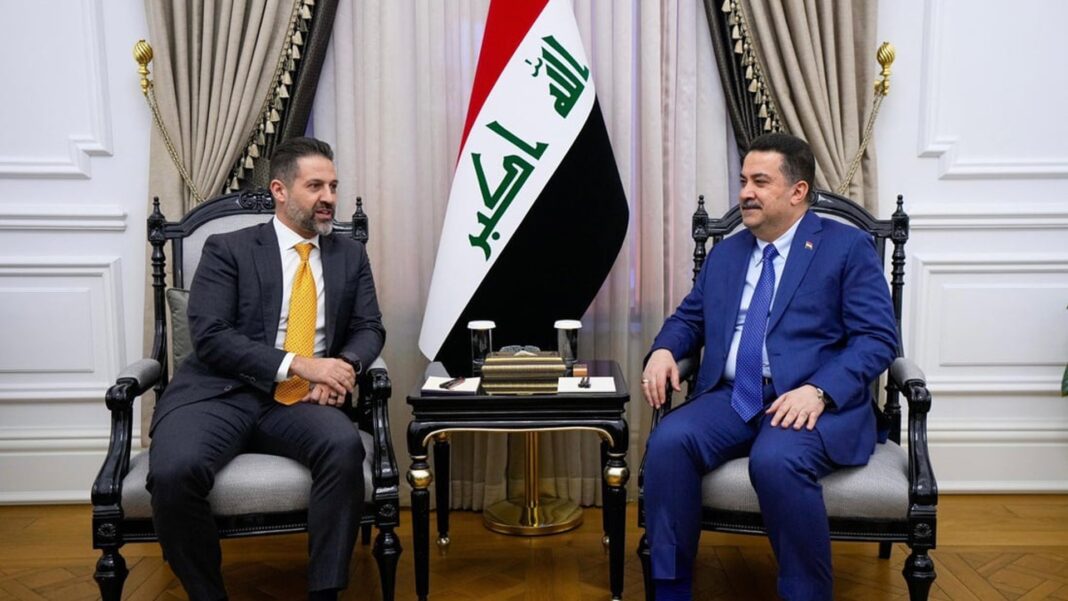
Strengthening Federal Cooperation shaped Monday’s meeting between Prime Minister Mohammed Shia al-Sudani and Kurdistan Region Deputy Prime Minister Qubad Talabani. The two leaders gathered in Baghdad to review political developments after the Nov. 11 parliamentary elections. They also discussed the next steps in forming a new federal government.
Al-Sudani’s media office released a statement after the meeting. The statement said both sides examined Iraq’s political, economic and development landscape. They reviewed ongoing projects and assessed progress across several service sectors. They agreed that the next government needs clear priorities and defined responsibilities.
The meeting highlighted the urgency of government formation. Both leaders urged political forces to move quickly and meet key constitutional deadlines. They stressed that Iraq requires stability, continuity and responsible leadership. They said delays create uncertainty and hinder development programs.
The Nov. 11 election drew heavy participation. More than 7,700 candidates competed for 329 parliamentary seats. Official results from the Independent High Electoral Commission showed 56.11% turnout nationwide. Observers noted that the results reshaped alliances and produced new parliamentary dynamics.
Al-Sudani’s Reconstruction and Development Coalition won the largest number of seats. However, the coalition did not secure an outright majority. Consequently, government formation now depends on negotiations among several political groups. Discussions continue as leaders attempt to create a coalition that can maintain stability and manage national challenges.
During the meeting, al-Sudani and Talabani stressed the importance of constitutional adherence. They said every step must reflect legal procedures and institutional standards. They argued that Iraq strengthens its democracy when political actors respect the constitution. As well as, also emphasized that compromise remains essential during complex negotiations.
Talabani continued his political outreach later in the day. He held separate talks with Nouri al-Maliki, head of the State of Law Coalition. Their meeting focused on the distribution of Iraq’s top federal positions. They discussed the presidency, the premiership and the parliamentary speakership. They also exchanged views on managing appointments through clear constitutional processes.
Iraq now enters a critical phase. Political forces must navigate sensitive issues and maintain dialogue. Leaders across the country stress that Strengthening Federal Cooperation remains essential for long-term stability. They also argue that inclusive decision-making helps prevent political crises.
As negotiations continue, many officials believe that Strengthening Federal Cooperation will guide the next government’s agenda. They hope that unified priorities, structured planning and national consensus can accelerate Iraq’s recovery and support sustained development.