By Kamiyar Deraney
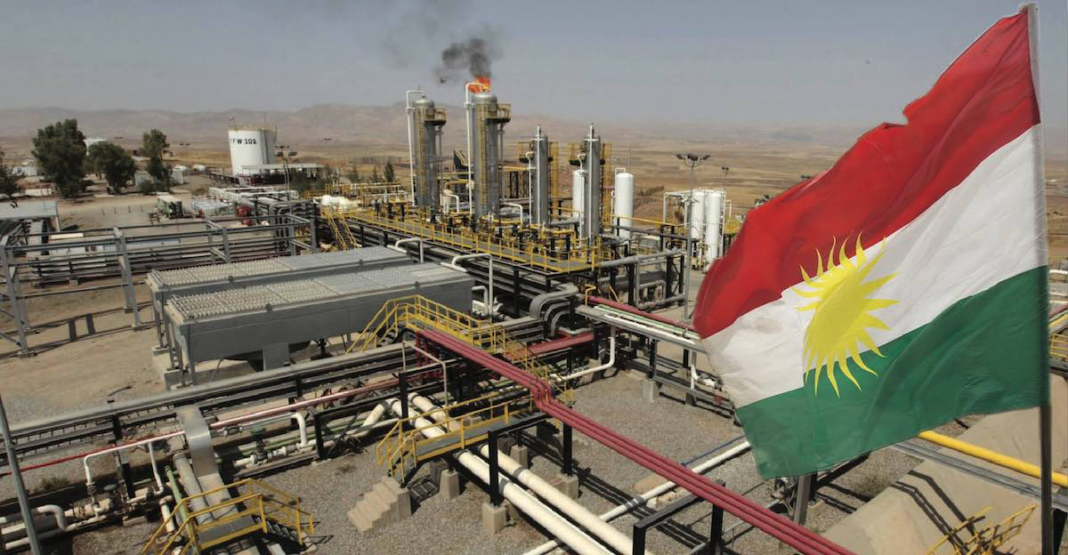
Oil and gas are central to the economy of the Kurdistan Region. The way oil is managed affects government revenue, public services, and economic stability. According to public budget data, oil revenues account for the vast majority of the Kurdistan Regional Government’s (KRG) income, making the sector the backbone of salary payments and public spending. Two major forces shape the oil sector in Kurdistan: legal rules from the Iraqi Constitution and political relationships with neighboring countries and global powers.
The Iraqi Constitution (Articles 111 and 112) defines oil and gas as resources owned by all the people of Iraq and assigns the federal government authority to manage them in cooperation with regions and governorates. Based on this framework, Baghdad oversees exports, revenue distribution, and international oil agreements.
In 2007, the KRG passed its own Oil and Gas Law to regulate exploration and production contracts independently. However, in February 2022, the Federal Supreme Court of Iraq ruled that the KRG oil law was unconstitutional and required the region to hand over oil production and export management to the federal government. This ruling significantly reshaped the legal environment for international oil companies operating in the Kurdistan Region.
The legal dispute has had measurable economic effects. Before export disruptions in 2023, the Kurdistan Region was exporting approximately 400,000–450,000 barrels of oil per day through the Iraq–Turkey pipeline. When exports were halted following arbitration between Iraq and Turkey, the region reportedly lost hundreds of millions of dollars per month in revenue. These disruptions directly affected the KRG’s ability to pay public sector salaries consistently.
Legal clarity improves investor confidence. International oil companies require secure contracts and predictable regulations before committing to long-term investments. Uncertainty increases financial risk and can delay production, reduce capital inflows, and slow economic growth.
Geopolitics plays an equally important role. Nearly all Kurdish crude oil exports depend on pipeline infrastructure that runs through Turkey to the Mediterranean port of Ceyhan. This makes relations with Ankara strategically vital. When pipeline operations are suspended or restricted, exports immediately decline, reducing regional income.
The United States remains a key diplomatic actor in Iraq’s energy sector. U.S. officials have repeatedly encouraged dialogue between Erbil and Baghdad to stabilize exports and protect foreign investment. At the Munich Security Conference 2026, President Nechirvan Barzani met with U.S. Secretary of State Marco Rubio to discuss the stability of Iraq and the Kurdistan Region, highlighting the continued importance of U.S. support for regional security and economic stability. Stability in northern Iraq is viewed as important not only for Iraq’s economy but also for broader regional energy markets.
Iran also holds influence through its strong political and economic ties with Baghdad. While Iran does not directly manage Kurdish oil exports, its influence within Iraq’s federal political system affects national budget negotiations and energy policy decisions that impact the Kurdistan Region.
Ultimately, the Kurdistan Region’s oil future depends on balancing constitutional law with geopolitical realities. Court decisions define legal authority, while regional diplomacy determines export access and investment stability. When Erbil and Baghdad cooperate within a clear legal framework and maintain stable external relationships, revenue flows are steadier, investor confidence improves, and economic planning becomes more reliable.
For citizens of the Kurdistan Region, this is not just a political issue. Oil revenue funds public salaries, infrastructure, healthcare, and education. Fluctuations in exports or legal disputes directly affect daily life and economic security.
Understanding both the legal framework and the geopolitical environment provides a clearer picture of the region’s economic path forward. In a region where hundreds of thousands of barrels per day and billions of dollars in annual revenue are at stake, law and diplomacy together shape the future of Kurdistan’s energy sector.