Iraq’s State of Law Coalition rejects ISIS detainee transfer following a controversial government decision announced on Sunday. The move immediately triggered political backlash inside parliament. Coalition leaders voiced firm opposition during a heated legislative session. Lawmakers focused heavily on border security and cross-border threats.
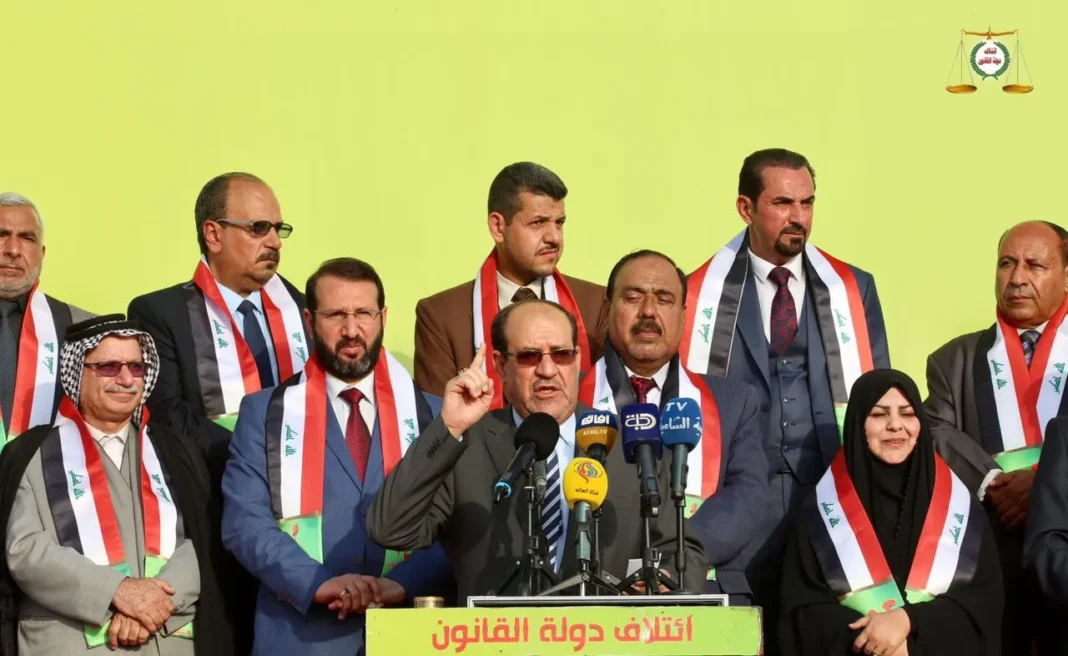
Nouri al-Maliki leads the State of Law Coalition and remains a top contender for the premiership. His bloc strongly criticized the approval process. Coalition member Mona al-Gharabi confirmed the rejection during a press briefing. She said lawmakers formally recorded their objection inside parliament.
The session included senior defense officials and security commanders. However, the Interior Minister did not attend the meeting. That absence raised additional concerns among several lawmakers. Many questioned the government’s coordination and transparency.
Meanwhile, Iraqi authorities already received the first group of detainees from Syria. Officials transferred 150 ISIS prisoners to Iraqi territory. Nine detainees reportedly hold Iraqi citizenship. The Ministry of Justice now supervises their detention and prosecution.
Authorities plan to prosecute the detainees under Iraqi law. They also intend to apply relevant international legal frameworks. However, critics argue Iraq already faces heavy security and judicial burdens. They warn the transfer could deepen existing challenges.
Iraq’s State of Law Coalition rejects ISIS detainee transfer partly due to regional instability. Recent clashes erupted near detention centers in northeastern Syria. Those facilities house ISIS fighters and family members. Violence there revived fears of mass escapes and security breakdowns.
Earlier, U.S. Central Command announced plans to relocate about 7,000 detainees. Officials described Iraqi prisons as more secure facilities. American forces coordinated the operation with Iraqi authorities. Baghdad later confirmed the agreement publicly.
Despite that coordination, political opposition inside Iraq continues to grow. Several lawmakers fear long-term consequences. They worry Iraq may absorb risks created by international failures. Others question whether Iraq received sufficient guarantees.
Additionally, government sources revealed plans to contact foreign governments. Officials want other countries to reclaim their detained nationals. Many detainees reportedly come from Europe, Asia, and North Africa. Diplomatic talks may begin soon.
ISIS no longer controls territory inside Iraq. Iraqi forces declared victory over the group in 2017. However, ISIS still operates as an insurgent network. Fighters remain active in deserts and rural regions.
Security operations continue across Diyala, Kirkuk, Salahaddin, and Anbar. Iraq’s Joint Operations Command reported dozens of missions in 2025. Airstrikes and ground raids killed more than 90 militants. Forces also targeted senior ISIS leaders.
Nevertheless, Iraq’s State of Law Coalition rejects ISIS detainee transfer as risks persist. Lawmakers demand stronger safeguards and clearer strategies. They urge the government to reconsider the decision. The debate now reflects broader concerns over sovereignty, security, and accountability.