
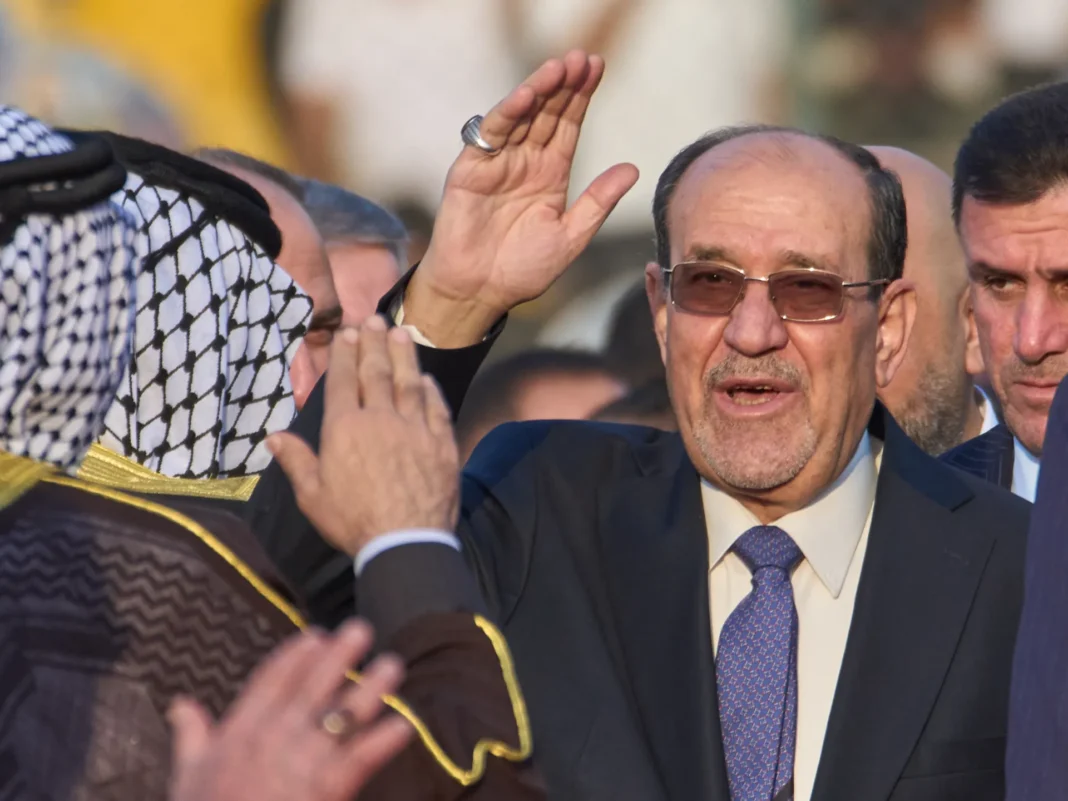
Al-Maliki’s bid dispute is escalating within Iraq’s Shiite Coordination Framework as the country debates the premiership. Nouri al-Maliki linked his withdrawal from the prime minister race to blocking caretaker PM Mohammed Shia al-Sudani’s mandate renewal, a source revealed.
The source explained that al-Maliki sent his position through a mediator who works to ease intra-Shiite tensions over the premiership. He conditioned withdrawing his nomination on two points: not renewing al-Sudani’s mandate and avoiding former PM Haider al-Abadi as a compromise candidate.
Instead, al-Maliki proposed naming a figure acceptable to all parties, including himself. This message reached factions opposed to his candidacy, and Coordination Framework leaders have begun discussions through internal meetings and contacts.
Observers expect the alliance to announce its position after the Eid al-Fitr holiday, which is about a week away. Meanwhile, Mohammed al-Baldaoui, a Sadiqoon bloc lawmaker representing Asaib Ahl al-Haq, urged the Coordination Framework to act quickly.
Al-Baldaoui stressed that the alliance must find a clear vision to form a government capable of leading Iraq during this transitional phase. He argued that renewing confidence in al-Sudani could prevent internal conflicts and avoid potential sanctions.
He also noted that Asaib Ahl al-Haq would support any decision the Framework leaders agree upon. A Coordination Framework meeting is expected soon to resolve government formation and leadership disputes.
The Coordination Framework nominated al-Maliki on January 24, opening negotiations to form a new cabinet. The process stalled because of disagreements over electing a president, which constitutionally precedes appointing the largest parliamentary bloc’s candidate.
Al-Maliki’s nomination faced opposition from some Sunni parties and factions within the Shiite camp. Washington also expressed concern, with President Donald Trump warning that U.S. assistance could be affected if al-Maliki returned as prime minister.
Sources indicate that most Coordination Framework factions favor renewing al-Sudani’s mandate. However, al-Maliki’s insistence and objections from some Shiite leaders caused a planned meeting to collapse, prolonging the dispute.
In conclusion, the al-Maliki bid dispute continues to shape Iraq’s political landscape. Coalition leaders must negotiate carefully to form a government while balancing competing factions and international concerns. Analysts predict ongoing deliberations will affect Iraq’s stability and governance in the coming weeks.