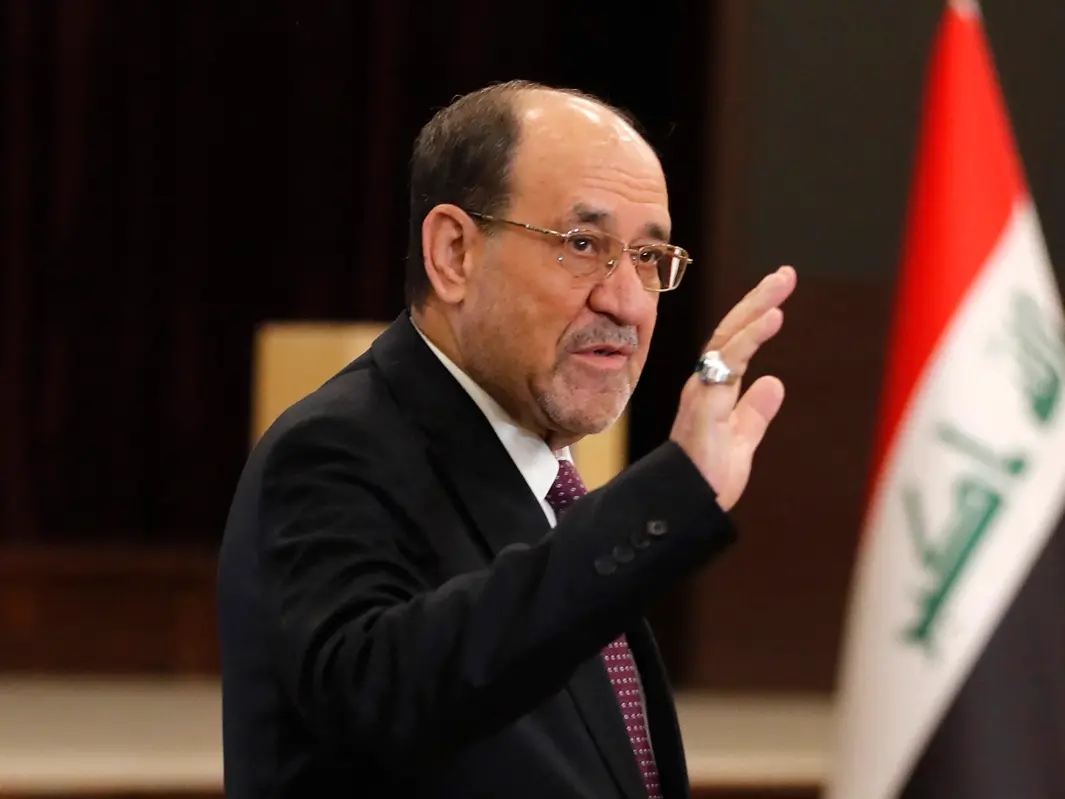
Nouri al-Maliki confirmed on Monday that he will not step down, insisting that Maliki’s prime minister bid aligns with Iraq’s national interests.
In an interview with AFP, Maliki said the U.S. messages “concern the Iraqi state, not me personally.” He added, “I will not withdraw my candidacy for the position of Prime Minister of Iraq.”
He stressed the need for a centralized military and security structure. “We want weapons under state control, with an army led by a single command,” he said. He also rejected oil and currency smuggling.
Maliki emphasized Iraq’s openness to global powers. “Iraq must engage major world powers while respecting sovereignty,” he added.
He also committed to honoring Iraq’s state institutions and national frameworks. Moreover, he noted, “The Coordination Framework is vital for the country’s stability.” In addition, he praised the U.S. withdrawal as peaceful and emphasized the importance of Iraq-U.S. relations for recovery.
Meanwhile, regarding Iran, Maliki stressed mutual interests. “Relations with Iran and other countries are based on shared interests. Therefore, we will not allow foreign interference in Iraq,” he said, referencing Iraq’s 1,300-kilometer border with Iran.
Furthermore, Maliki addressed Washington’s expectations for a civilian-led government. “The next government will exclude armed factions. Consequently, participants must lay down their weapons. Some factions have agreed,” he explained.
He also condemned sectarian exploitation. “Iraq rejects the use of sectarianism. Additionally, we seek agreements with regional and global partners. Therefore, Iraq protects regional security,” he said. Maliki underscored that embassies and official interests in Iraq will remain safeguarded.
Finally, the former prime minister highlighted the country’s economic challenges. “Iraq requires intensive national efforts to revive the economy. Thus, we must provide essential services to citizens,” he stressed.
Maliki also defended his candidacy amid U.S. and regional scrutiny. “Our focus is on strengthening state institutions. Maliki’s prime minister bid is about Iraq’s sovereignty and stability, not external pressures,” he said.
He concluded by reaffirming Iraq’s strategic independence. “I will not allow Iraq to become a state run from abroad. Our policies prioritize the people and the country,” he added.
Analysts warn that Maliki’s decision could heighten tensions with both Washington and regional powers, as Iraq navigates its delicate post-election landscape. The outcome will influence domestic politics and Iraq’s foreign relations.