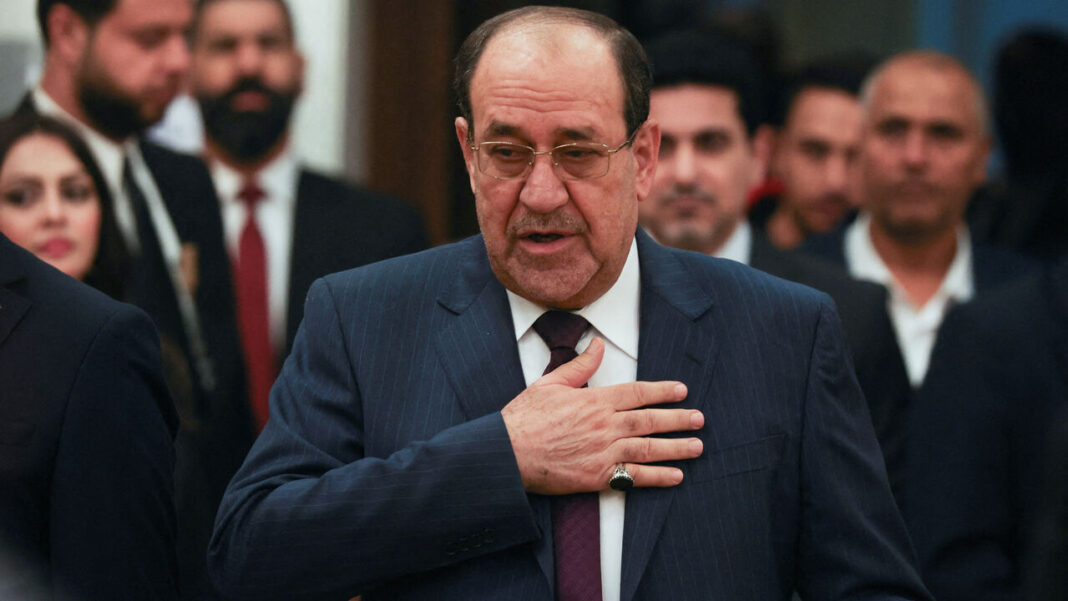
A senior ally of Prime Minister Mohammed Shia al-Sudani confirmed that Maliki’s withdrawal from the premiership marks a major shift in Iraq’s political scene. The move follows weeks of mounting pressure on former Prime Minister Nouri al-Maliki to step aside. Analysts say this development could reshape negotiations and alliances in Baghdad.
Bahaa al-Araji, head of Sudani’s Reconstruction and Development bloc in parliament, told Al-Sharqiya TV that he interpreted Maliki’s recent tweet as an official step back from the nomination. Moreover, he explained, “He called on the next government to follow an independent national approach away from political axes. Therefore, this represents a withdrawal from the nomination for prime minister, and he should be thanked under the current circumstances.”
Additionally, Araji emphasized that Maliki’s message reflected the wisdom of a statesman who understands Iraq’s delicate political dynamics. Consequently, he noted, the Coordination Framework, which had previously backed Maliki, now faces a new reality. “As a result, its leaders reached a consensus that it would be difficult to proceed with Maliki’s nomination,” he clarified.
The statement positions Sudani as the dominant figure in the current political moment. Araji noted, “Sudani is no longer just a candidate. Today, he is the decisive figure at this stage. Who among the other candidates can reach an understanding with both the United States and Iran simultaneously?”
Araji emphasized the bloc’s parliamentary weight. With roughly 50 seats, it claims entitlement to five ministries in ongoing government negotiations. He described the group as central to shaping Iraq’s next cabinet and its broader political direction.
Maliki’s March 5 tweet called for Iraq to be “an effective balancing element in its regional environment” and demanded an “independent national approach that does not engage in axes.” Araji interpreted these words as a clear signal of Maliki’s withdrawal from premiership.
Maliki’s candidacy had caused tension within the Coordination Framework for months. Despite repeated pressure to step down, he avoided formal withdrawal and skipped Framework meetings. This left the alliance in a bind: either force Maliki out or move forward with a candidate rejected by Washington. U.S. officials, including President Donald Trump, warned that continued support for Iraq could be reconsidered if Maliki became prime minister. The message reportedly included explicit hints of sanctions.
With Maliki’s withdrawal from the premiership, Sudani now holds a decisive advantage. Political observers suggest this shift may accelerate government formation and ease international concerns about Iraq’s stability.